
*FYI - this post may contain affiliate links, which means we earn a commission at no extra cost to you if you purchase from them. Also, as an Amazon Associate I earn from qualifying purchases. Check out our Privacy Policy and Disclosure. for more info.
It’s extremely ironic to me that the Amalfi Coast, one of the world’s most beautiful destinations, happens to also be one of the easiest places on Earth to have a terrible time…
But sadly, it’s true! Amidst all the dramatic photo opps, crystalline waters, and slurpable seafood, there’s a sweaty and stressful sea of easy mistakes, bus line-ups, stairs, and eye-gouging prices… all of which are easy to fall victim to without proper planning.
Luckily, you’re here, so that won’t happen to youuuu, I promise.
Because in this post, I’m sharing all the top must-knows before visiting the Amalfi Coast to help you save money, avoid headaches, and make the most of your trip… assembled through personal trial and error. I hope you find it helpful!
Save this List of Amalfi Coast Travel Tips for Later!
You’ll be very glad you did.
First let’s just get this out of the way…
1. The Amalfi Coast technically does not include Sorrento
I know. You might feel like you’ve been lied to, but alas, while it’s a great base for exploring the Amalfi Coast, the lovely and lively town of Sorrento is, in fact, located on the Sorrentine Peninsula.
… Whereas the Amalfi Coast proper is made up of the following 13 towns (from West to East):
- Positano
- Praiano
- Furore
- Conca dei Marini
- Amalfi
- Atrani
- Scala
- Ravello
- Minori
- Tramonti
- Maiori
- Cetara
- Vietri sul Mare
And while not technically part of the Amalfi Coast itself, Salerno can be found super close by as well, with bus and ferry connections to the Amalfi Coast proper.
So, hopefully that gives you some quick bearings before we move onto your first main headache: where to stay.

2. Don’t assume that you need to stay in Positano
The sad Instagrammy truth of it all is that Positano and Amalfi tend to get most first timers’ attention because… well, they are annoyingly photogenic. Picturesque as they may be though, it’s important for you to know that you will find MUCH better value in other towns along the coast.
Those thirteen towns I mentioned earlier (alongside honourary mentions Sorrento and Salerno) all have their pros and cons as bases… but unfortunately, you will never find a base that boasts great views, a reasonable price, and convenience all-in-one. Inevitably, compromises will need to be made.
If you’re looking for bases that middle on all three – meaning pretty convenient, relatively affordable, and more subtly beautiful, I would start by looking at the towns that are serviced regularly by public ferries.
We’ll cover transport more thoroughly later, but ferries are by far the least stressful way to get around, so staying close to a ferry port is a must for convenience… which is why towns like Minori, Maiori, Cetara, and Vietri Sul Mare are often considered as the ‘best value’ picks for an Amalfi Coast trip outside of the main hotspots of Positano and Amalfi.
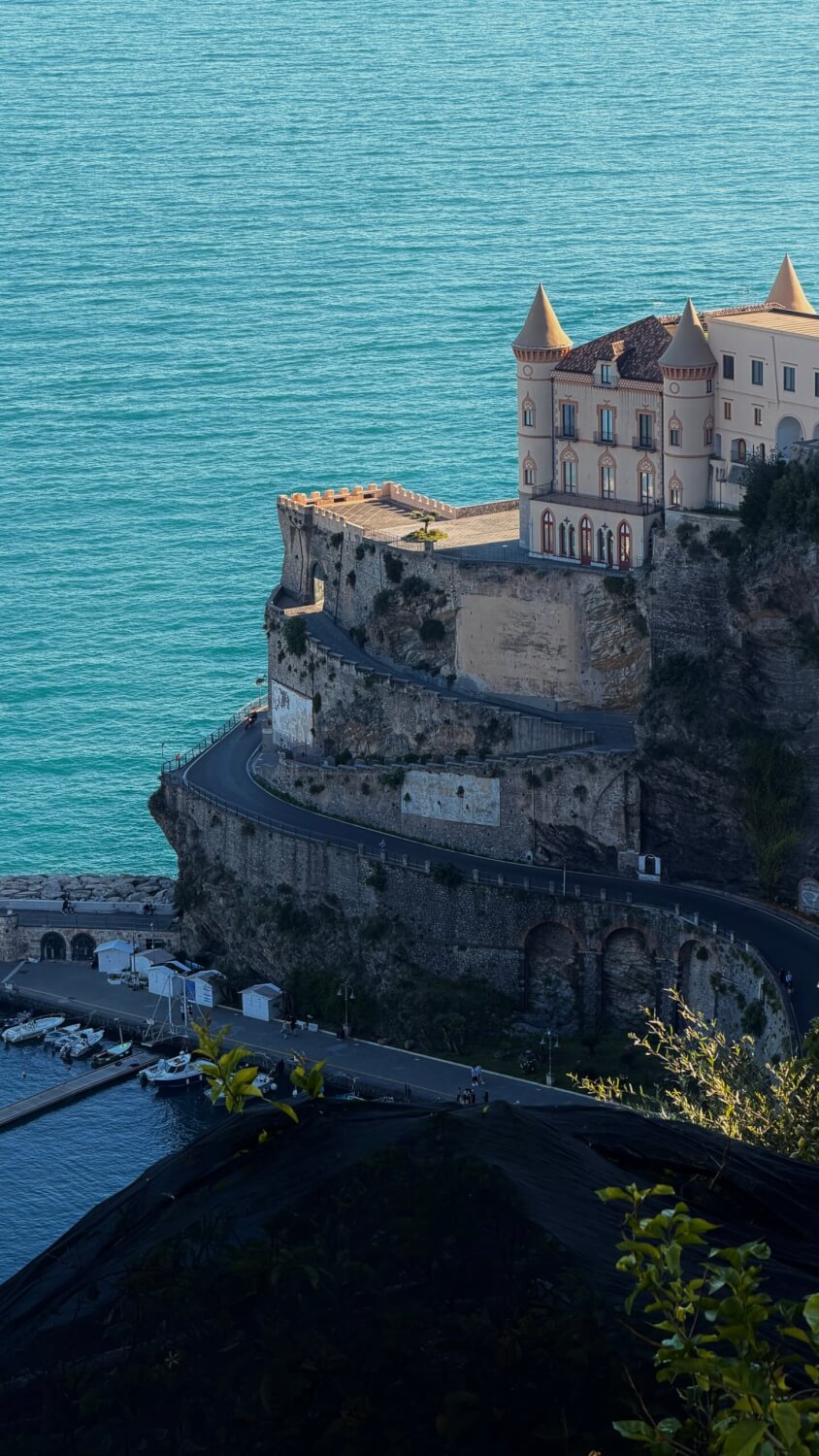
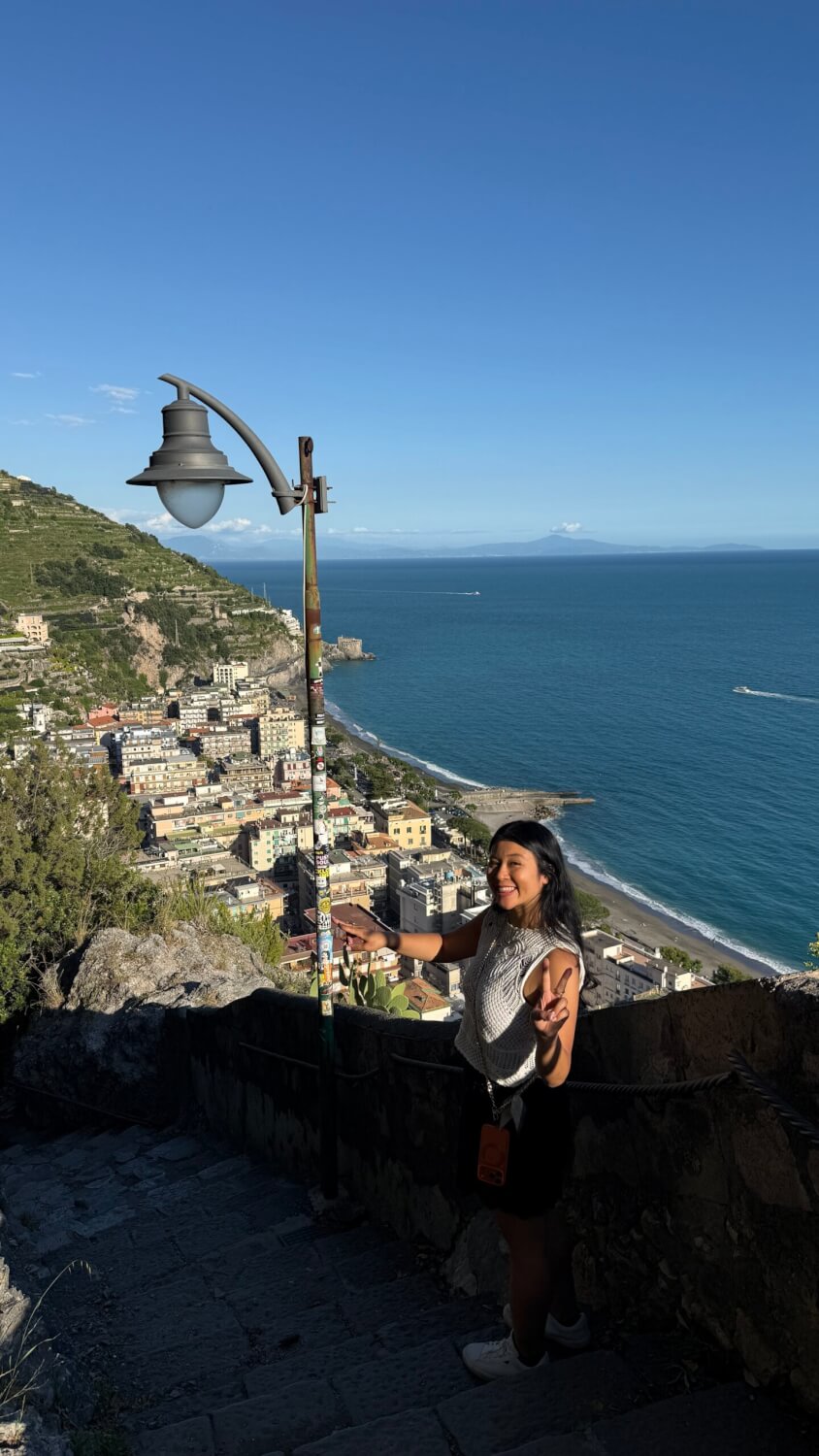
Atrani, which is a 10 minute walk from Amalfi (via underground tunnel) is another solid option, though the term affordable is becoming increasingly debatable.
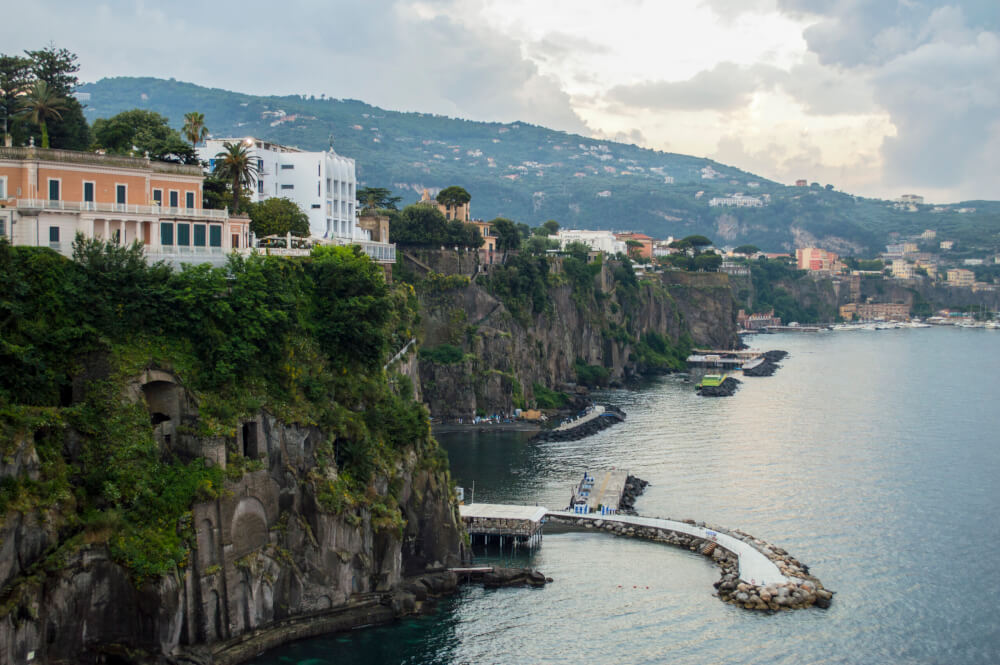
And Sorrento is also a solid base, despite prices rising every year. This was where I stayed on my first trip over ten years ago, and it’s incredibly convenient in terms of transport links. Plus, it’s nice enough of a town itself with things to do… though do note that most of the nice beach space is taken up by hotels, and inaccessible to the general peasantry public.
If you’re willing to compromise on any of those elements though, here’s what I would advise.
Firstly, if you’re willing to compromise on price, then admittedly, Positano is probably where you’re going to get the most classic Amalfi Coast experience with the most dramatic viewpoints, an abundance of nice restaurants with a view, beaches with a view, and a million cutesy boutiques selling floral dresses… with a view. Amalfi offers similar perks with less dramatic photo opps, but superior transport connections and walkability.
And while these towns are gorgeous, if you’re not looking for photo opps and views as your main goal, then you might be better off choosing a different base.
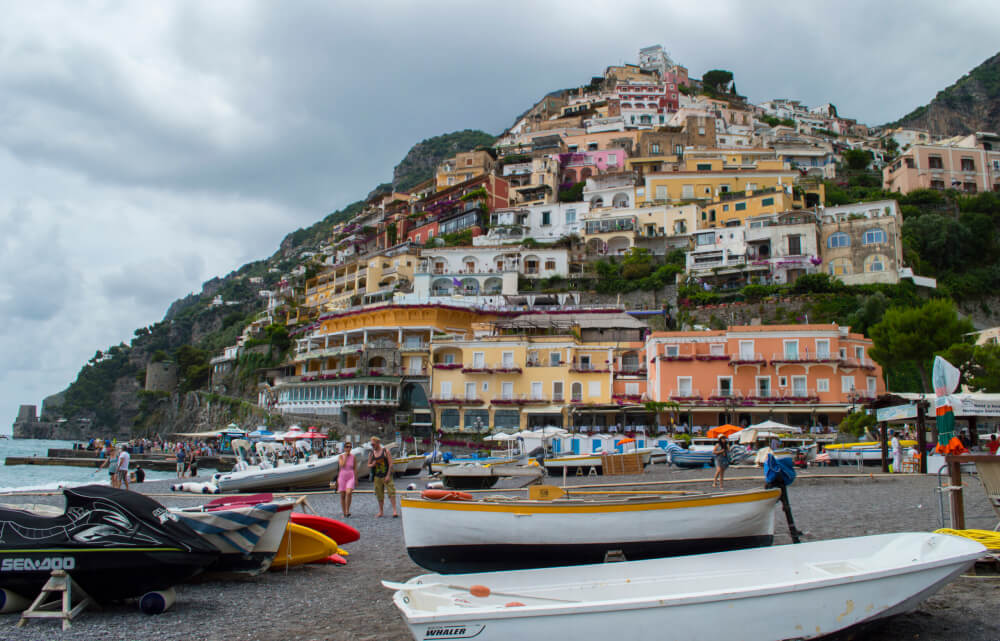
So, if convenience is the compromise, then one of the many smaller towns with fewer transport connections might be the way to go.
On my most recent trip we stayed in Furore at this wonderful little place called Villa Pino. The views were unreal, the breakfast spread was immaculate, and while there were buses going to both Amalfi and other towns along the coast, we mainly used it as a base for hikes. This allowed us to easily prance over to the start point of the famous Path of the Gods one day, while braving the approximate 10 million steps downhill to the epic Fiordo di Furore. For the price, I thought this place was amazing value.
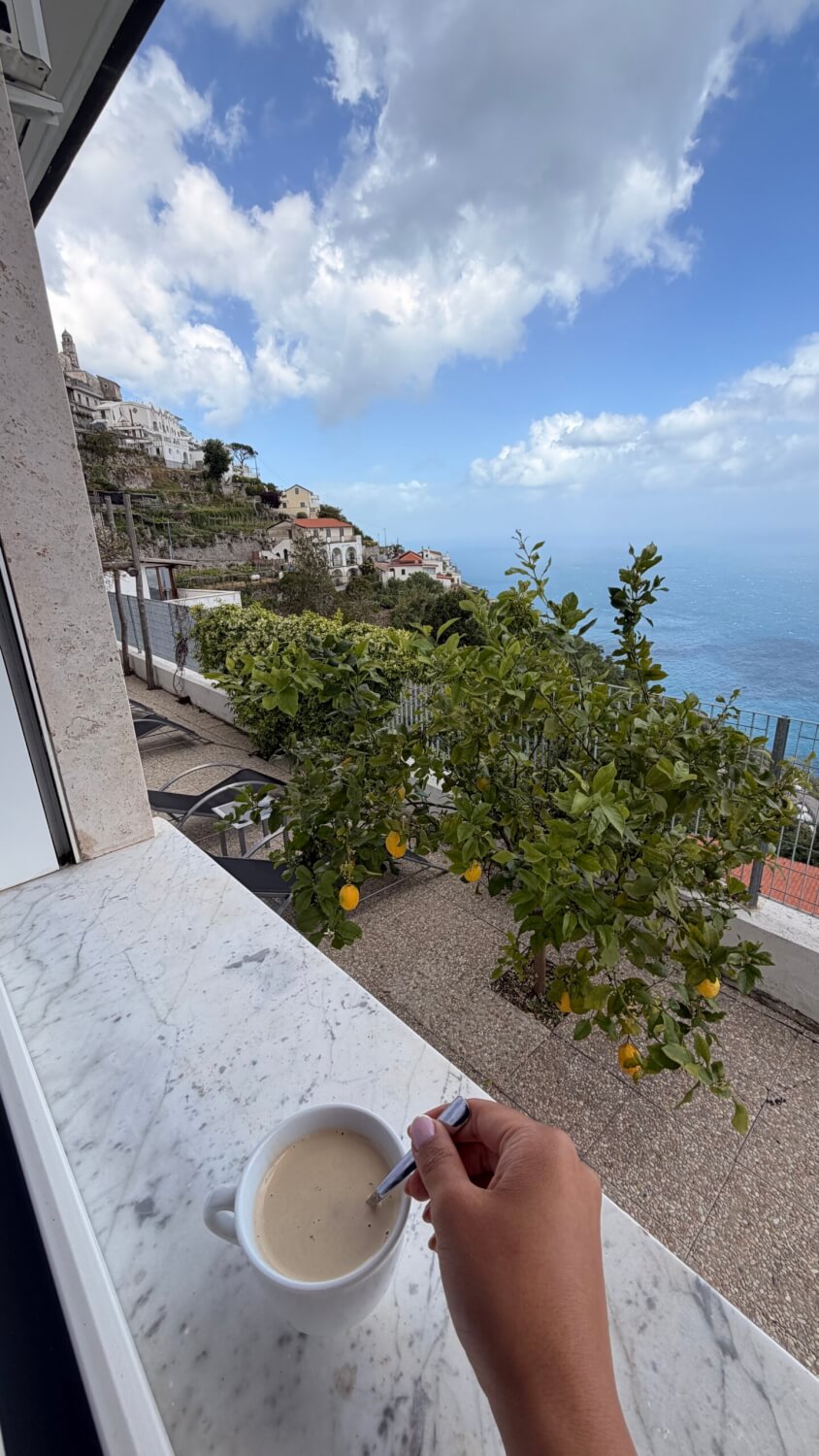
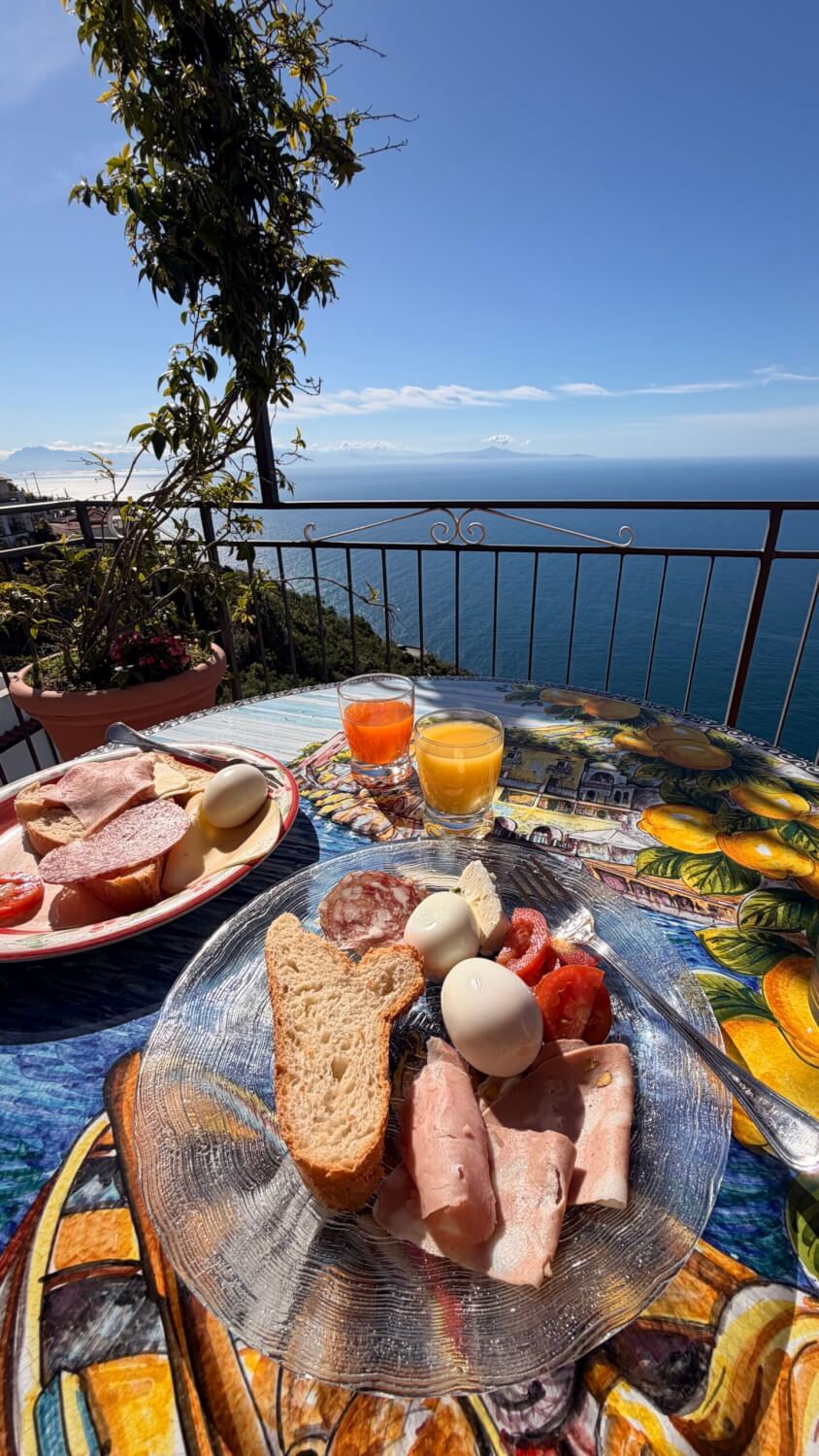
Praiano is another potential base for those willing to compromise on convenience – it’s a lovely town with great views, but lacks in transport connections compared to other Amalfi Coast towns.
Finally, if you’re willing to compromise on views, then Salerno might be the way to go, or if you’re planning a hiking trip, something higher up in Agerola might make sense.
Ultimately, I would only choose a base that you would be happy to spend a lot of time in. Don’t choose just based on what’s cheap assuming you’ll day trip to tons of other places, because public transport might mess with those plans. And if you’re one of the many people who (crazy idea) actually want their vacation to be relaxing, then you might as well enjoy where you’re staying.

3. There are no direct flights or trains to the Amalfi Coast
One thing that catches most first timers off-guard is that getting to the Amalfi Coast is actually a hellscape kind of journey because… well, let me make one thing clear: your final route will inevitably include some time on a car, bus, or boat. So don’t expect any journey to be quick or straightforward.
In brief, the closest international airports are in Naples and Salerno (which opened in 2024).
Despite Salerno being much closer and more convenient because a ferry can get you to many Amalfi Coast towns quickly, most international visitors still fly into Naples because it services more destinations.
So, from Naples to the Amalfi Coast, your options are to either…
- Take a taxi or private transfer (the drive is just over an hour) or
- Take the train from Naples to Sorrento, and then catch public transport to your Amalfi Coast town of choice – either using a bus or ferry. And, depending on where you’re staying, probably some additional walking too
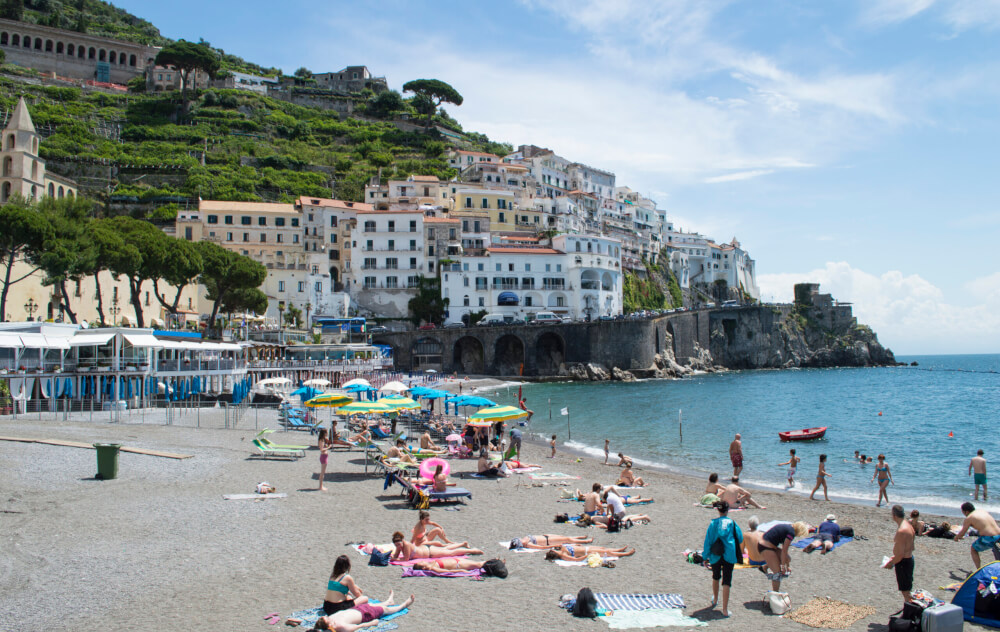
4. Splurge on a private transfer if you can
For those keen to use public transport, the train-bus-walk combo might not sound too bad given the massive difference in cost… but do be warned that public transport along the Amalfi Coast is notoriously nightmareish, with far more demand than supply, and an unreliable schedule to boot.
Add on the fact that there are no dedicated spots for luggage on-board buses, and you may well understand why most guides advise a private transfer whenever possible.
And that’s advice that I’ll be echoing in this guide.
Build private transfers into your budget and you will be much less stressed overall, with substantially fewer tears shed. Plus, as a bonus, I’ve heard that many drivers are happy to stop at scenic points along the way and also help you take photos, so you do get some more value there beyond just transport.
We used Positano Taxi Tony for a late night ride home once, and they were great!
5. It’s tough to enjoy the Amalfi Coast on a tight budget
You’ve probably already gathered this, but the Amalfi Coast is not a place to be pinching pennies.
Sure, there are ways to do things on a reasonable budget. I’d say the way we did it recently (with a base in Furore and hiking between towns) was honestly perfect, but truthfully, the Amalfi Coast is a place where makin’ it rain will help substantially in reducin’ the pain.
For instance, when we went to Ravello to start our Path of the Lemons hike, we happily paid 5x the amount of a public bus to get a private shuttle bus that guaranteed us seats. (It was only 10 euro each, but still!)
Anyways, trust me, this is not a place that you want to be stressed about money, because beyond costs like accommodation, even restaurants and shops offer super high prices. You also want to be prepared in case you run into issues where sadly, the only solution is flinging money at it… like when you miss the last bus or ferry, but more on that later.
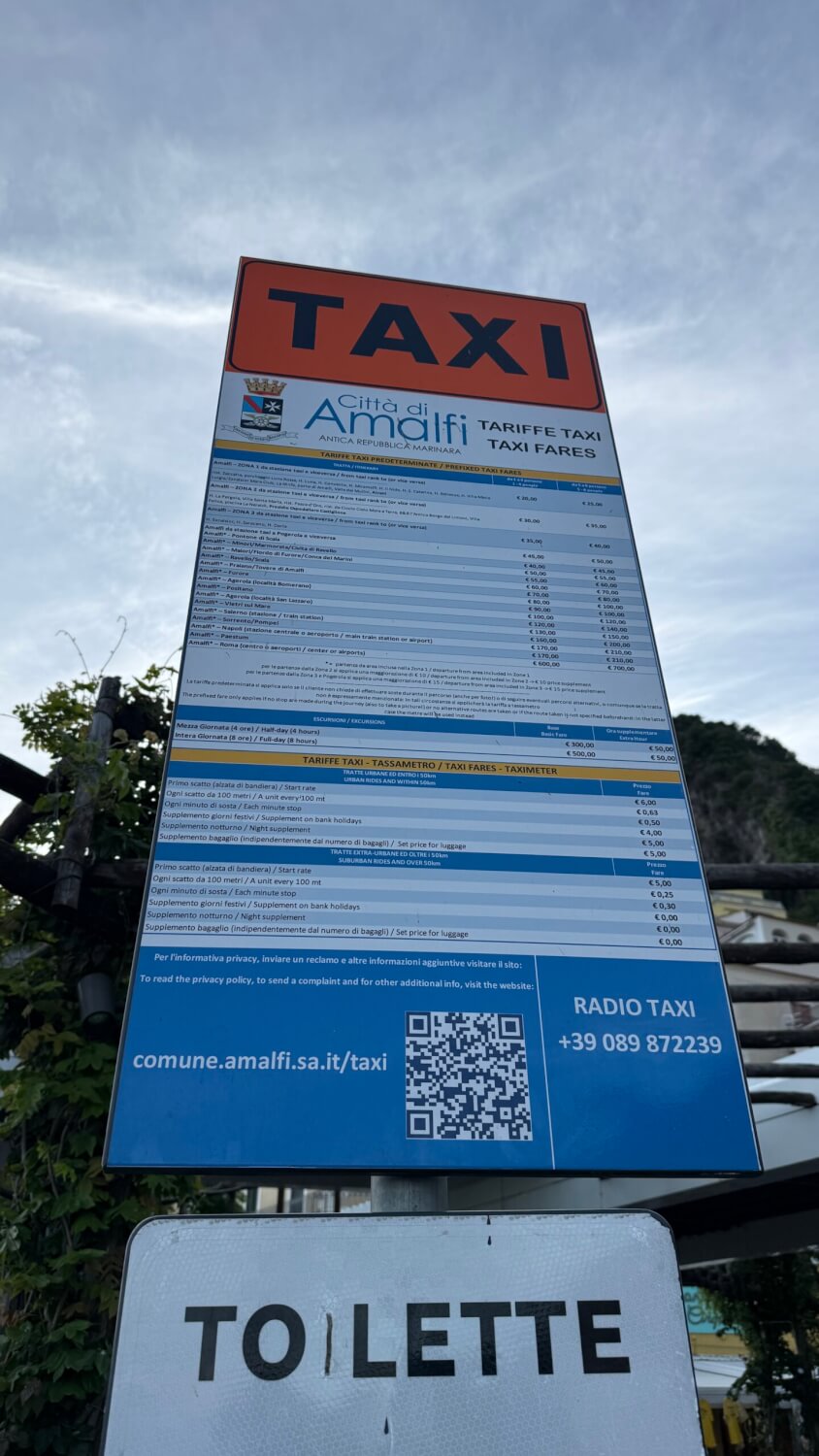
Just to give you an idea of taxi prices to expect though:
6. Give your itinerary plenty of room to breathe
Many first-timers to the glorious Costiera amalfitana tend to imagine a tiny stretch of villages two prances and a skip away from each other, but the reality is much less romantic thanks to comically sharp winding roads, tourist-dense traffic, and unreliable public transport in general.
This is why I would advise you pace your itinerary in a way that you visit no more two towns in one day… because trust me, town hopping along the Amalfi Coast sounds like a lot more fun than it actually is.
And I may ruffle some feathers here, but you really don’t need to see every single town. Would it be nice to? Sure, but there’s significant overlap in what each town has to offer – nice views, pastel houses, fresh seafood, etc. so you’d probably have a better time just enjoying a few places properly rather than stress about hitting up every town.
So yes, give yourself permission to cull the itinerary and focus on exploring deeper in a few places rather than jumping around.

7. Poke around on Google Maps to find lesser known gems
… Rather than relying only on social media, which is often the research tool of choice for Amalfi Coast visitors.
It may sound old school, but a quick search of ‘restaurants’, ‘viewpoints’, and ‘activities’ on Google Maps can be a goldmine for discovering beautiful and good-value spots that steer you away from the viral crowd… which tends to come with higher prices and longer lines.
8. Aim for at least 3-4 nights to enjoy properly
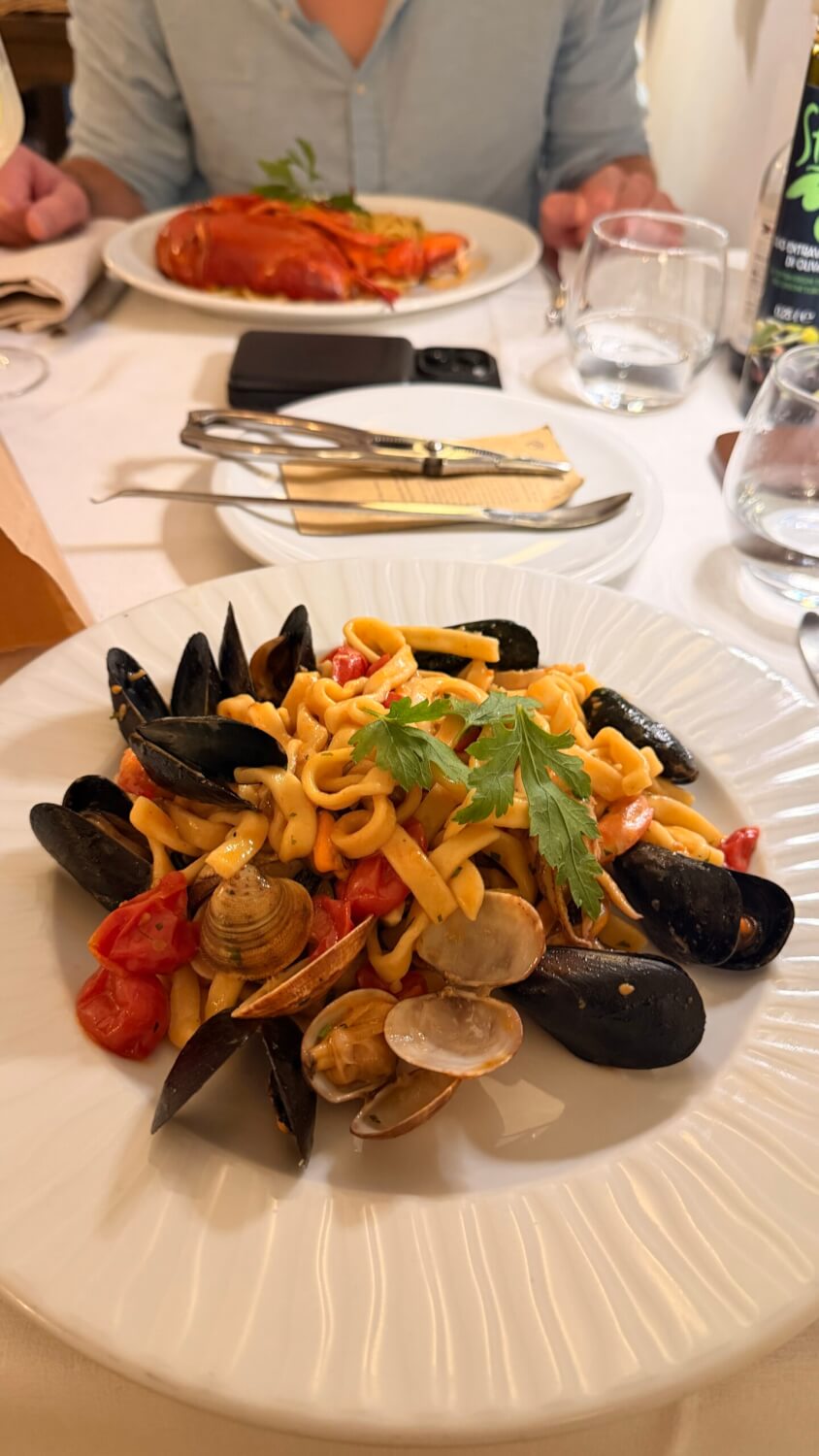
It may be annoying to hear, but the Amalfi Coast is not a destination to be rushed.
If time and budget allows, 3-4 days is what I’d recommend. This should be enough time for you to explore a few towns, twirl around in glee, and really soak in the magic of the coast (which is best enjoyed slowly).
While I understand sometimes a day is all you have, day trips from popular hubs like Naples or Rome involve hours in transport, with minimal time to enjoy what this scenic slice of paradise is all about. So, if you wanted to do it as a day trip, I’d recommend a private tour that saves you from trying to survive the whole thing on public transport, which can be fraught with delays, cancellations, and other hurdles.
Here are some of the most highly rated tours you can book:
9. Aim to visit during shoulder season
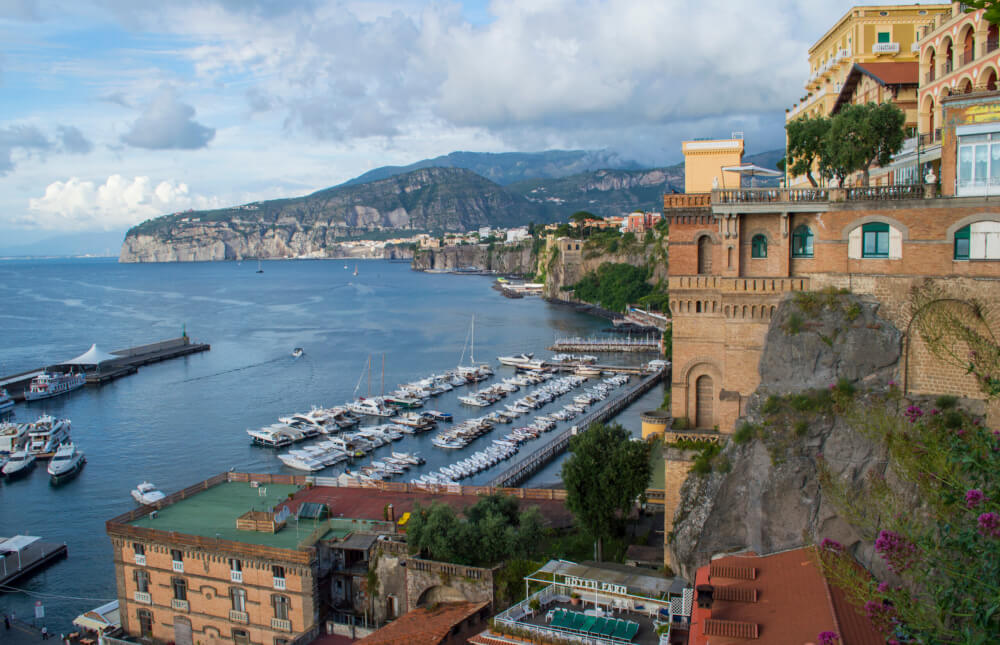
Now, while the pastel-coloured houses and turquoise waters of the Amalfi Coast have become synonymous with every Pinterest board named ‘Euro summer’, the unfortunate truth is that July and August bring peak crowds, peak prices and peak temperatures… making it a fairly undesirable time to visit for those who are able to explore other options.
In fact, many seasoned travellers prefer May, June, September or October. Though be warned that these times will only be relatively quieter, and definitely not quiet by any stretch of the imagination.
Weather is also a bit less predictable during these periods, and I say this from experience after going in May both times, and being pelted by heavy rainstorms for a day each time.
Still, to me the tradeoff of fewer crowds is worth it!
10. Avoid major public holidays in Italy
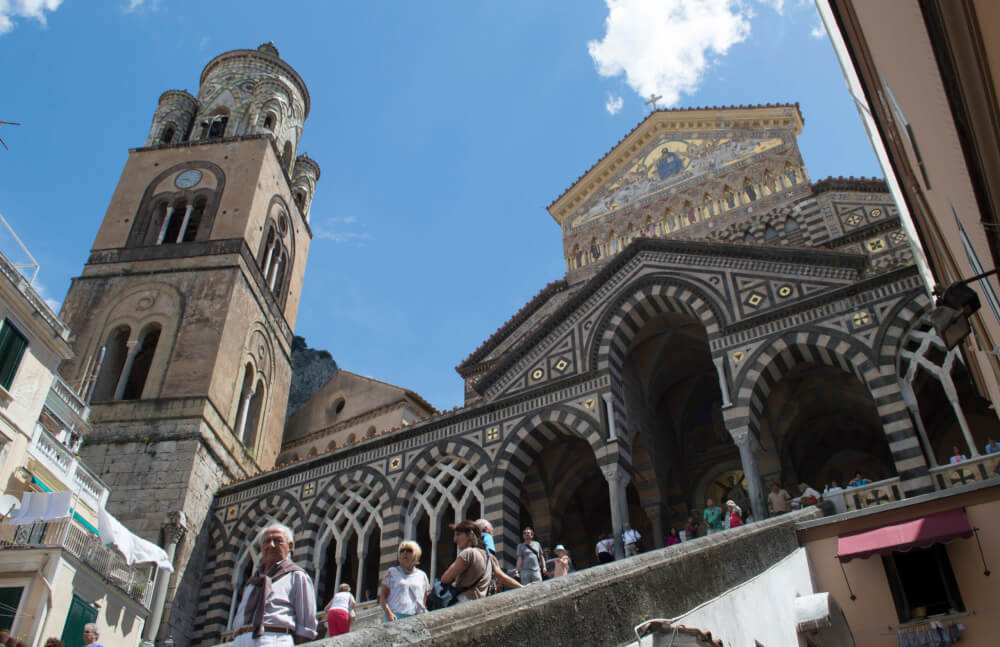
In addition to summer, another time to avoid in general is any major public holiday. Not just the ones from your home country, but the ones in Italy as well.
Because trust me, as much as international tourists love Italy, Italians love it just as much, if not more.
So, these are times that the coast gets even busier than normal, so consider Italian national holidays and other busy periods like spring break and try to avoid them if you value your sanity.
11. Book accommodation much earlier than you think you need to
Speaking of valuing your sanity, here’s an important tip: book accommodation as soon as you can. Earlier than you’ve ever booked anything in your life. Plzz.
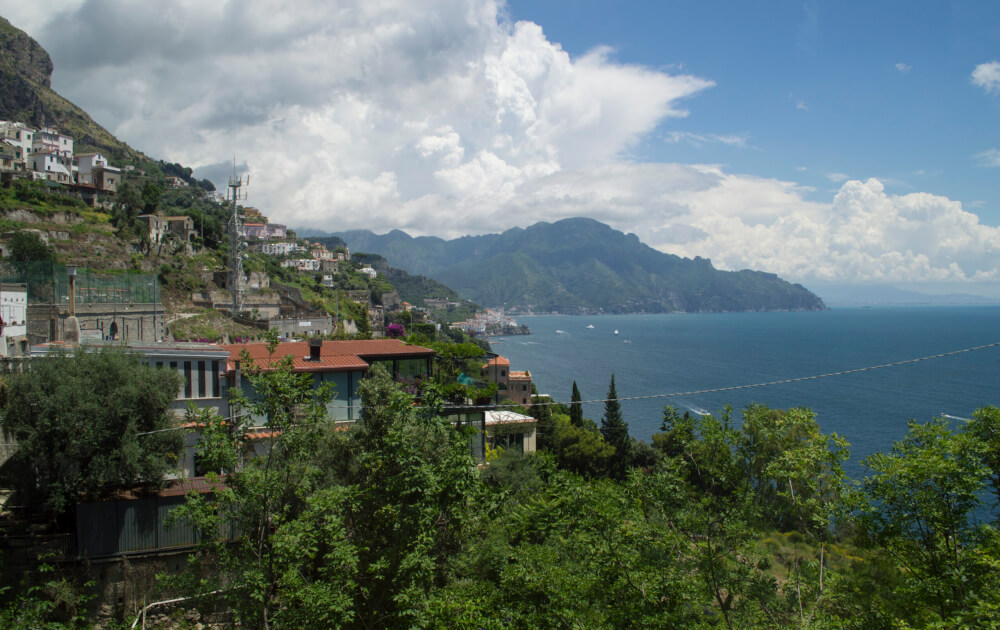
The popularity of this coastal wonderland cannot be overstated, and sadly, the best hotels, guesthouses and apartments can sell out months in advance, especially in Positano and Amalfi. As a rule of thumb, if you’ve learned about a hotel through any viral social media post, it’s probably already sold out for your dates.
So, get it figured out as soon as possible.
While booking, I do implore you to also double check details like whether there is vehicle access or not, because with many smaller places, you’ll end up lugging your bags up at least some stairs, so it’s best to know beforehand.
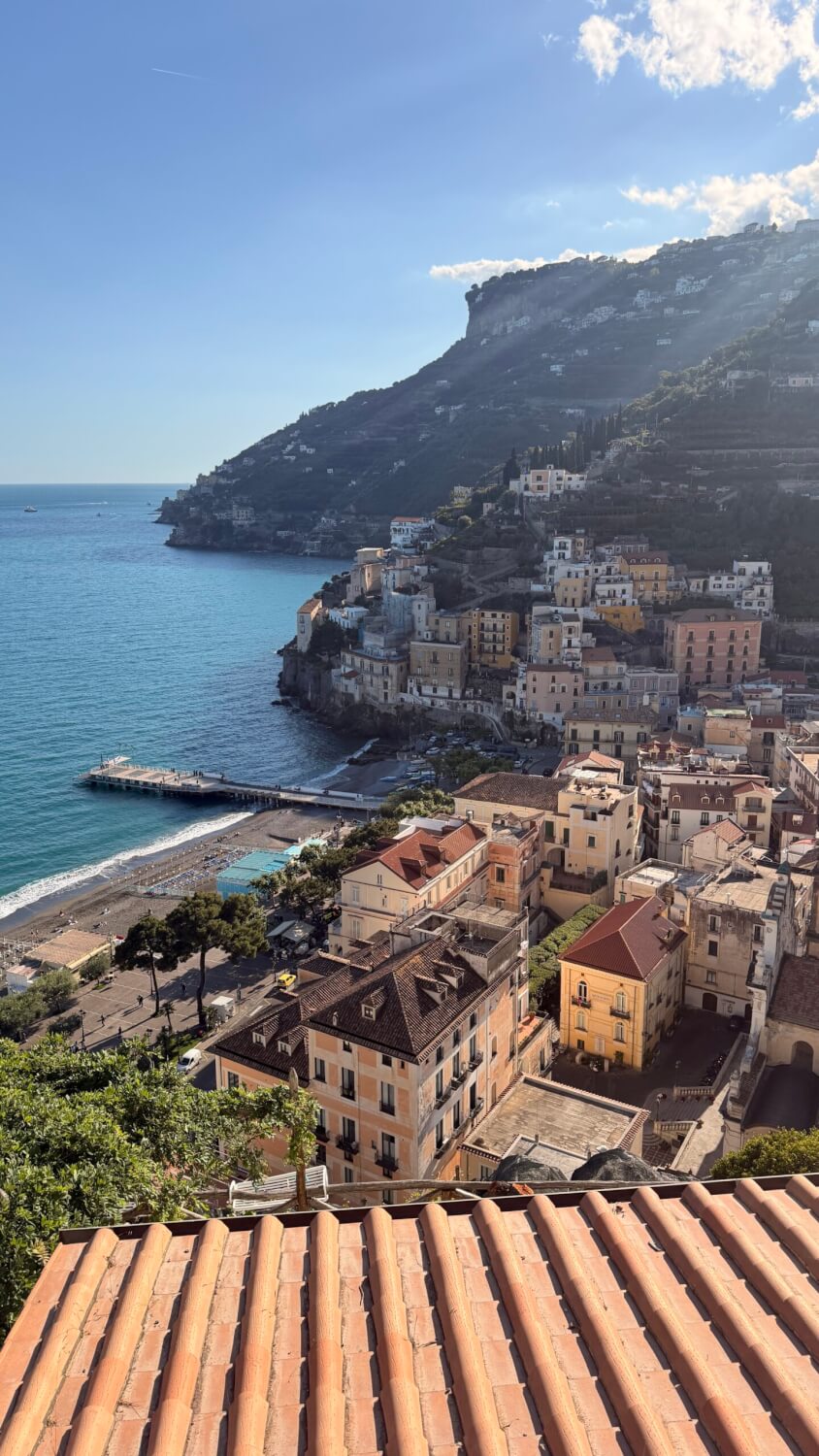
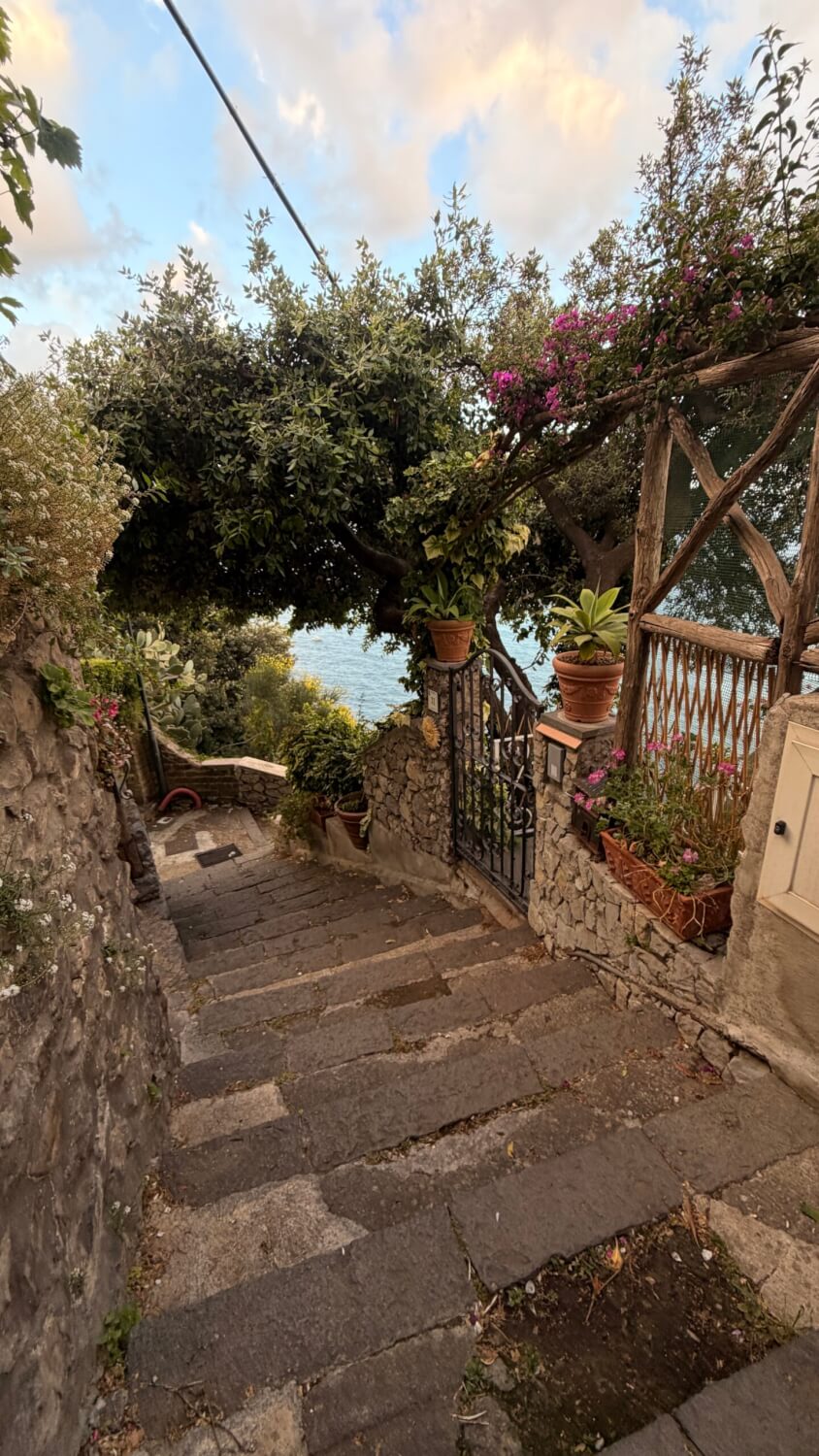
12. Book ahead as well for restaurants, beach clubs, etc.
For the spontaneous among you, I regret to inform you that booking ahead applies to more than just places to sleep.
Because yes, even restaurants, cooking classes, beach clubs, and other activities require prior booking. Often months in advance. Again, this is doubly true for anything that has gone viral on social media, so be sure to start your itinerary planning well ahead of time.
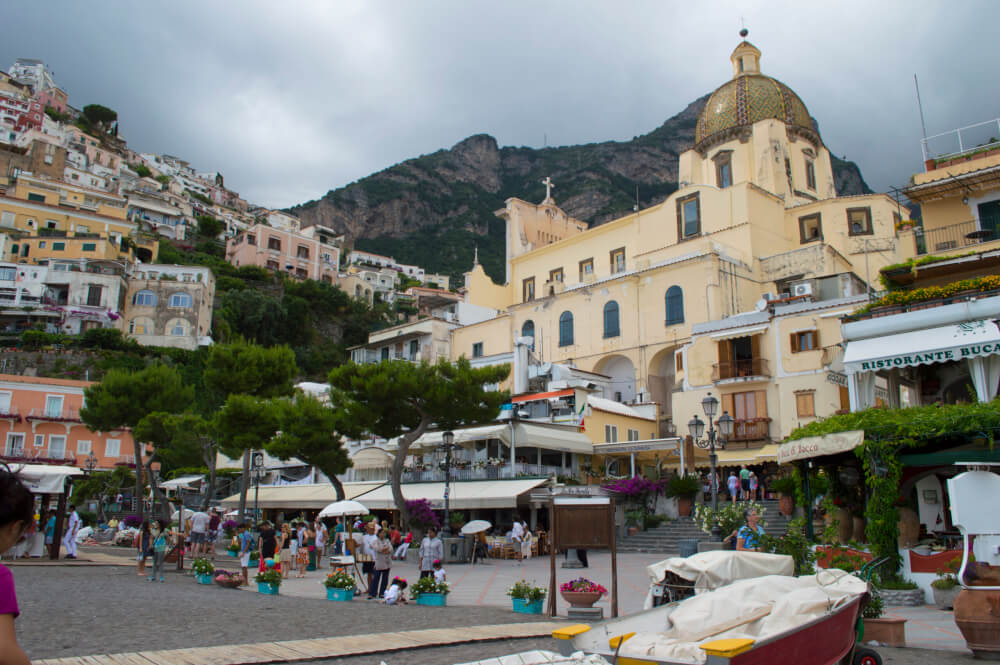
13. Pack as light as possible
Now, I’m usually an advocate for packing light anyway, but on the Amalfi Coast, this advice becomes a lot more pressing because stairs, cobbled streets & public transport are a true nightmare with heavy bags in tow.
I would advise you look up your hotel on Google Street View to get a sense of what it looks like to get there, as many properties may not have street access, and therefore require you to navigate additional streets and endless stairs too.
Needless to say, pack comfy walking shoes.
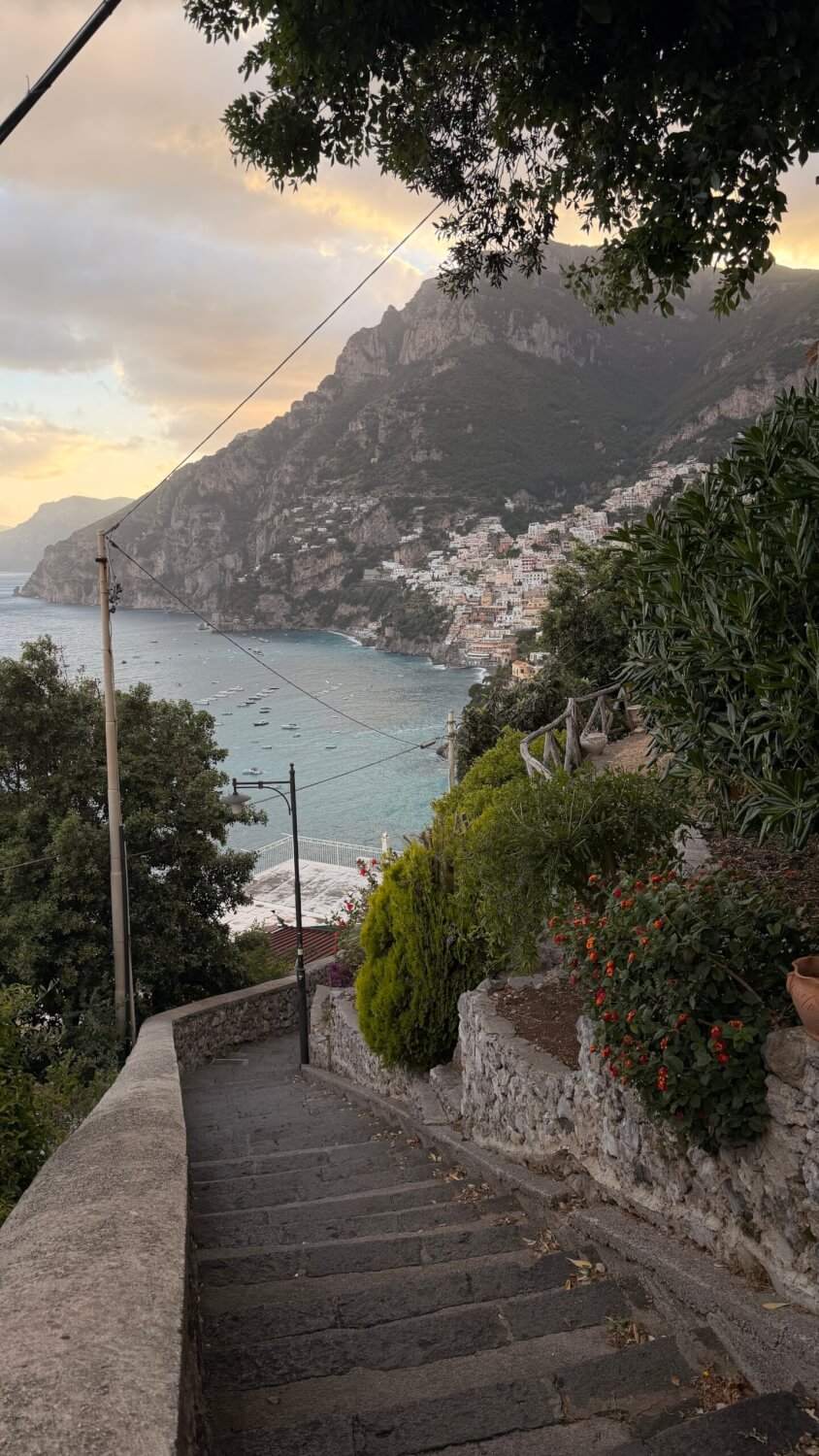
14. Avoid renting a car
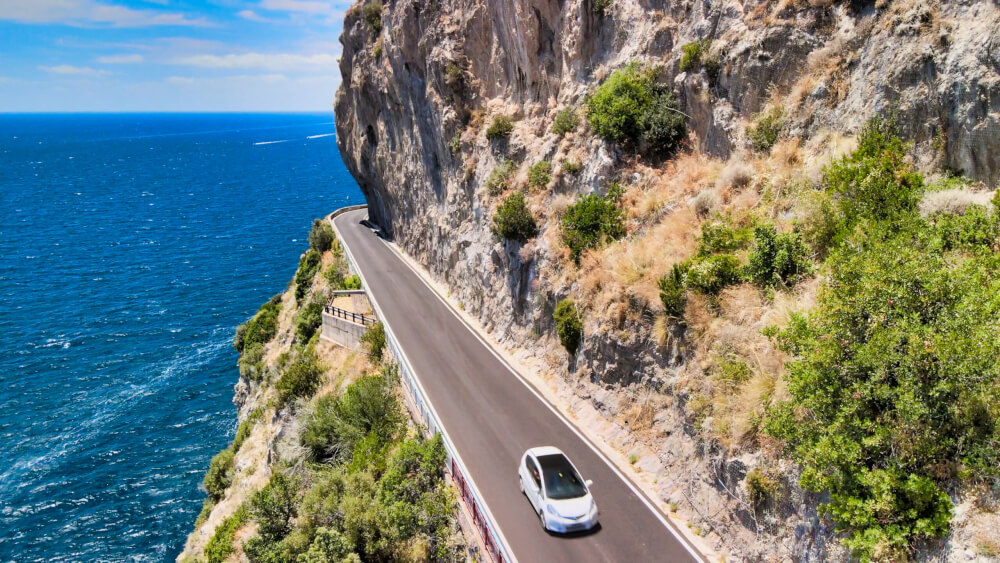
The winding roads of the Amalfi Coast are the stuff of legend… offering dreamy vistas at every turn, with a side of puke potential, and stress sweats.
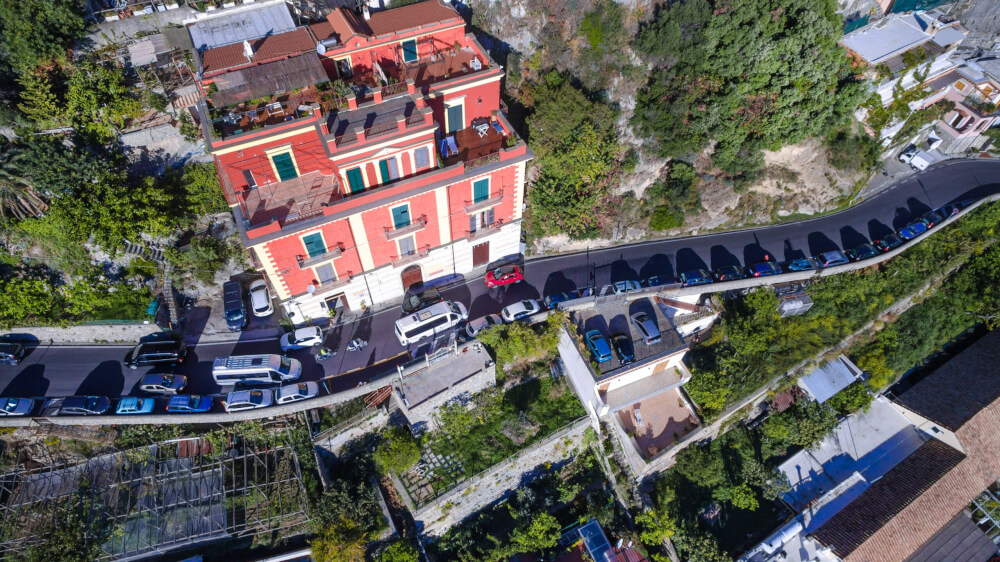
Because as idyllic as they look, they’re also incredibly narrow, congested, and notorious for expensive and elusive parking. All of which make renting a car very unappealing, especially for those who aren’t used to local roads (i.e. most of you).
We had a rental car because we were coming from Puglia, but our plan (which we stuck to) was to not actually drive while we were there, because yes the roads are pretty tough to navigate, a lesson cemented in our heads after just getting to our hotel in Furore.
And even if you are a skilled driver, there are still many rules and limitations that can catch you off guard, like the almighty ‘ZTL’, AKA the Zona Trafico Limitado. These zones are active in many historic centres during certain times, and fine vehicles if they enter when they’re not supposed to.
In peak season, the Amalfi Coast even has congestion-control rules that dictate who can drive based on what number their license plate ends with. So yes all that said, avoid renting a car.
15. Scooter rentals are another possibility
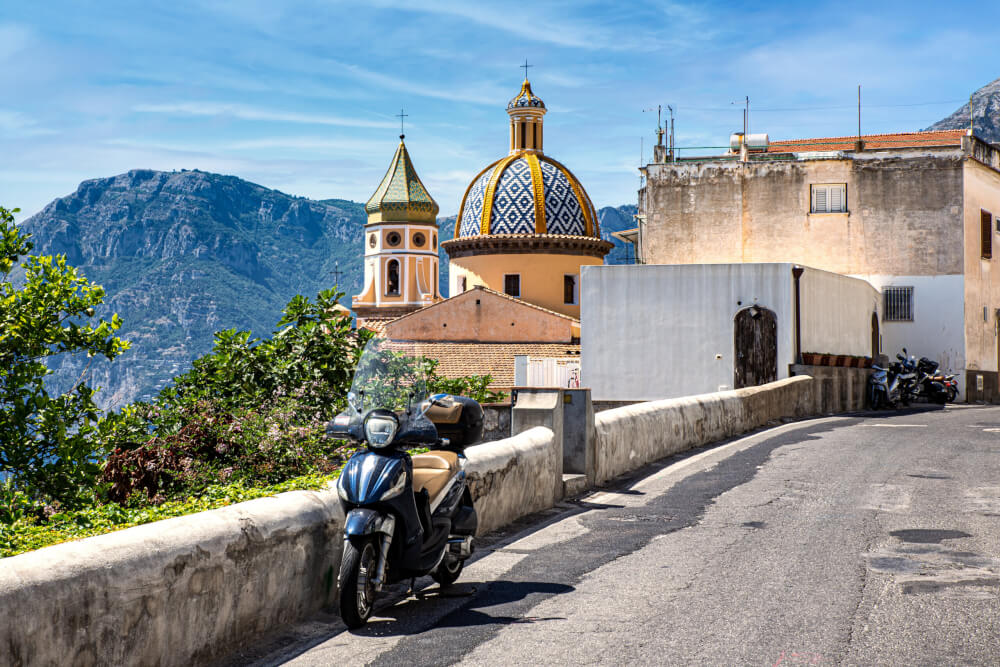
Now if you really want to scratch that itch of having freedom to go wherever, whenever, then I might recommend looking into a scooter rental… assuming you are confident and comfortable with them, of course.
A lot of people say it’s a terrible idea to drive a scooter on the Amalfi Coast due to how narrow and tight the turns are, but so long as you are a careful and confident driver, this might be worth considering if you are prioritizing flexibility, and independence above all else. I’ve had friends who have done this and said it was a great experience! It all comes down to your own comfort level.
16. Ferries are the best way to get around w/ public transport
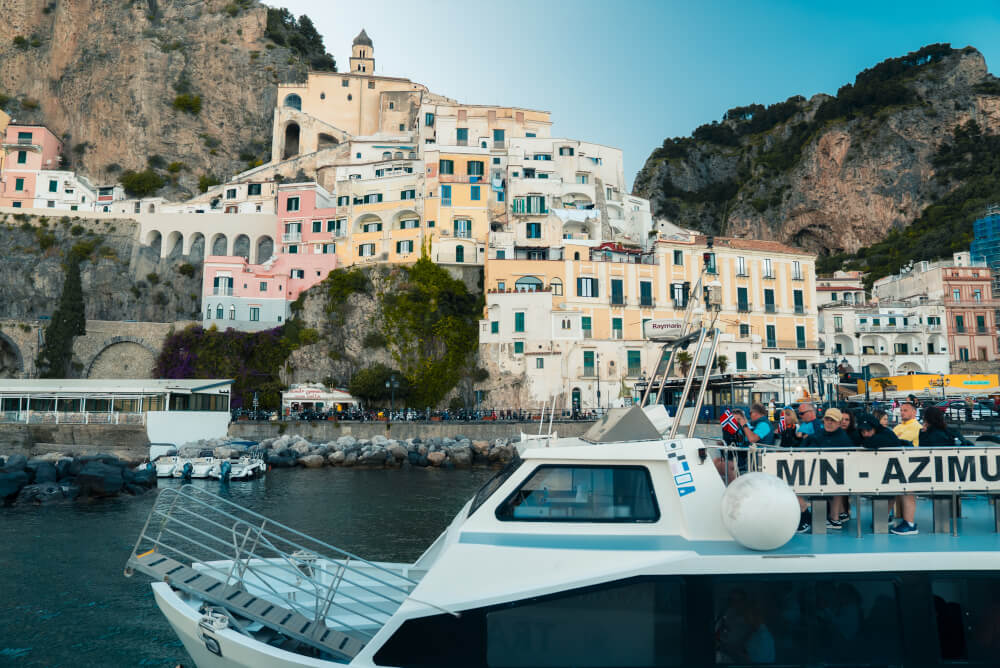
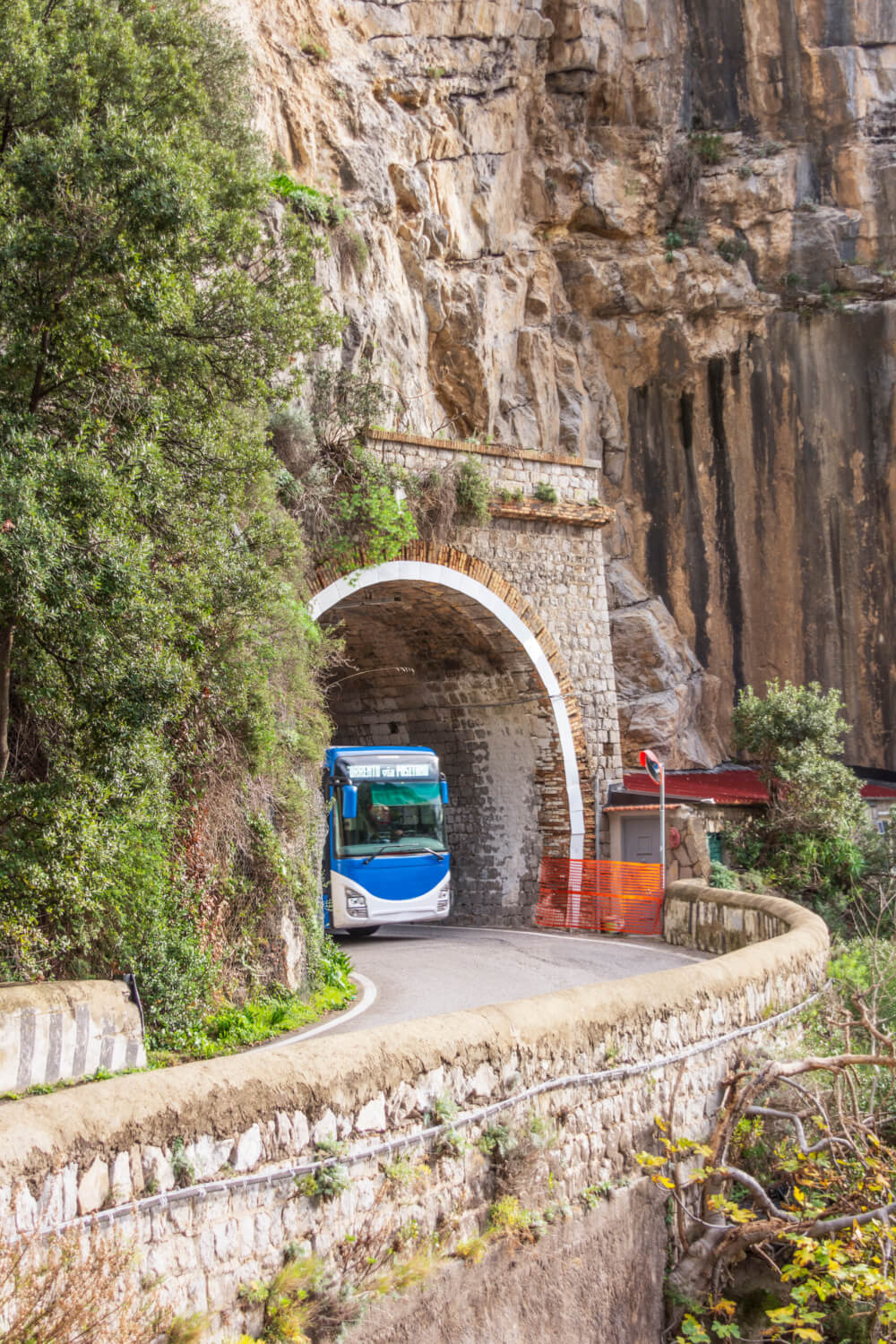
All that said, if you want to rely on public transport instead, then considering how much you’ve heard about the treacherous roads of the Amalfi Coast, it should come as zero surprise that the top recommended way of getting around is on the water. Luckily there are several ferry companies that can take you around to most points of interest.
The main companies that serve the Amalfi Coast include TravelMar & NLG... with other options including Alilauro, SNAV, & Caremar if you’re venturing out to places like Sorrento, Naples and Capri.
But – big but, beware that ferries can and do get cancelled when the weather isn’t cooperating… meaning you’ll be forced onto one of the region’s infamous buses. This leads well into my next must-know.
17. Never assume public transport will go smoothly – plan for delays
I could rage forever about the public transport situation on the Amalfi Coast but in brief, the reality is there just isn’t enough transport available to cope with the absurd demand.
So expect line ups. Expect full buses. Expect waiting hours due to said full buses. Anddd expect your day’s plan to be thrown off kilter as a result.
This is especially true if you are partway along a bus route rather than at a terminus stop because by the time buses load up in say Positano, the odds of there being space for you in Furore is not high.
This is why I would recommend staying in a base that you actually enjoy because the less you have to deal with the bus, the better.
Most importantly, do not make any assumptions about the bus system, like “oh, the driver knows I pressed the stop button” or “oh, the driver knows I want to board because I’m standing right here”. With how infrequent the buses are, you don’t want to take any chances… so do everything in your power to make your intentions and needs clear.
One time, I took the bus from Amalfi back to our hotel in Furore, and the driver went six or seven stops past ours before he noticed he had skipped us (and many others). This meant we had to walk in the dark back to our hotel in the end.
So yes with your expectations as bleak and low as they can be, let’s tackle some logistics.
18. Bus tickets must be purchased in advance & validated
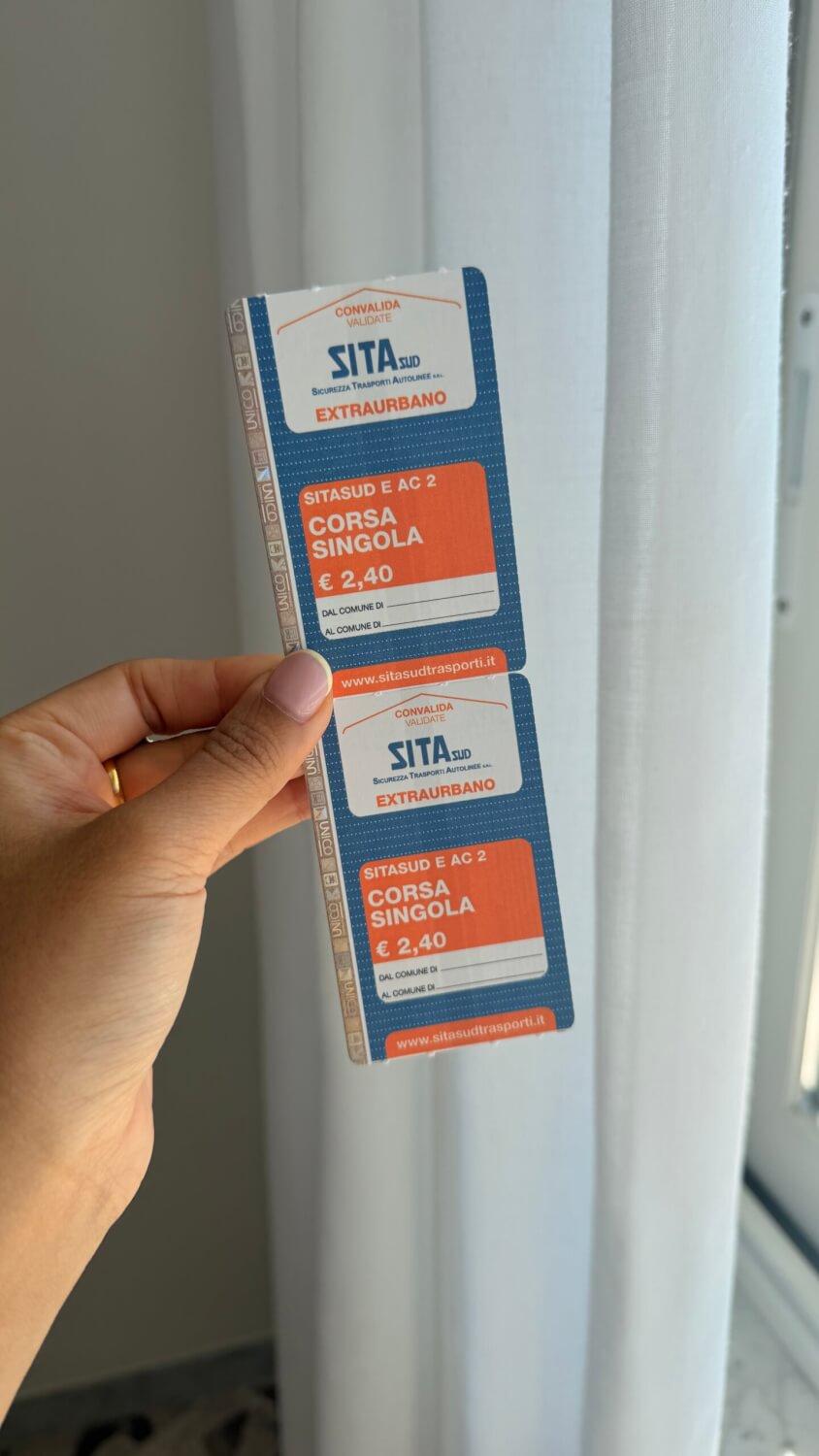
Remember: bus tickets cannot be purchased on board for buses here, so make sure you buy them ahead of time at a Tabaccheria (tobacco shop), or through the Unico Campania app if you’re travelling on a SITA bus (which you will be, in most cases). I’d recommend the app because not all tobacco shops sell bus tickets, and they have a silly habit of being impossible to find when you actually need them.
NOTE: There are also buses servicing mainly Positano, run by Mobility Amalfi Coast, but these buses require a different ticket.
All tickets need to be validated by the way – the physical ones, you validate by putting into a machine, and the app ones, you press a button to validate and then show the driver… though 99% of my drivers did not even care to look.
19. Triple check the bus schedule before you leave
Now for a very very very important tip, learned personally in the most embarassing way.
Make sure you consult the bus schedule before you gallop off to your day’s activities, because you will inevitably get distracted by all the beautiful views and activities, and forget to check later.
Like I did, when I found out the hard way that buses actually stopped running from Positano to Amalfi at 8:30pm, which to me felt super early. This was an epiphany made at 8:40pm, while waiting in line for dinner. Needless to say, we had already missed the last bus, at which point the only option left was to get a taxi.
Grand total for a 45 minute ride from Positano to Furore? Just under €180… including a surcharge for using my credit card
So, yes, check those bus timetables like it’s your full time job!
20. Learn the quirks of boarding the bus
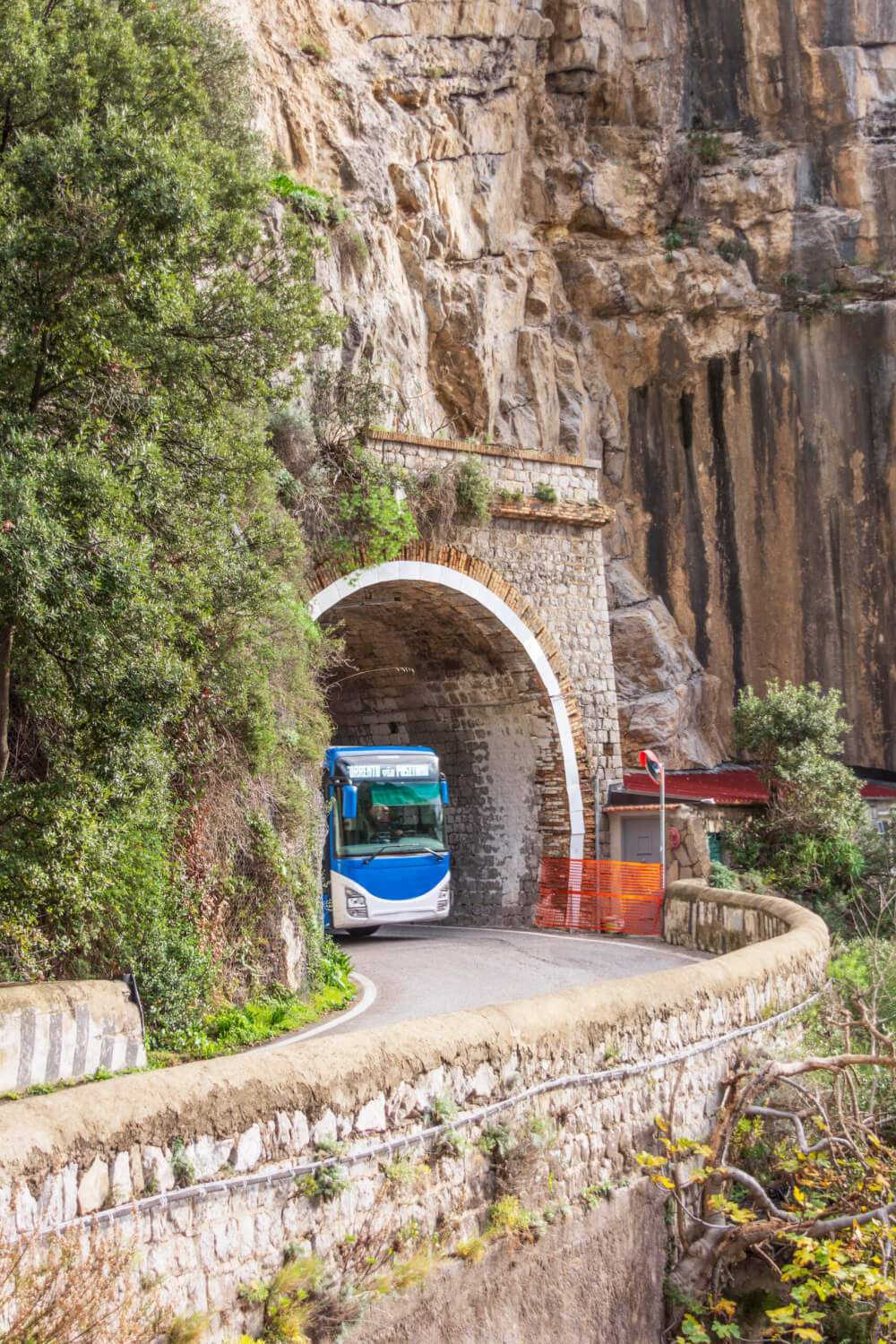
Not only are bus stop signs often quite ‘subtle’, you usually have to hail the bus, or flag the driver down, even if you are clearly stood there. As I said before, buses are infrequent, so you don’t want to take any chances.
Generally, the door is on the right side of the bus, so stand on the correct side depending on which way you’re headed – this will make everything way smoother.
And it goes without saying: if you have a choice, try to sit on the side that is aligned with the coast so that you can get the best, most spectacular views.
21. Hiking can be a great way to get around
Now, if all this bleak bus chat has scared you off, then I’d once again like to propose hiking as a nice way to get around.
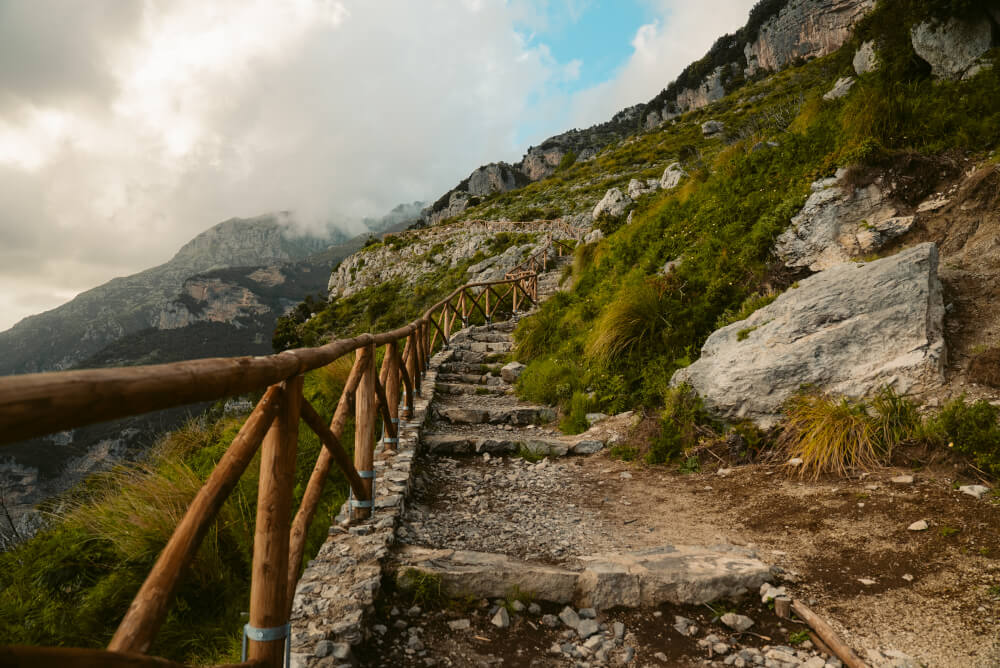
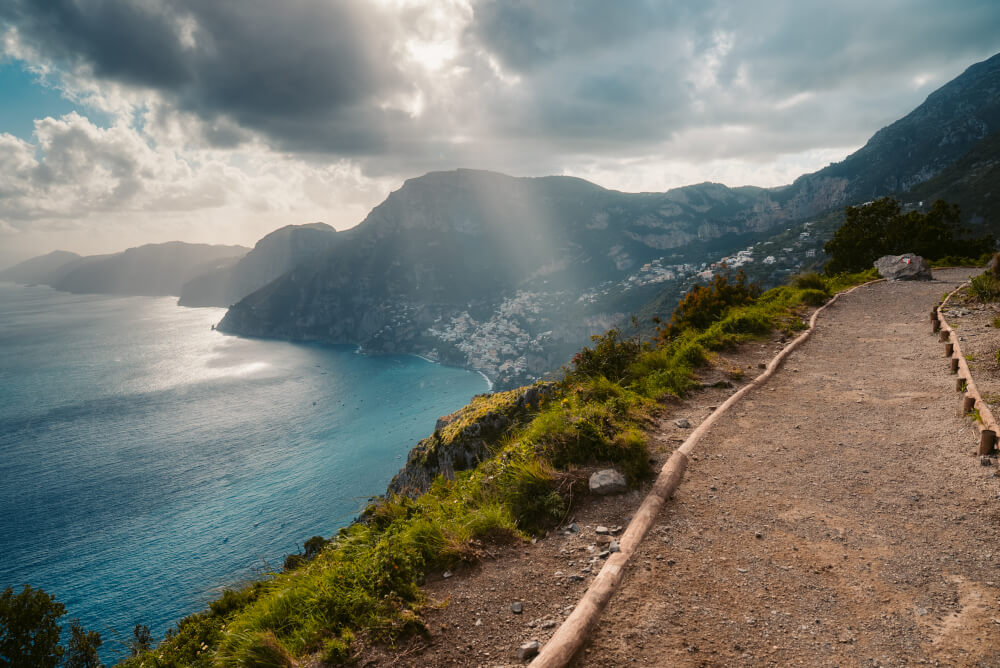
On our most recent trip, we did both the Path of the Gods from Bomerano to Positano and the Path of the Lemons from Ravello to Maiori… as well a hike from our villa in Furore down to the Fiordo di Furore.
Honestly, being able to enjoy the views fully without relying on a bus both ways was amazing. We also started our hikes later in the day which meant we largely had them all to ourselves. If you don’t mind a lot of downhill knee trauma, I can definitely recommend hiking as much as you can!
22. Always allow for extra time to make resos/bookings
Now regardless of how you’re getting around, do make sure you leave plenty of time for you to get… anywhere. Especially if it’s an important thing like a flight or onward transport.
Traffic jams and delays in general are incredibly common, especially in summer.
But even on foot, routes as they are given on Google Maps don’t capture the full depth of how tough some of these climbs are! A 20-minute journey can easily become an hour. So yes, allow plenty of buffer time.

23. Carry cash (especially small bills and coins)
Many smaller shops and even tobacco shops selling bus tickets, tickets, and everything will be cash only.
And even if they aren’t cash only, some of them add on a surcharge for paying with card.
That super pricey taxi ride we had to take for instance incurred a 5% credit card charge, so having some cash on you is definitely a good idea.
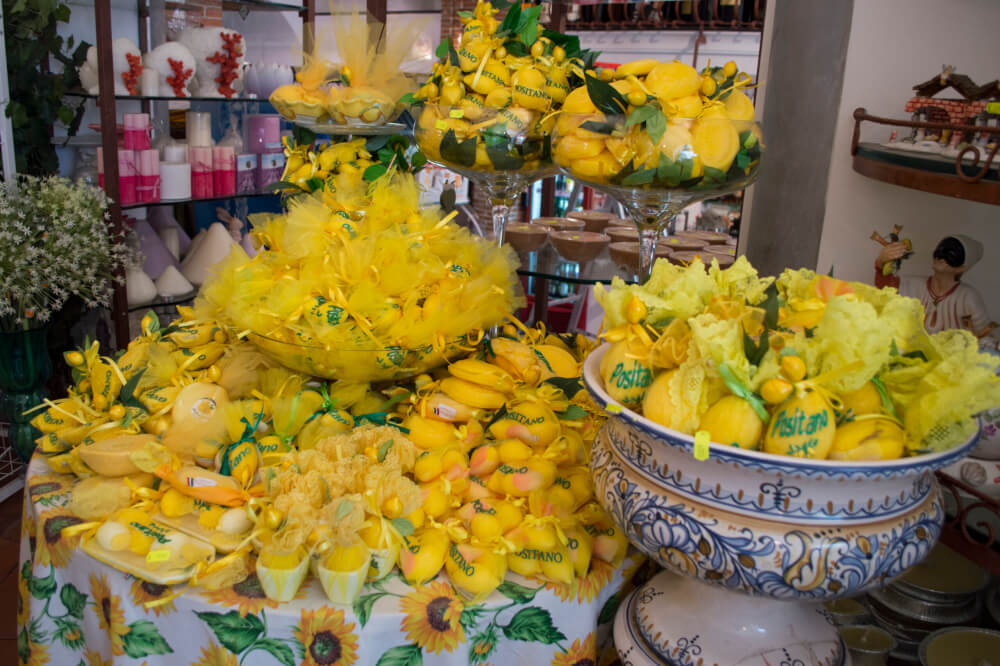
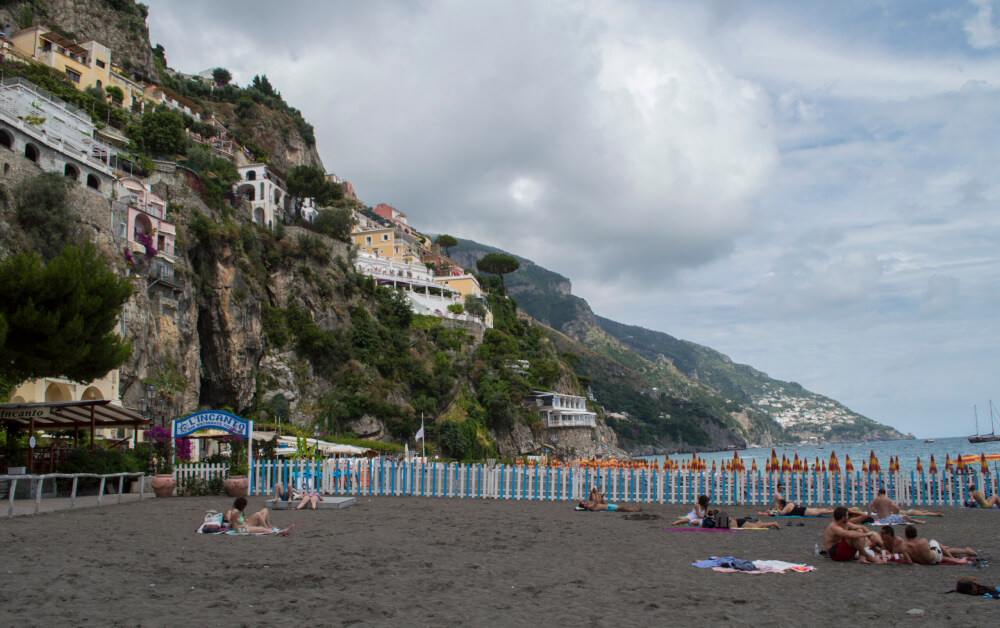
24. Beware that most beaches aren’t free
Indeed – most of the nicest beachfront spaces belong to private beach clubs. Sad news for us non-resorty mortals, eh?
If you’re looking for somewhere that will let you splish splash for free though, keep an eye out in your research for a Spiaggia Libera, which means free beach… though expect these to be crowded and often not as picturesque or amenity-filled of course as beach clubs.
25. Bring water shoes for the beach
Yes, I’m saving some of the sexiest advice for last. Unfortunately, the beaches here are rocky, and it is very possible that you will cut your feet open when you’re swimming… so definitely bring water shoes if you wanna be comfy (and oh so effortlessly cool).
26. Don’t trust Google Maps opening hours
… Speaking from plenty of personal experience.
Businesses around here often don’t keep things fully up-to-date online, so I’d advise you always have a backup plan, just in case things are closed when they aren’t meant to be.
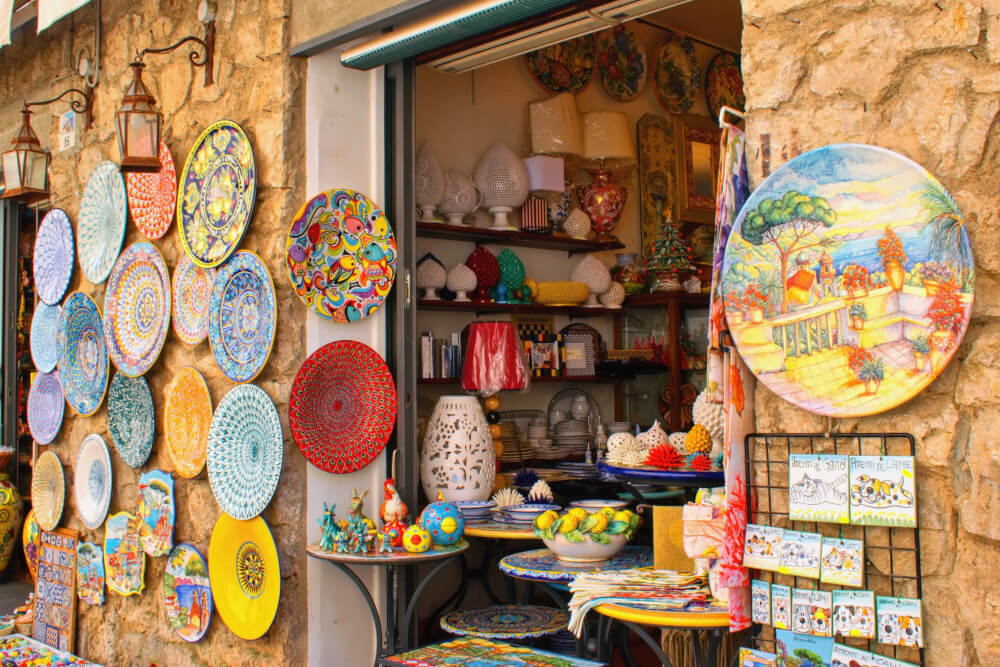
27. Always check prices before buying
Amalfi Coast sticker shock is truly something else.
Some of the prices I saw on my most recent trip shocked me. So yes, don’t make any assumptions about prices, and always make sure to check the tag… especially in Positano.
(Okay I get that some stuff is handmade and whatever but 200-300 euro for summer dresses!!?? I mean come on.)
Granted, I take this all to mean that I’m not the target market here, but yeah always check prices.
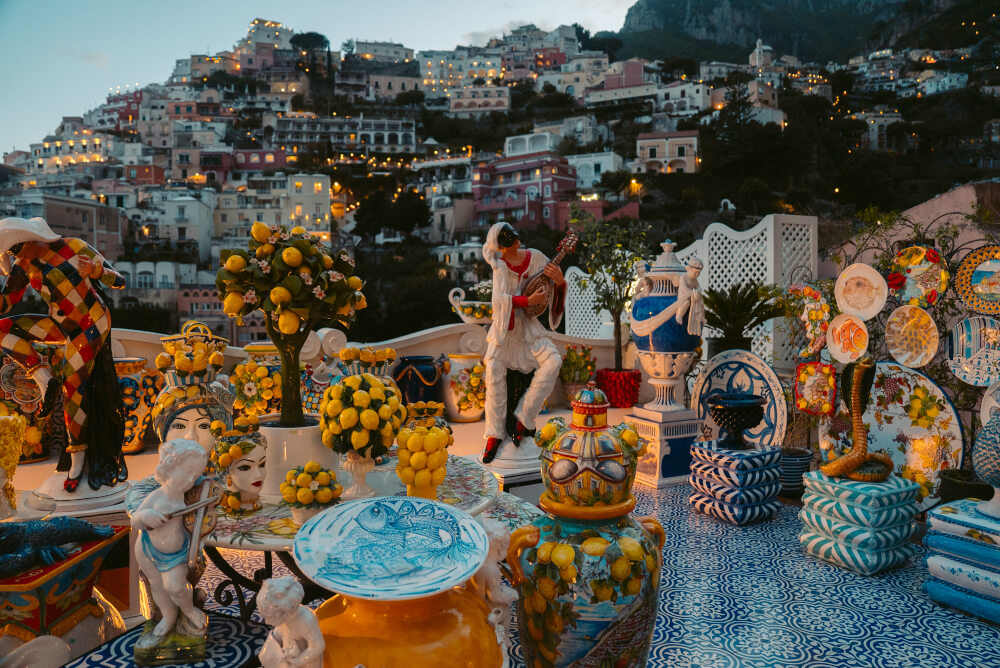
28. To avoid crowds, consider doling activities later
I alluded to this earlier, but it’s an important tip to reiterate if dodging crowds is your thing. Starting later (assuming you still have transport options) is a true cheat code for a more peaceful and quieter experience.
Did I Miss Any of Your Favourite Amalfi Coast Tips?
Let me know in the comments!