
*FYI - this post may contain affiliate links, which means we earn a commission at no extra cost to you if you purchase from them. Also, as an Amazon Associate I earn from qualifying purchases. Check out our Privacy Policy and Disclosure. for more info.
Sometimes, the word “fairytale” is enough to describe a pretty city. Regrettably, this is not the case for Krakow.
Because sure, Krakow does have an epic hilltop castle… with its own fire breathing dragon. And its Old Town is known for its sprawling square lined with pastel facades and endless horse carriages…
But there’s so much more to it than just magic-tinted aesthetics. There’s also vast underground ruins, absurdly delicious donuts, and more museums than your eyeballs could ever handle. It has to be said as well that there are darker chapters of history here that couldn’t be farther from a fairytale. But that’s all part of what makes a visit here so unique and interesting.
I’m serious – there is SO much to do here, and I can’t wait to share them all…! Below, you’ll find a list of all the best things you can do in the (way more than just a fairytale) city of Krakow. I hope you find it helpful!
Save this list of Things to Do in Krakow for Later!
You’ll be very glad you did.
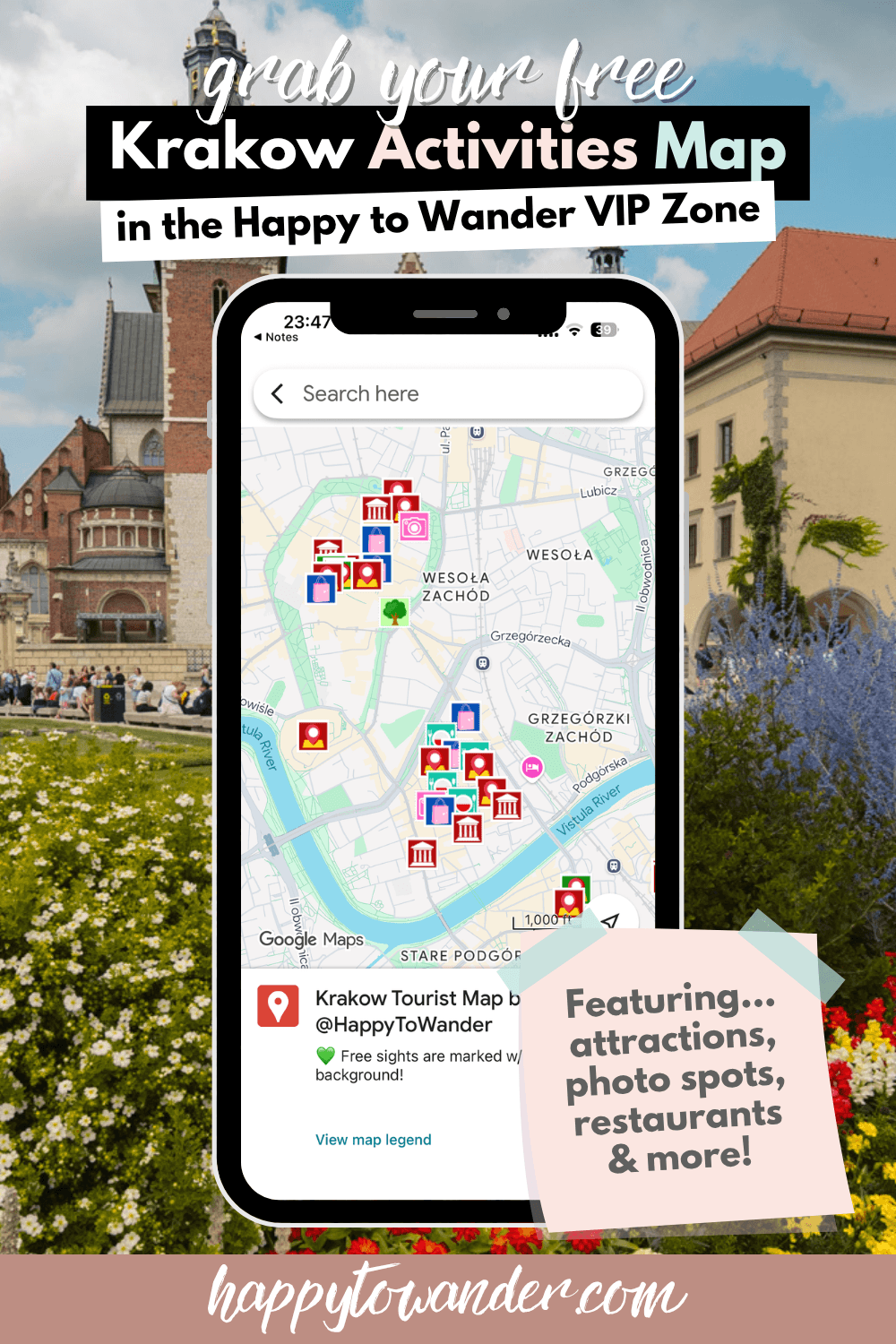
My Free Map of Things to Do in Krakow
For a free map that includes all the activities below (plus recommendations for food, drink, etc.), head to my VIP Zone!
1. Wander around the Old Town
For those with a short time in Krakow, this is without a doubt where you’ll want to focus your attention first. Krakow’s Old Town is compact, atmospheric, and stuffed with surprising attractions once you realize just how many museums and sights are concealed behind all the pretty facades.
Some highlights here include the Rynek Główny or Main Market Square which, at 200 meters by 200 meters, is said to be the largest medieval market square on the continent, lined with majestic mansions, shops, restaurants, bars, and museums… but more on this later.
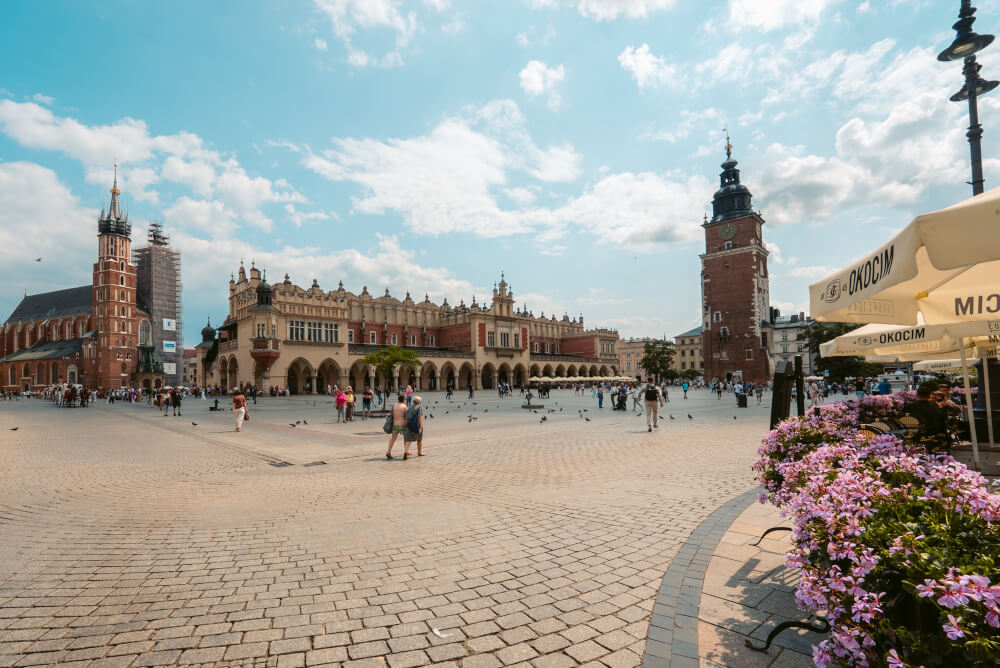
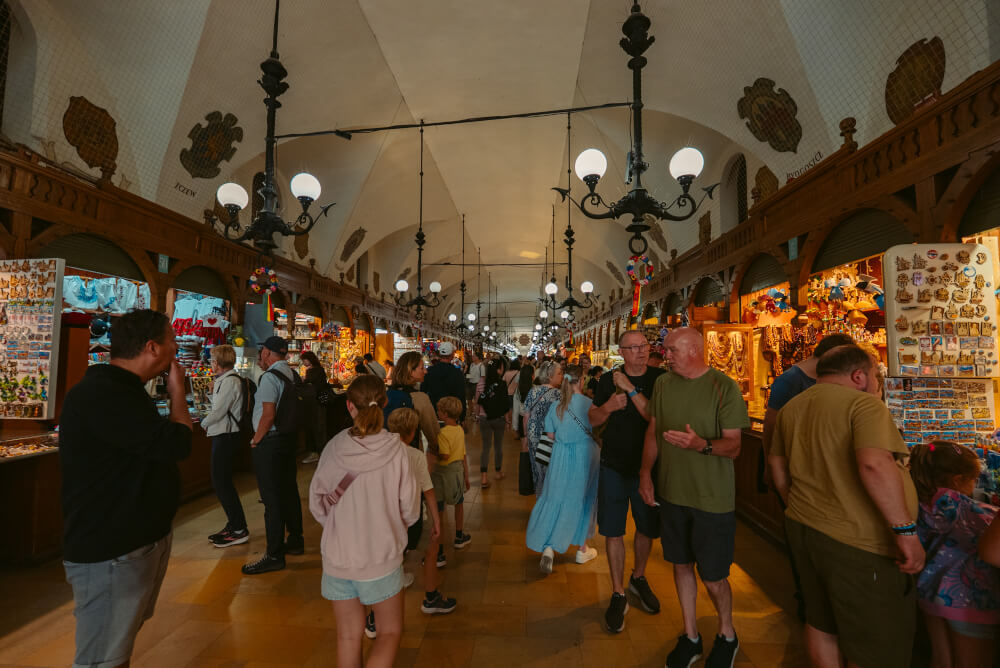
The centerpiece of this square is no doubt the Sukiennice, or Cloth Hall, which dates back to the 14th century, when it served as a major hub for international trade along the Silk Road.
While today, the market stalls mainly sell touristy souvenirs and toys, it’s still a beautiful space to have a quick wander through… though beware it does get incredibly busy in the afternoon.
Lining the square, you’ll find one of the city’s most iconic symbols, the soaring St Mary’s Basilica, known for its distinctive uneven twin towers. According to legend, this asymmetry can be owed to a petty brotherly rivalry, when two brothers were hired to tackle one tower each and obviously got too competitive in trying to best each other.
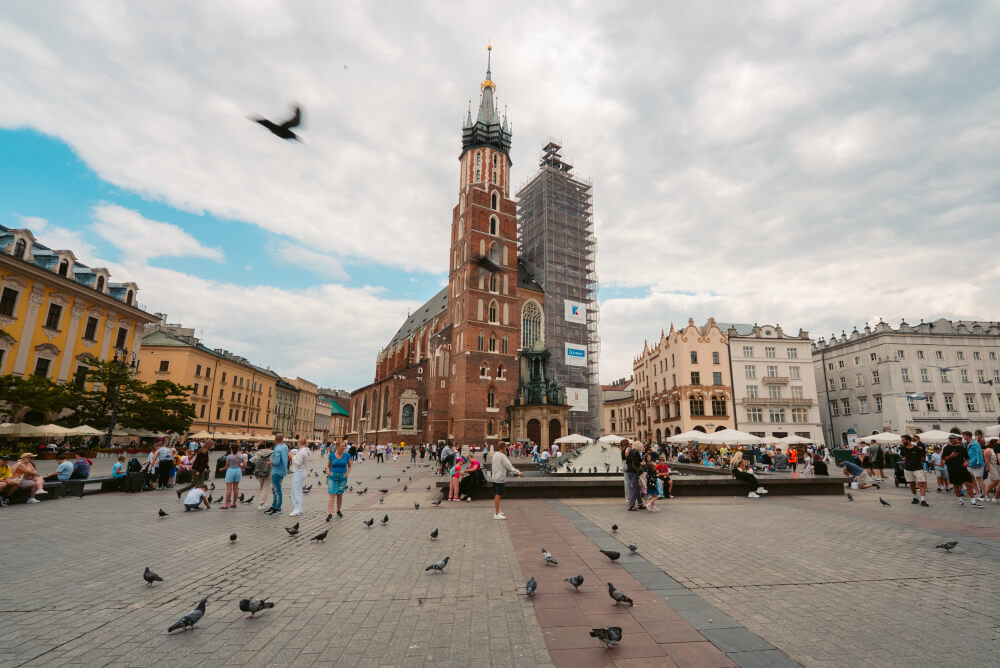
It is from these towers that the hourly bugle call known as the Hejnał Mariacki is played. This tradition dates back to medieval times and has been broadcasted daily at noon on national radio since the 1920s. If you think you’ve missed it, don’t worry – they actually play four times in different directions, so you have plenty of chances.
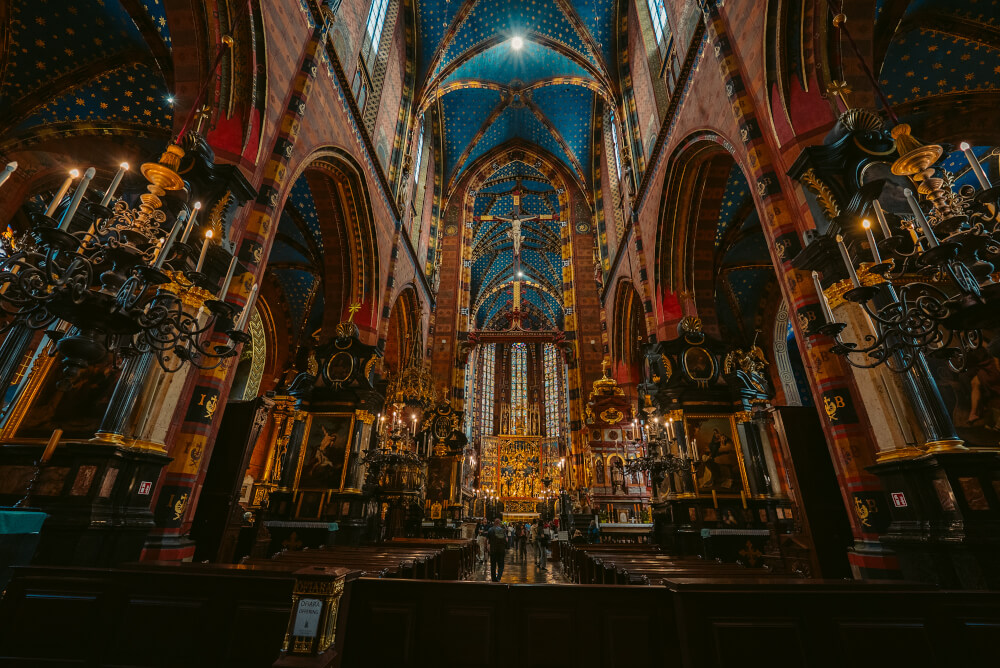
Of course, the interior of St Mary’s is a spectacular must-see thanks to its dramatic blue ceiling and its magnificent wooden altarpiece, considered one of Poland’s most valuable treasures… once seized by the Third Reich and stowed away in the basement of Nuremberg Castle, where it was found after WWII and brought back to Poland.
For those who dare, in the warmer months, an extra ticket can grant you access to a climb up the Bugle Tower, conquering 239 steps for one of the best views of Krakow.
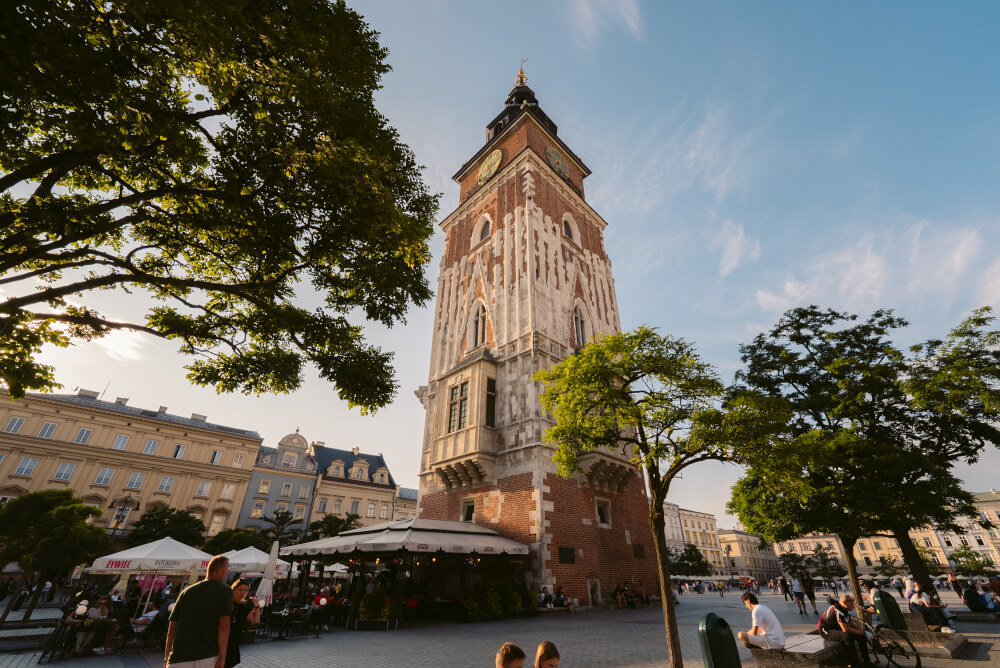
For a slightly less arduous climb, you can also check out the last remaining portion of the old Kraków Town Hall, its tower, where a quick skip up its 110 steps will give a bird’s perspective over the city’s sweeping main square.
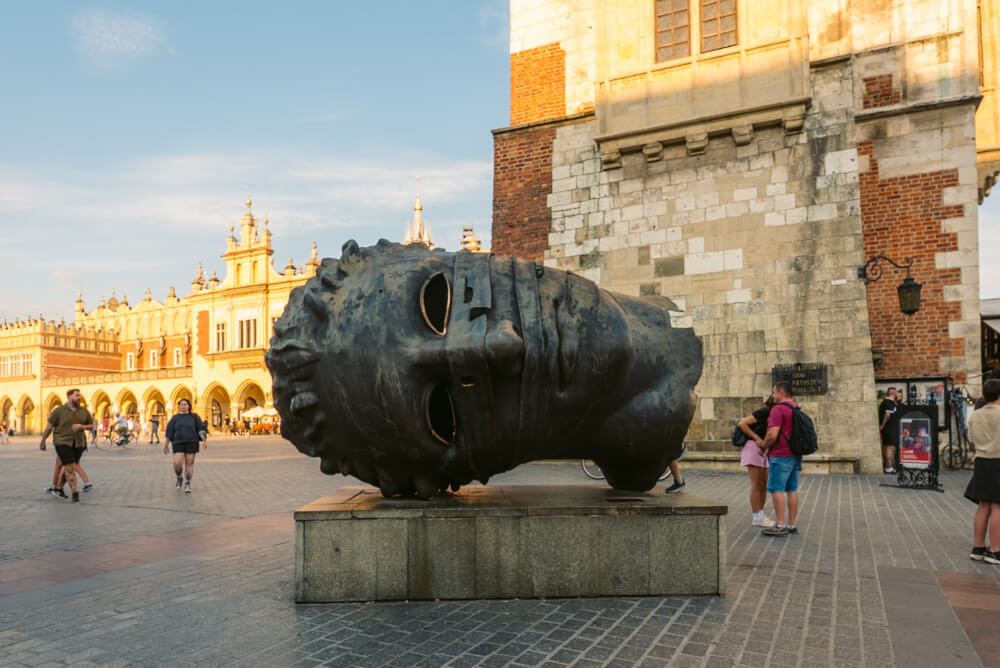
But there’s plenty to see from the ground too, like the Eros Bendato Sculpture — a massive bronze head lying dramatically on its side, created by Polish artist Igor Mitoraj.
And the historic bookshop at No. 23, said to be one of Europe’s oldest bookshops dating back to the early 17th century and still operating today.
Don’t forget to explore beyond the main streets though. The popular Floriańska Street, for instance, is far from the nicest. Be sure to check out the parallel Szpitalna Street street instead, where you can ogle the beautiful Juliusz Słowacki Theatre. And head over to Szczepanski Square, which tends to be a bit calmer and lined with lovely cafes.
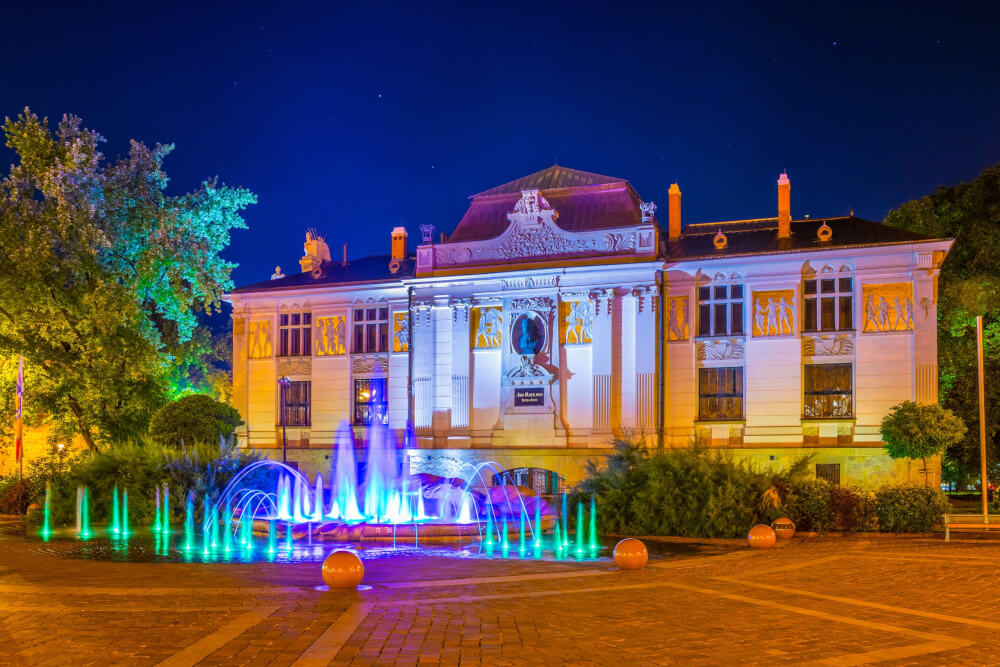
For those with more time though, it might also be worth it for you to…
2. Enjoy the many museums in and around the main square
If you want to dive deeper into local history, art, or…. weaponry, just know that there are tons of museums scattered around town, many of which are within the Old Town walls, including several branches of the Museum Narodowe w Krakowie (MNK) or the National Museum in Krakow.
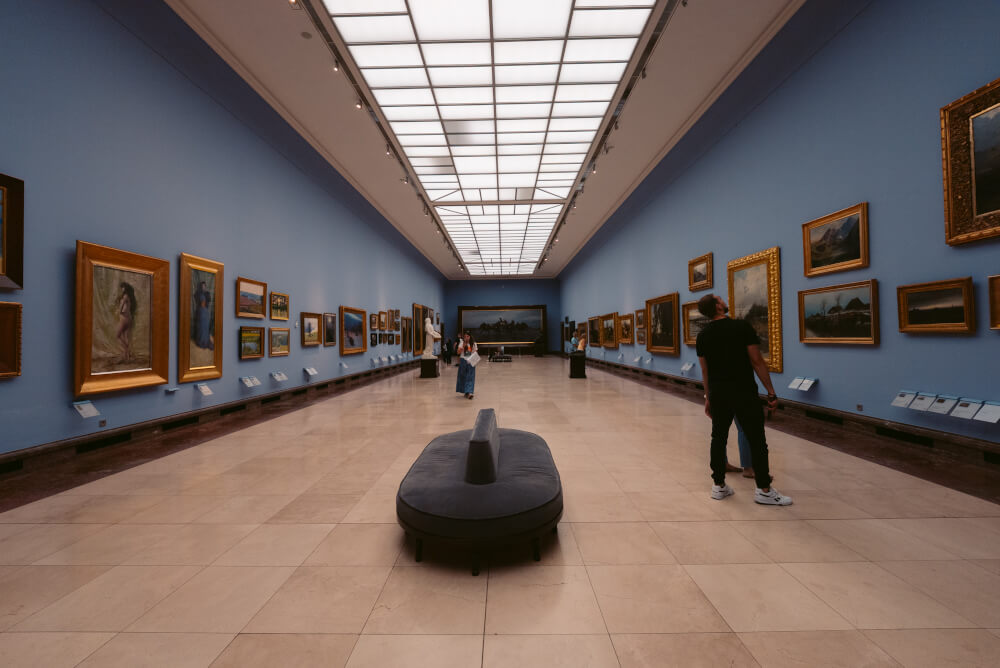
Above the Cloth Hall, for instance, you’ll find the MNK Sukiennice, a 19th-century Polish Art Gallery home to some massive paintings and dramatic historical works.
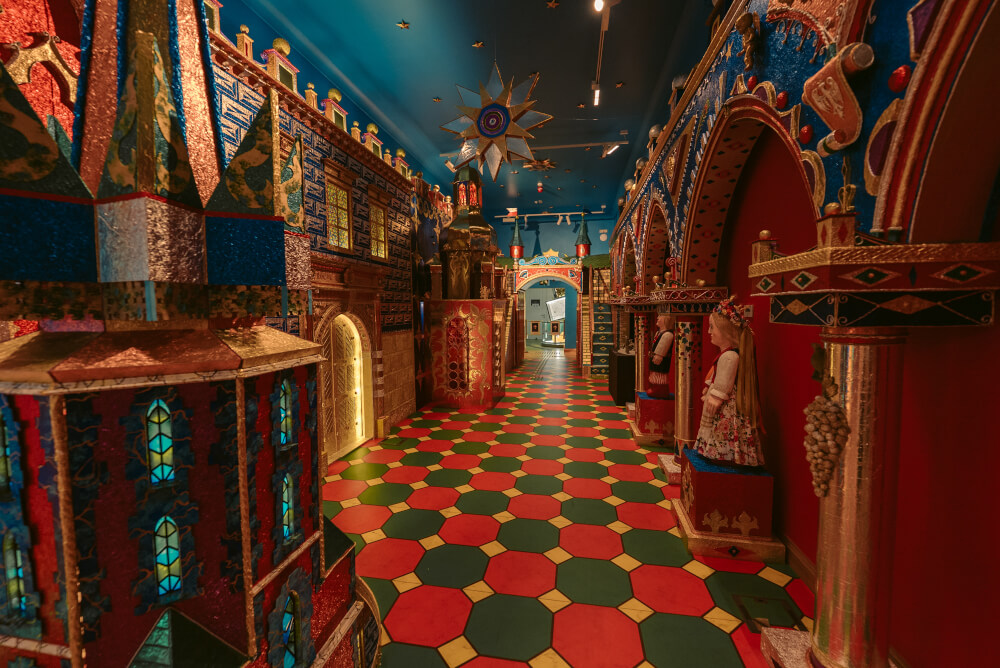
Steps away, you’ll find another branch of the MNK at Krzysztofory Palace, which offers a detailed walkthrough of the city’s history through multimedia exhibits, artifacts, and immersive reconstructions of everyday life in Krakow through the centuries.
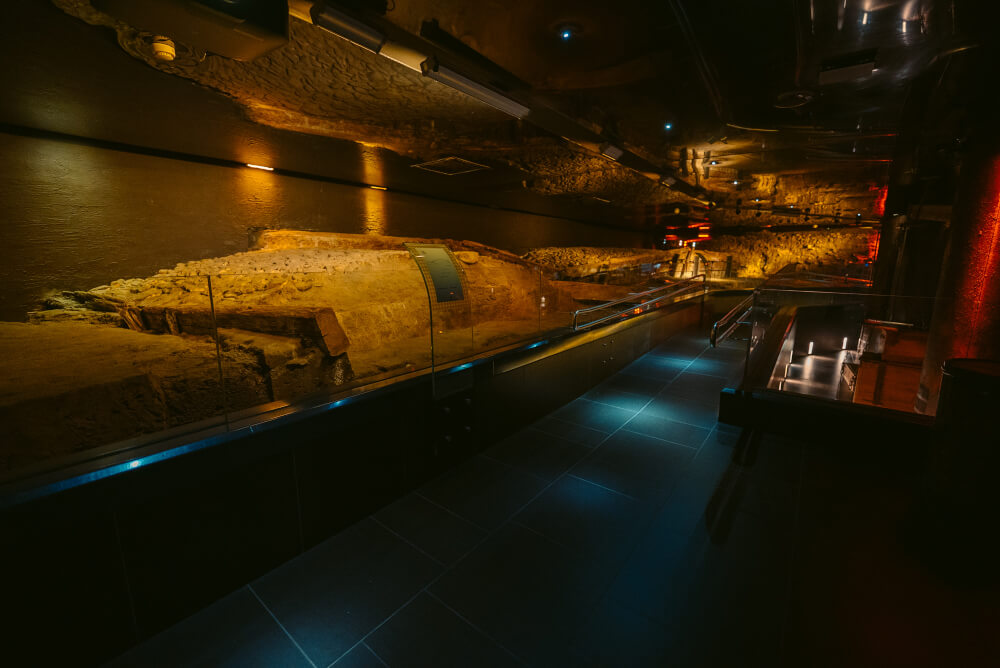
And of course, below the main square lurks one of Krakow’s most popular attractions, the Rynek Underground, a 4000m2 museum dedicated to showcasing the city’s extensive history through interactive displays and archaeological finds discovered here during a 2005 excavation.
The main exhibition brings Kraków’s medieval past to life through holograms, videos and immersive visuals like smoke machines and lasers… while elsewhere you’ll get to walk alongside ancient walls previously buried through centuries of development. You even get to watch some dramatic but informative historic films along the way.
For those interested in diving deeper into the past 700 years of Kraków’s history, and especially for those with young ones in tow, this is a very unique historic attraction for your Krakow bucket list.
Beware though – entry is capped at a few hundred people per time slot, so this is definitely one to book in advance.
If classic art, rather than history is more your speed, I can definitely recommend you…
3. Admire the collection at the Czartoryski Museum
In my opinion, this Old Town Museum is worth seeing for its beautiful interiors alone, including its gorgeous light-filled atrium with dramatic glass roof.
Inside, you’ll find the eclectic collection of a former princess, Princess Izabela Czartoryska, one of Poland’s earliest museum founders and avid collector of European art.
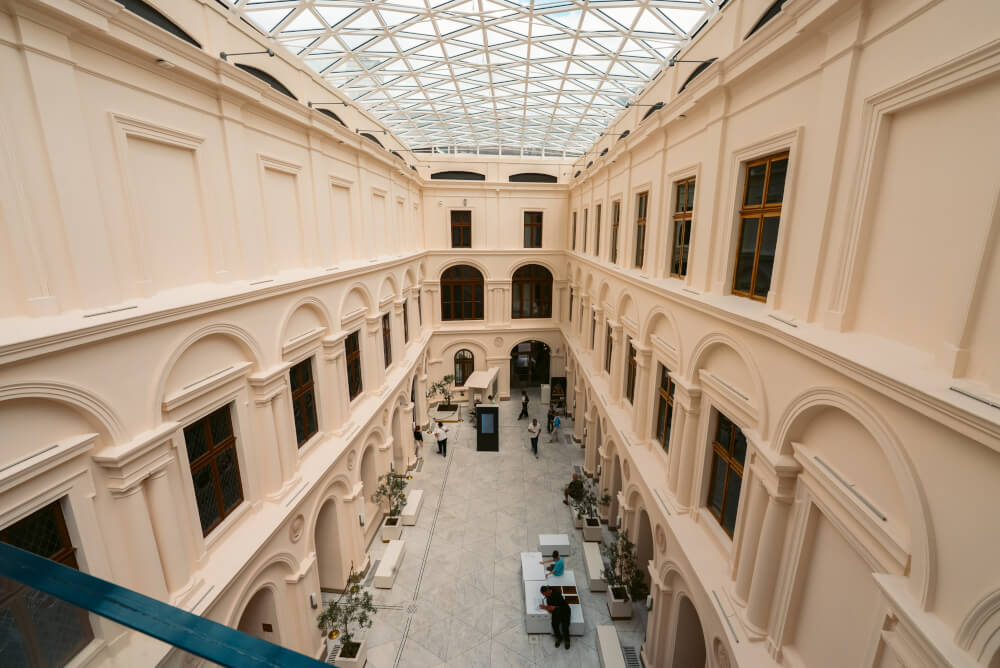
The most famous highlights of the museum’s surprisingly extensive collection include Leonardo da Vinci’s Lady With An Ermine and Rembrandt’s Landscape with the Good Samaritan.
But I have to say, the cakes in their café are pretty good too.
Housed in the same building is the small but fascinating MNK Arsenal. Inside, you’ll find a treasure trove of medieval weapons, armor, and military artifacts, all built into the city’s former defensive walls.
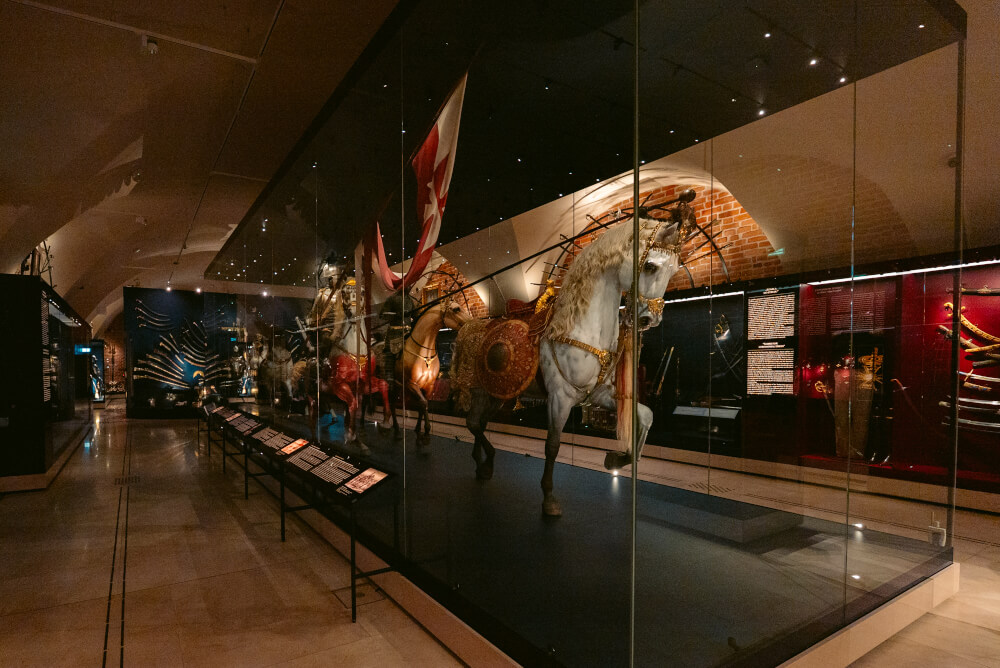
Speaking of defensive walls, though, another fun Krakow activity is to…
4. Explore the city’s old fortifications
Once upon a time, Krakow was a walled city surrounded by formidable medieval defenses that included thick stone walls, watchtowers and a protective moat designed to keep invaders at bay.
Today, visitors can still catch glimpses of this history at spots like The Barbican, which was once a key outer gateway protecting the northern entrance to the city and part of a sophisticated defensive network; today home to a small museum space with rotating exhibitions and historical displays.
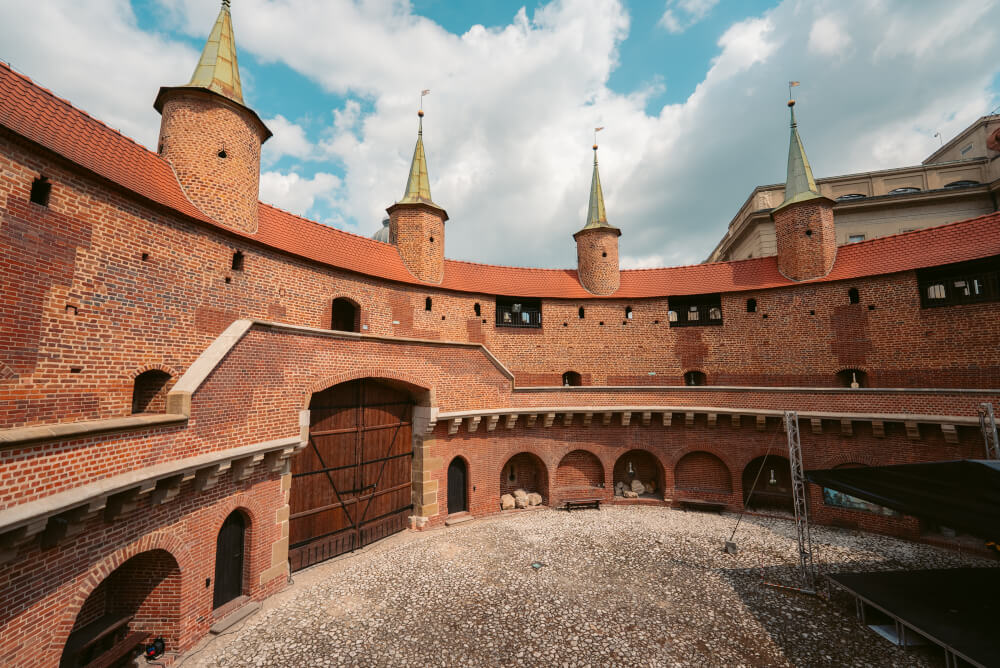
Visitors can also take a walk up along the Old City Walls for a small fee. This activity is quick but atmospheric and allows you to stroll along the preserved ramparts, admire the unique views, and imagine what it might have been like to guard the city centuries ago.
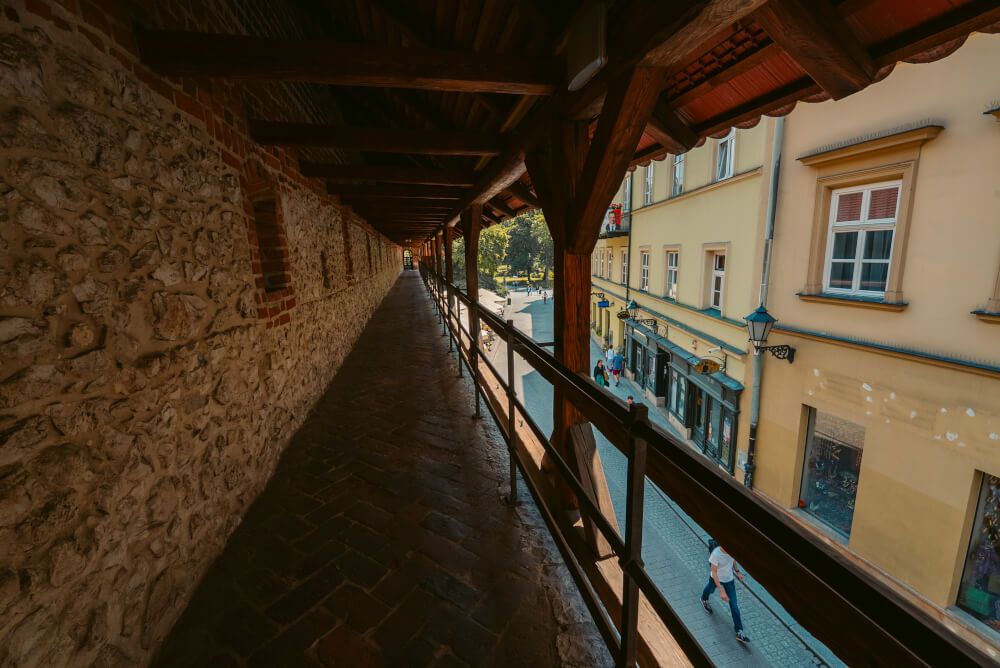
Of course, another way to experience the city’s former fortifications is a…
5. Stroll around the Planty
Granted, not much remains of the city’s former walls, but there’s something pretty cool in its place – the city’s Planty.
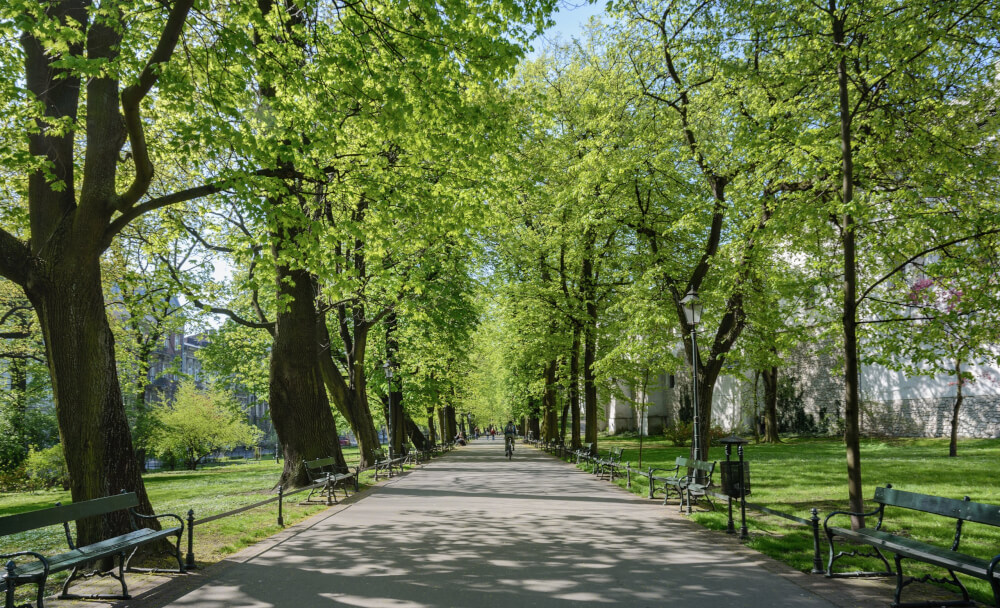
This leafy park forms a green ring around the entire Old Town, replacing the demolished medieval fortifications. It’s the perfect spot for a relaxed stroll, or if you’re in need of a break, a great place to plunk down and enjoy a little sightseeing break and snack.
There’s a branch of my favourite Polish donut chain close to here – Dobra Pączkarnia, so do as I did and grab one (or if I’m being honest, three) and go to town.
Once you’re fuelled up and full of Paczki, it’s time to…
6. Head to the epic Wawel Castle
Make no mistake – this castle complex is absolutely massive and packed with sights, so you need to plan to spend at least half a day here to do it justice. While entry to the grounds is free, there are a ton of spaces worth paying for to see inside to fully round out your snoopy expedition.
The ticketing system is a bit confusing, with the possibility of paying for just the spaces you want to see, or an all-in-one ticket that includes everything. Having done everything, here is each section of the castle explained, so you know what you’re getting yourself into.
The main exhibition space here is definitely the Castle itself, where you can pay for a general Castle ticket or a single ticket for just Castle I, the first floor… or Castle II, the second floor.
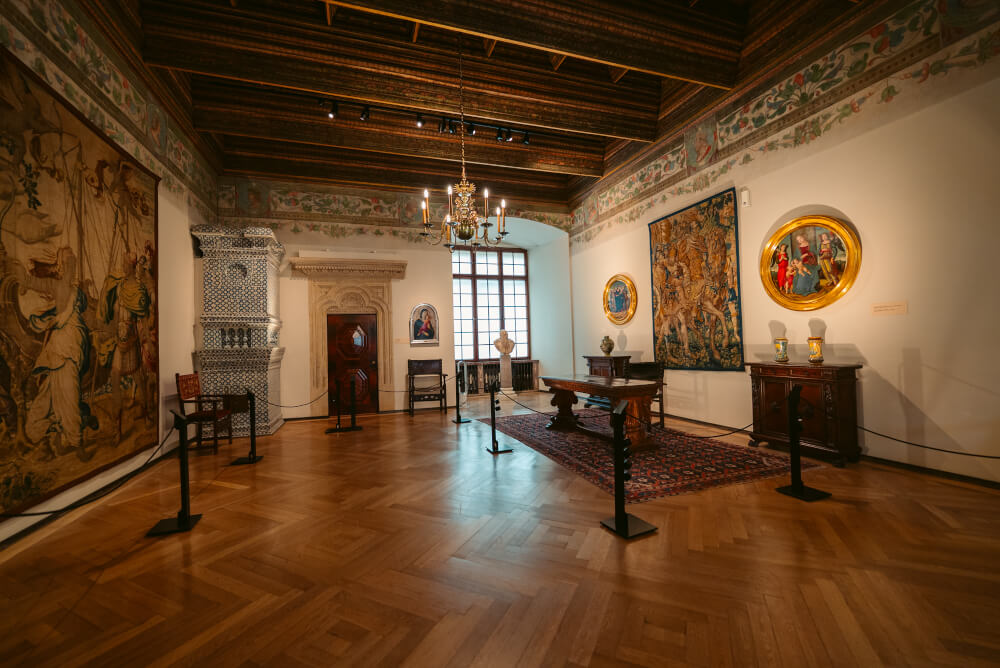
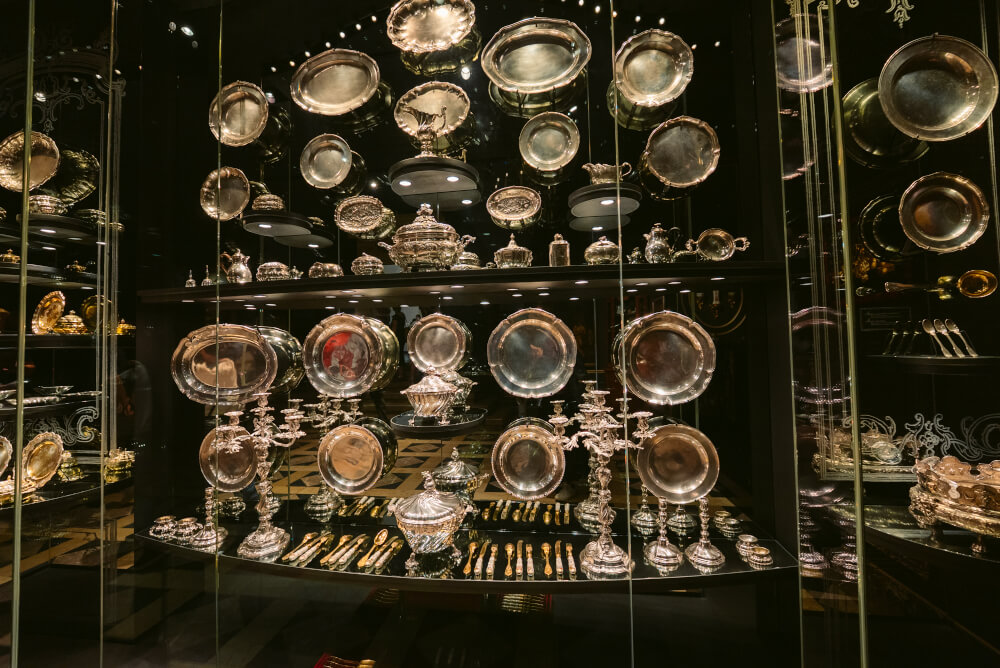
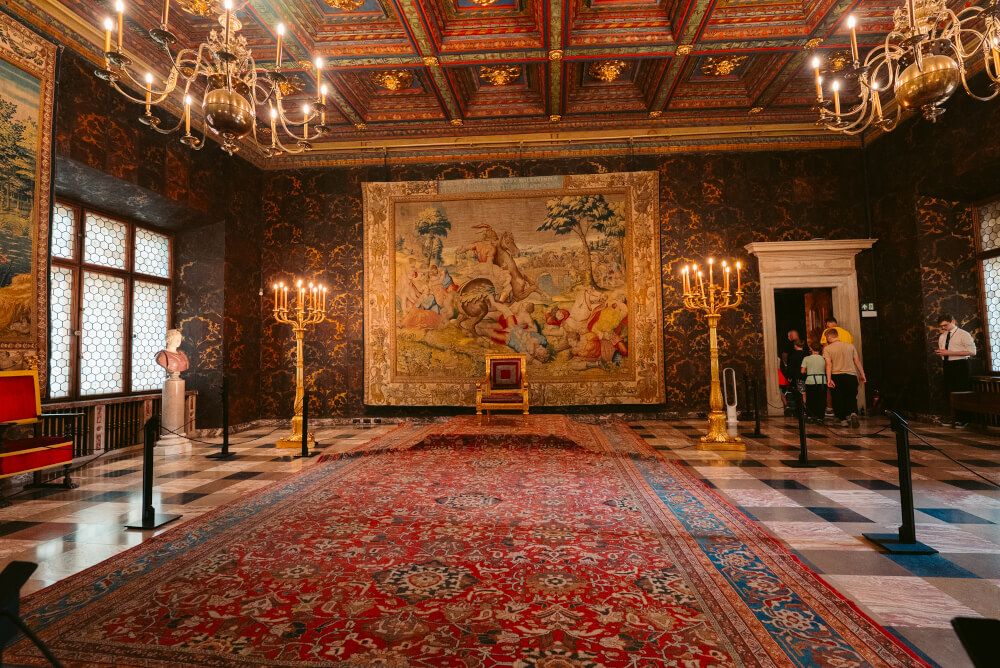
The first floor of the castle is home to the lavish State Rooms, decked out with ornate ceilings, grand fireplaces, period furniture and an impressive collection of Renaissance tapestries that once symbolized royal power and prestige. Along with the delightful Porcelain Cabinet, if you’re weirdly into crockery like I am.
The second floor of the castle is home to the Royal Private Apartments, offering a more intimate glimpse into how Polish kings and queens actually lived, complete with richly decorated chambers and historic artworks like the castle’s collection of Ottoman Turkish Tents.
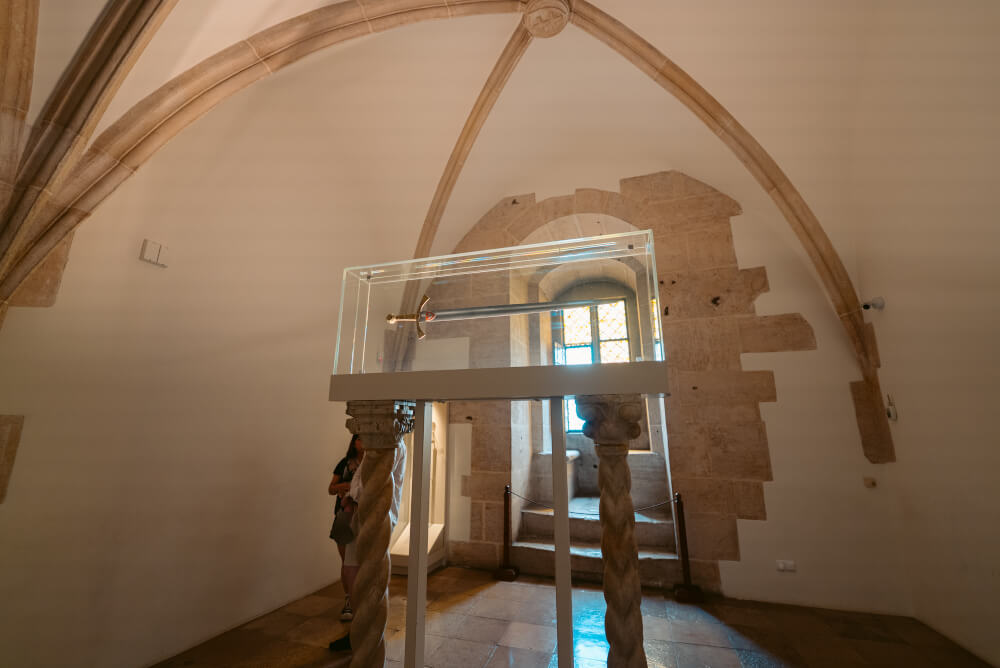
You can also just get an individual ticket for the Crown Treasury, which houses Polish royal regalia, ceremonial swords, jewels and historic insignia, including the famed coronation sword known as Szczerbiec.
Another separate ticketed area is the Castle Underground, which features archaeological remains of earlier structures, and artifacts uncovered beneath the hill over centuries… split between two spaces: the Lost Wawel and the Lapidarium.
A ticket to this also includes a visit to other small exhibition spaces including The Church of Saint Gereon.
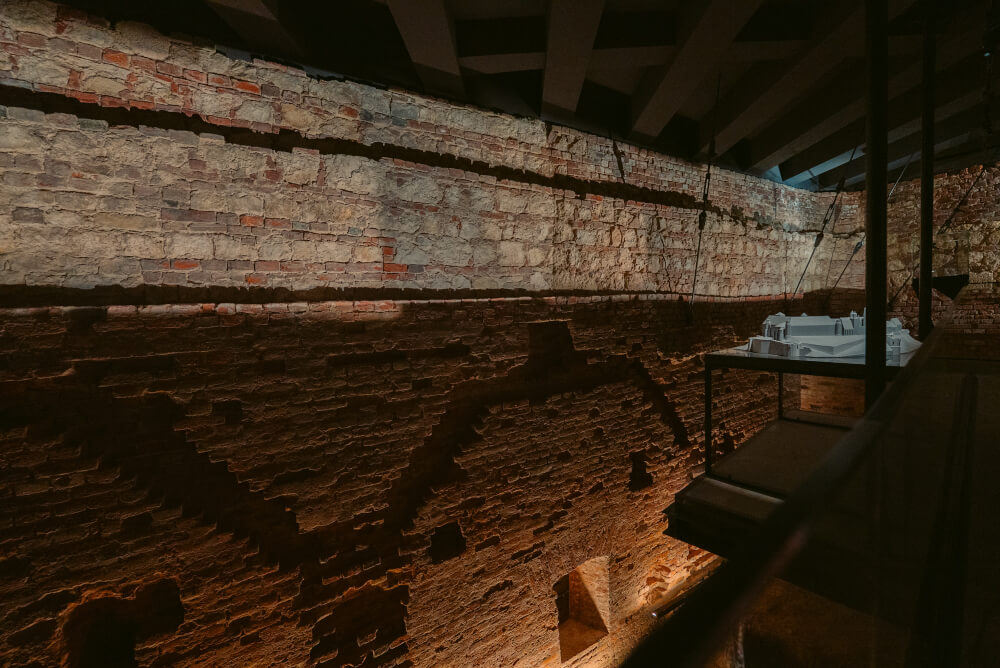
A relatively new addition to the castle’s attractions list is the new Between the Walls exhibition at Wawel Underground, which is a short timed audio-visual experience that immerses you in the layered history of Wawel Hill through projections, sound design and atmospheric storytelling set within the castle’s ancient defensive walls
There’s also the Armoury you can visit, which is home to a collection of historic weapons, suits of armor, shields and military artifacts that once equipped the kingdom’s defenders.
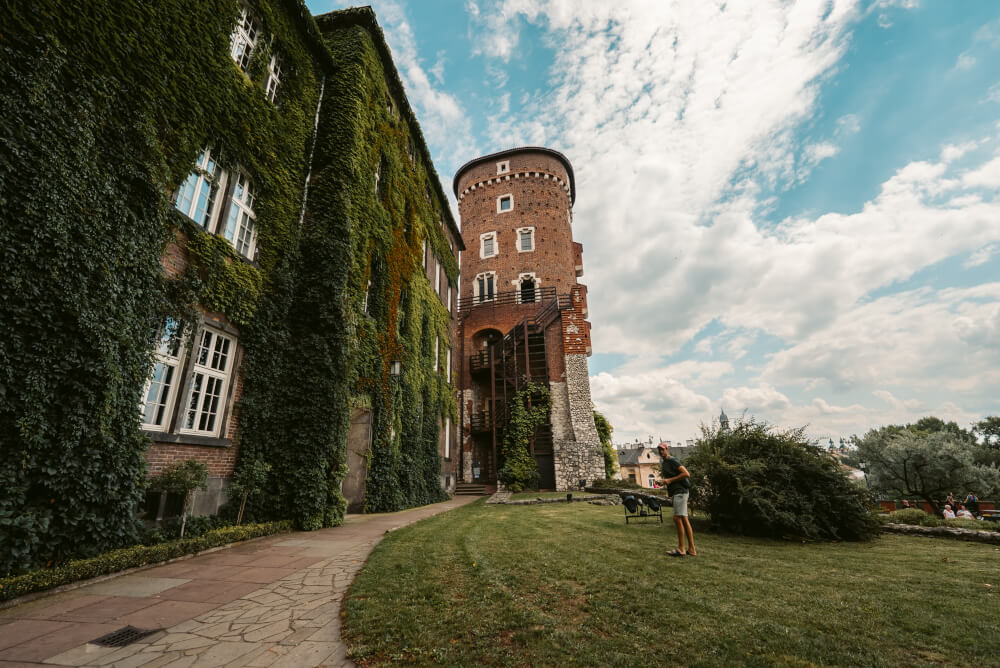
Plus with the Wawel for Enthusiasts all inclusive ticket, you also have access to other sights, including the option to climb up Sandomierska Tower, a tower once used for defensive lookout and as a prison for important captives, now mainly nice for pretty views.
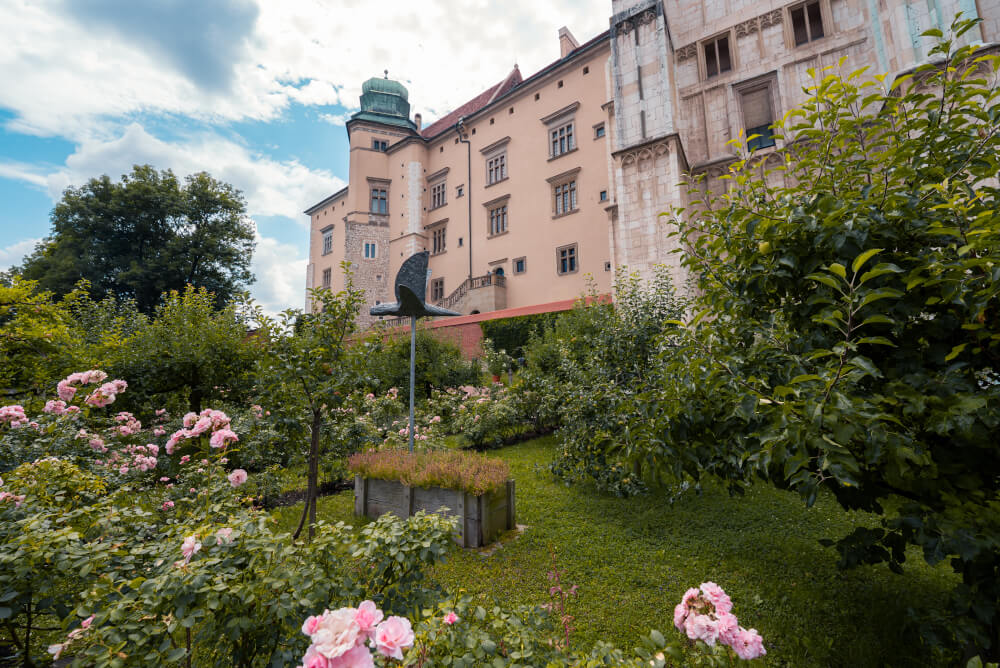
And also the Royal Gardens, which are beautifully landscaped terraces overlooking the Vistula River, perfect for a peaceful wander once you’ve had your fill of royal interiors.
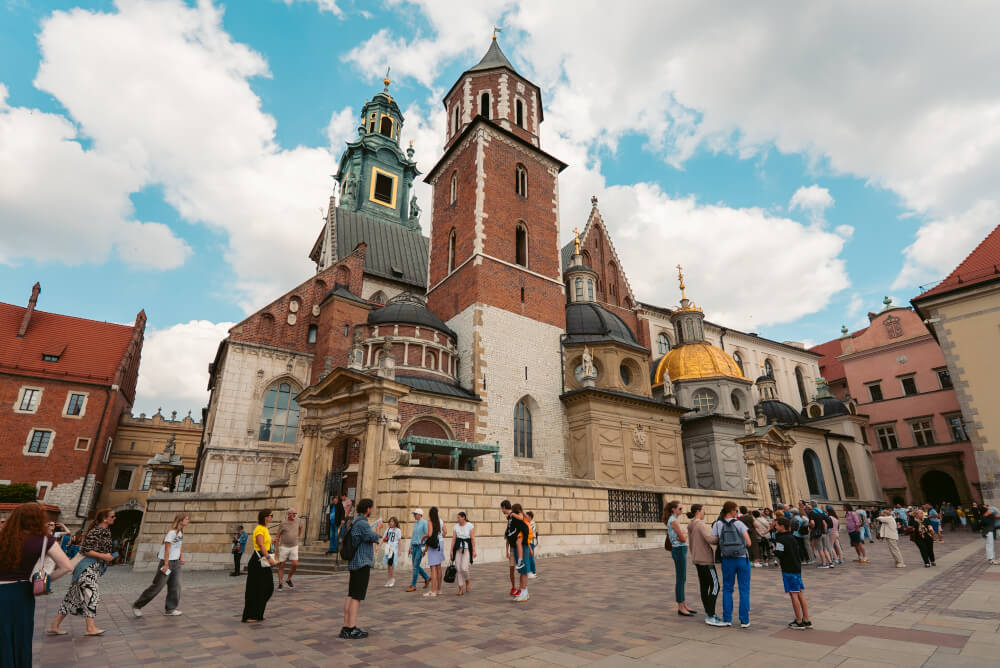
While up on the hill, you can also admire Wawel Cathedral, which is already gorgeous from the outside, but if you have time and around 22 PLN, is worth seeing inside as well, with ornate chapels, royal tombs, the massive Sigismund Bell, and centuries of Polish monarchs laid to rest beneath its floors.
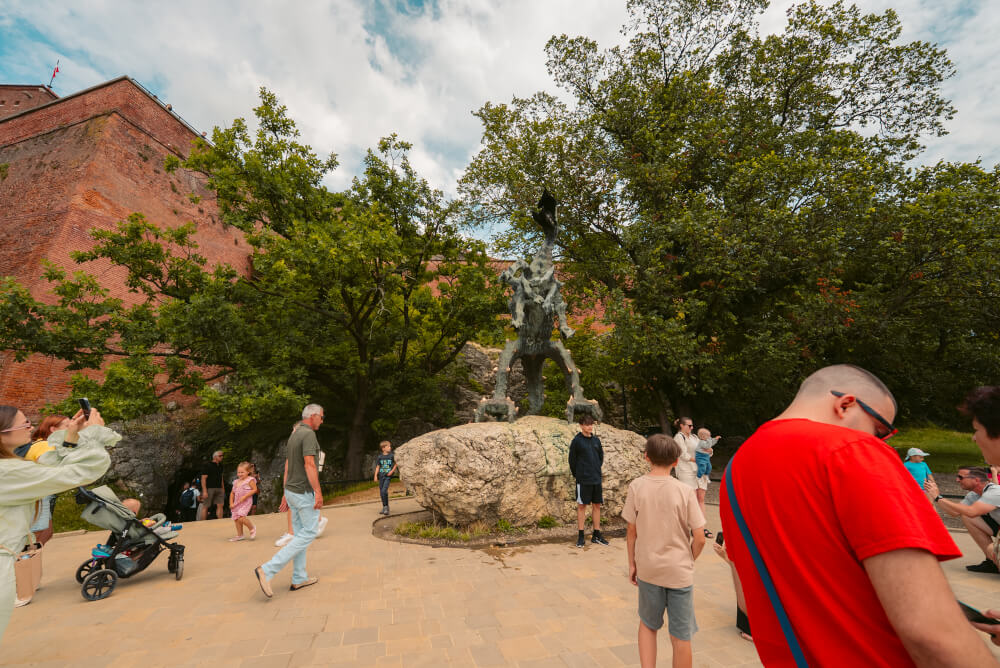
And at the end of your visit, be sure to head through the Dragon’s Den for a shortcut down to the river through a flight of about 135 steps that will put you right in front of the famous fire-breathing Wawel Dragon statue.
Next up, do be sure to go for a…
7. Wander around Kazimierz
This is Kraków’s Jewish Quarter.
For much needed context, it might make sense to book a walking tour of the area, which was once home to one of the largest and most vibrant Jewish communities in Europe before the devastation of World War II, but highlights of a visit here include the Old Synagogue, known for its fortress-like Gothic architecture and its role as one of the oldest surviving synagogues in Poland. Today, it is home to a museum dedicated to Jewish history.
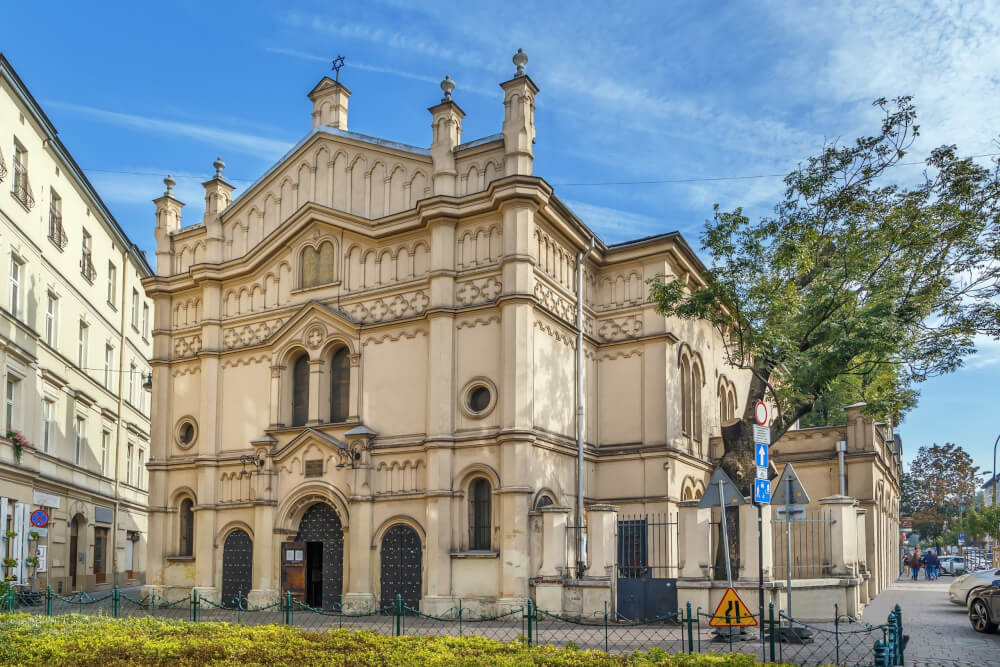
This is the best known synagogue of the district, but by no means the only one, nor the only one open to visitors. Other synagogues open for public visits include the Remuh Synagogue, known for its adjacent historic cemetery filled with centuries-old tombstones; and the Tempel Synagogue, known for its ornate Moorish Revival interior and still-active cultural events and concerts.
If it interests you, Kazimierz is also home to a few churches worth seeing as well, including the Corpus Christi Basilica and St. Catherine’s Church.
If not, on the museum front, this quarter also has a surprising number to offer, the most prominent of which is the Galicia Jewish Museum, which is home to powerful photography exhibitions aiming to present Jewish history from a new, unique perspective.
Its permanent photographic exhibition, Traces of Memory, captures the remnants of Jewish history found in Poland’s countryside, while various temporary exhibitions tackle other topics related to Jewish victims of the Holocaust, and Jewish culture as a whole. I thought this museum was excellent, and definitely worth visiting for some moving photography and displays.
Those with the interest can also check out the Ethnographic Museum of Kraków, which explores Polish folk culture through traditional costumes, crafts and everyday objects housed in a former town hall; and the Museum of Municipal Engineering, which features quirky displays on trams, vintage vehicles and the development of urban technology in Kraków.
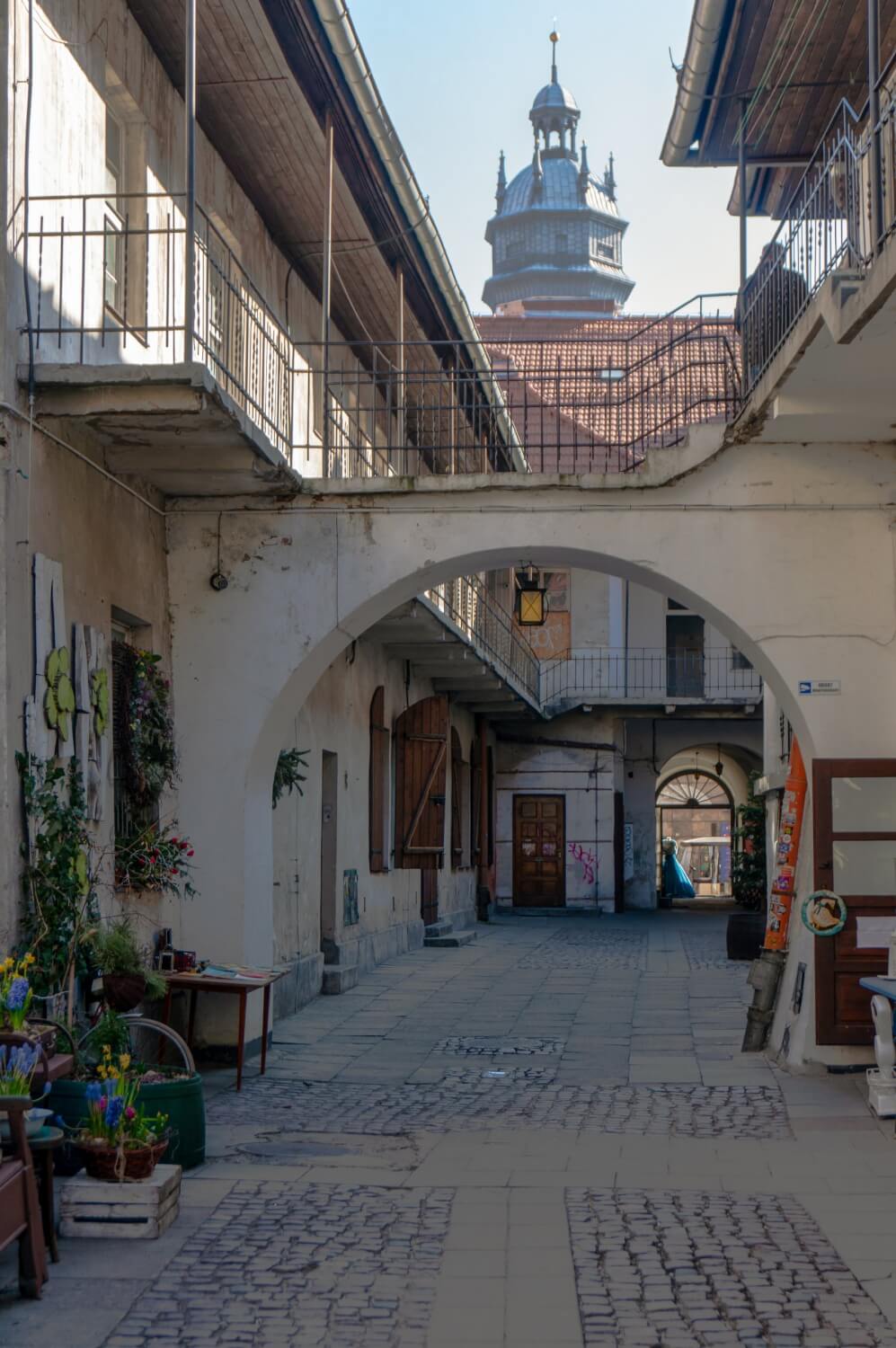
For film buffs, another highlight of the district is a visit to some of the most iconic locations from Schindler’s List, which famously filmed in the area in 1993. The beautiful passageway between ulica Beera Meiselsa 17 and ulica Józefa 12, in particular, has become known among tourists as “Schindler’s Passage” thanks to its memorable appearance in the film’s haunting ghetto scenes.
Beyond regular sightseeing, though, what this district is known for today is its eclectic assortment of restaurants, shops, street art, and street food. During my visit, I noticed lots of food trucks scattered around the area, with even bagel vending machines on site to ensure you never go hungry.
An especially famous specialty is zapiekanki, a tasty Polish answer to pizza, made up of a halved baguette topped with cheese and various toppings, toasted until bubbly and finished with a generous drizzle of sauce.

But for a nice sit-down experience, I really enjoyed eating in the courtyard at Restauracja Wręga, which is known for its hearty Polish classics and cozy atmosphere.
And next time, I would definitely love to check out the famous Once Upon a Time restaurant, which is housed in four historic Jewish shops, today converted into one frozen-in-time restaurant filled with vintage knickknacks, known for their traditional Polish cuisine.
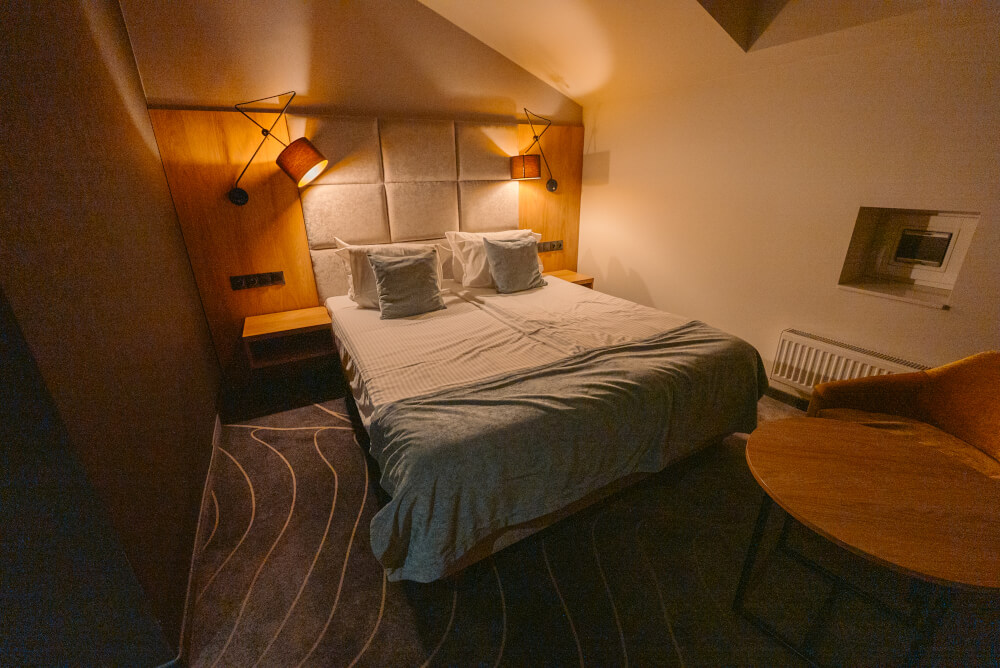
Overall, I think this is a great neighbourhood for seeing a different side of Krakow outside of the Old Town, and I’d even recommend staying here if you don’t mind a longer walk into the Old Town, just because there are so many great food spots and cute little shops. I stayed at the Hotel M29 and really enjoyed it.
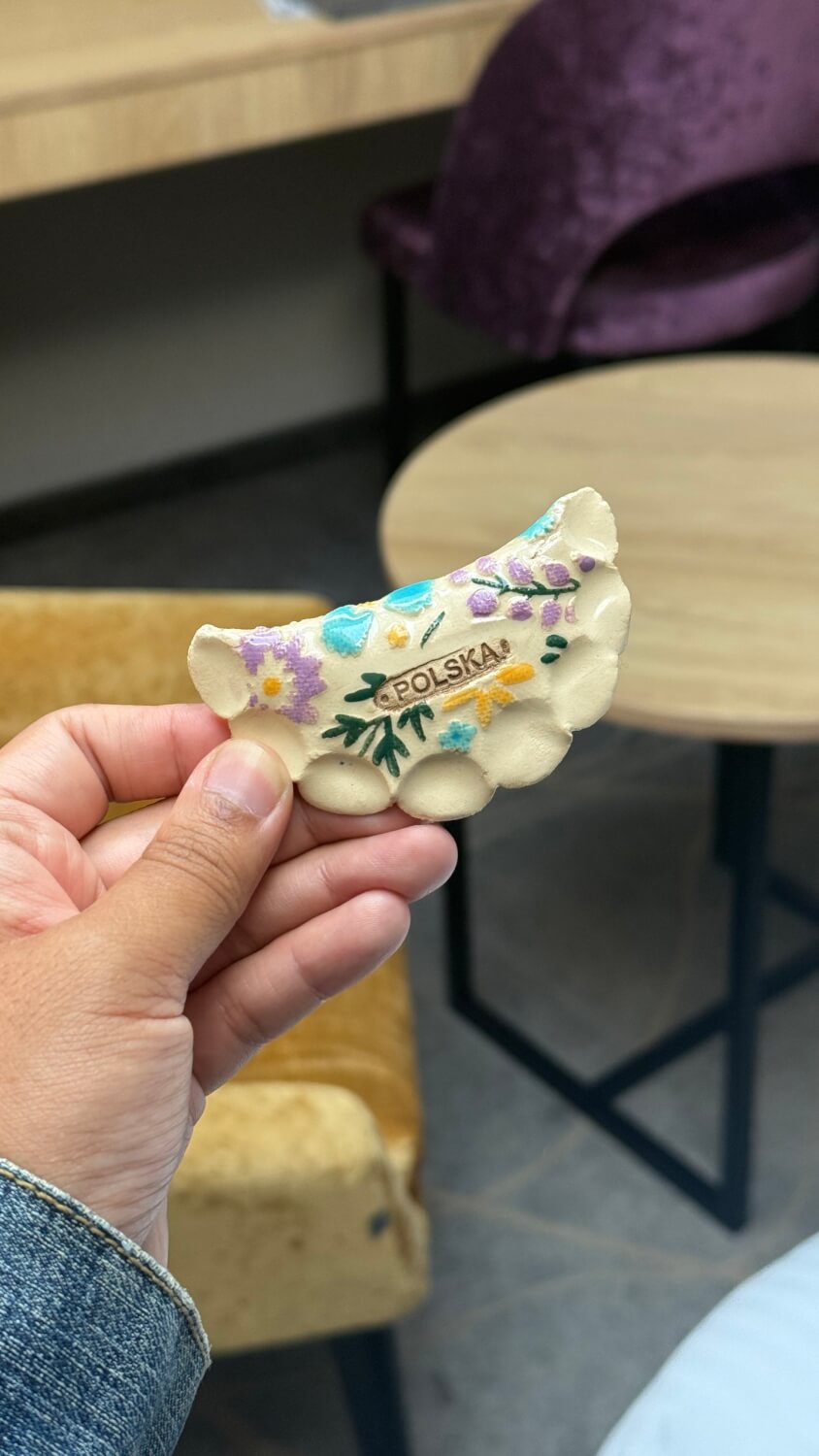
In fact, just around the corner you’ll find one of the cutest spots for a souvenir in Krakow, Magnetic Story, where you’ll find beautiful handmade pierogi magnets and more.
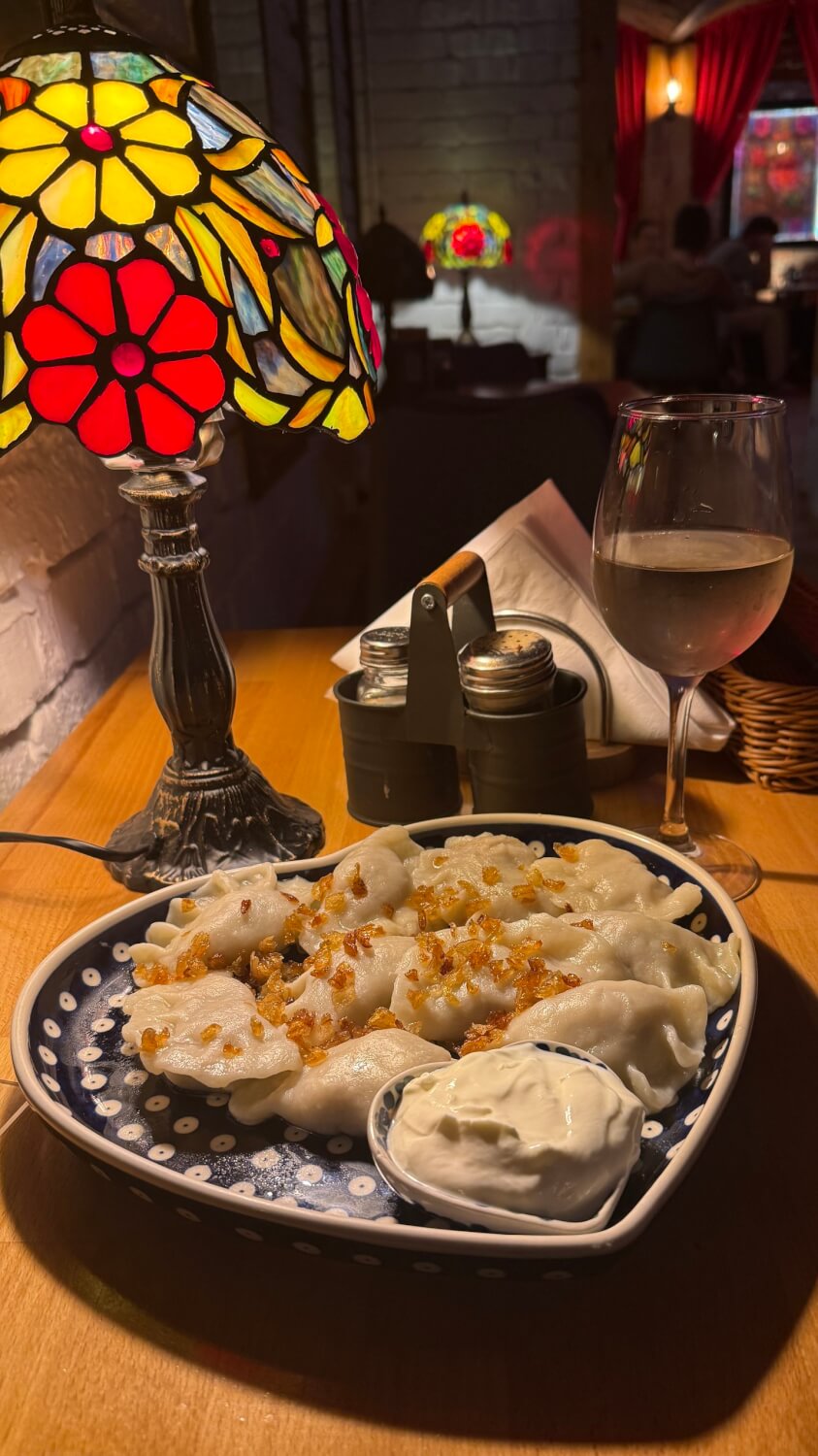
And speaking of pierogi, a super cute and cozy place to try them can be found close to here as well – the adorable Pyszne Pierogi na Wynos… which I loved.
Now, from Kazimierz, you can easily…
8. Explore onwards in the Podgórze, Jewish Ghetto
Historically, this was once the area where the Nazi occupiers forcibly established the Kraków Ghetto during World War II, confining thousands of Jewish residents in overcrowded and inhumane conditions.
Today, there aren’t a ton of sights of interest for tourists, but the main ones include…
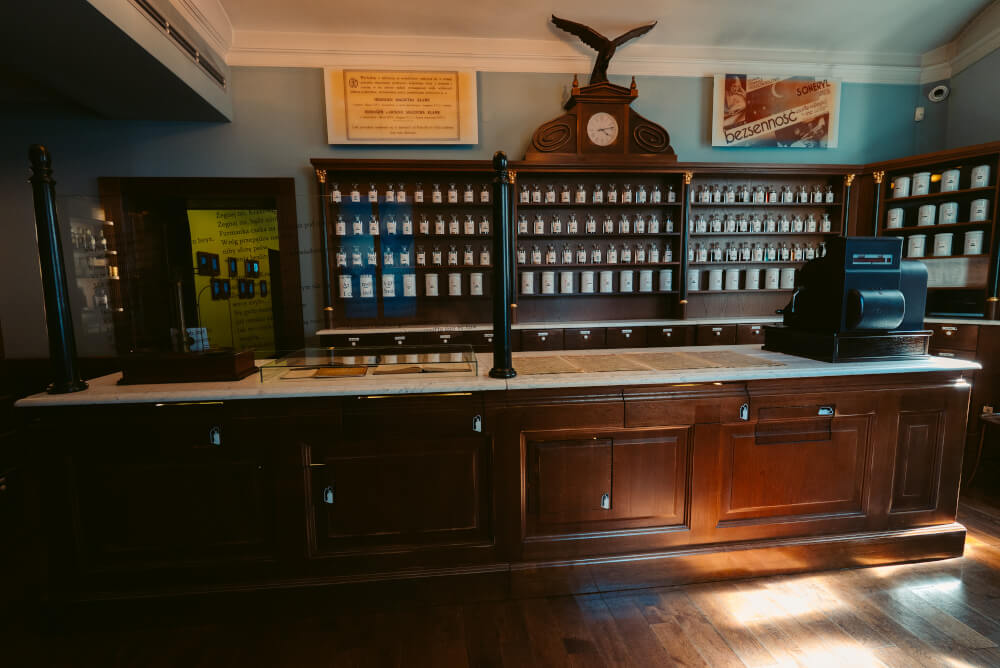
- Tadeusz Pankiewicz’s Pharmacy, which is a preserved pharmacy whose owner chose to remain inside the ghetto to assist Jewish residents, now transformed into a small but deeply moving museum about life in the ghetto.
- And Plac Bohaterów Getta, home to the Empty Chairs Memorial, designed to represent the furniture left behind in the square during deportations, symbolizing absence, loss and the lives that were taken.
From this district, you are close to one of Krakow’s most prominent sights, so let’s move onto our next activity, which is to…
9. Visit Oskar Schindler’s Enamel Factory
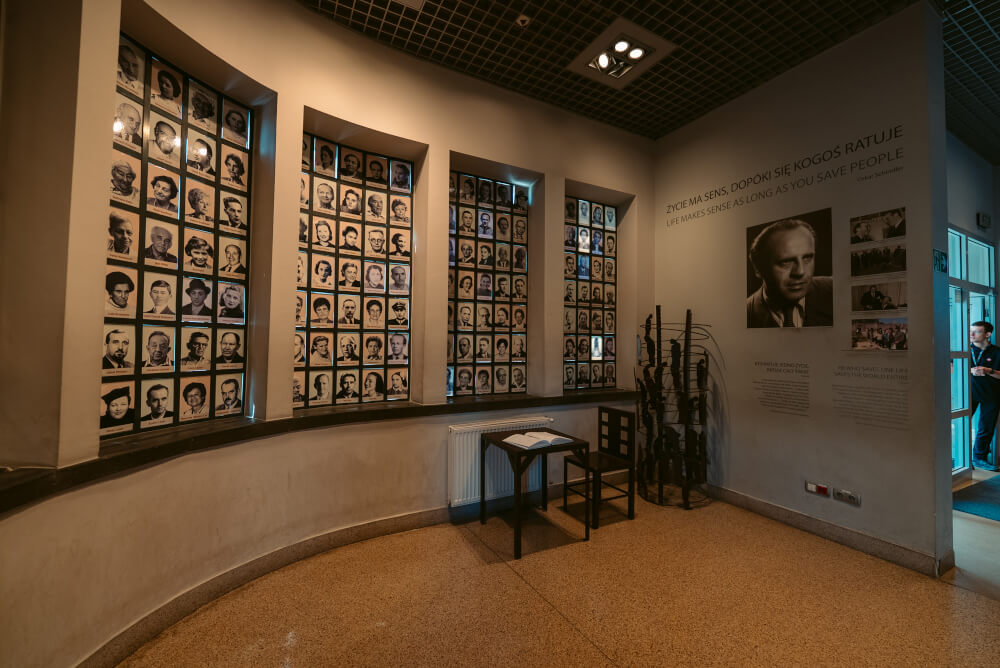
Housed in the former Oskar Schindler enamelware factory in the Podgórze district, today this museum is home to a comprehensive and immersive exhibition titled “Kraków Under Nazi Occupation 1939–1945,” detailing life in the city during World War II.
Highlights include reconstructed wartime streets and shopfronts, personal testimonies, photographs, multimedia displays, and thoughtfully designed rooms that recreate everything from cramped apartments to administrative offices, helping visitors better understand daily life under occupation.
Overall, this is a really extensive and interesting exhibit if you’re interested in general Krakow wartime history, but do note that there are only a small handful of things about Schindler himself, so if that’s your main purpose for visiting, just have your expectations in check.
Practically next door, you can also…
10. Visit the Museum of Contemporary Art Krakow (MOCAK)
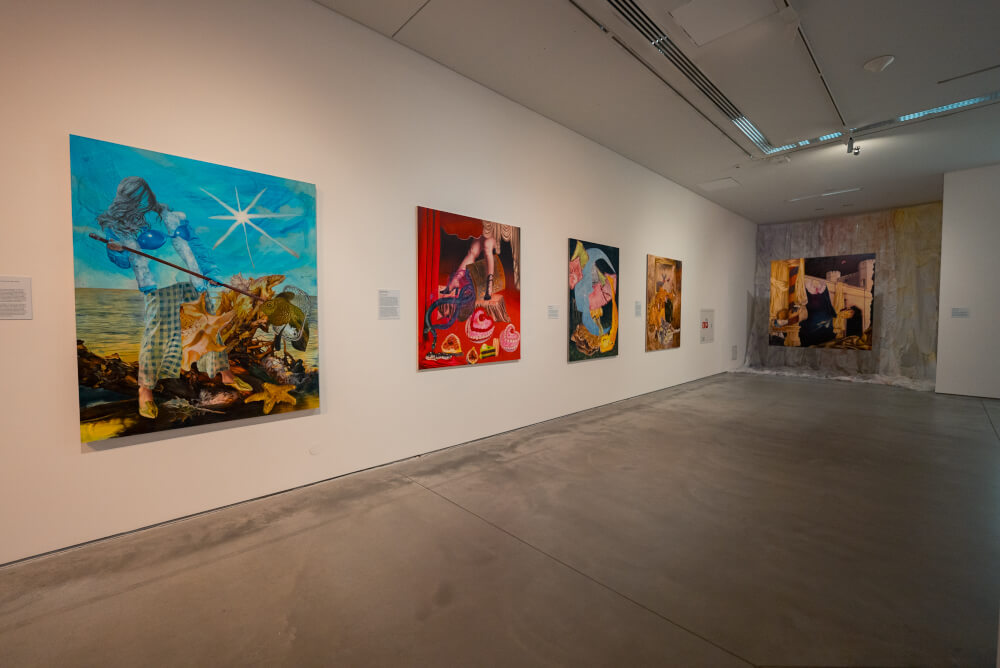
This museum is home to a number of thought-provoking contemporary installations, sculptures and temporary exhibitions from Polish and international artists.
As with most contemporary art museums, the work here isn’t for everyone, but it’s definitely a nice way to round out your time in this part of town.
While we’re on the topic of museums, I should also mention that if you’re especially interested in any of these topics, you can also…
11. Visit one of Krakow’s many small private museums
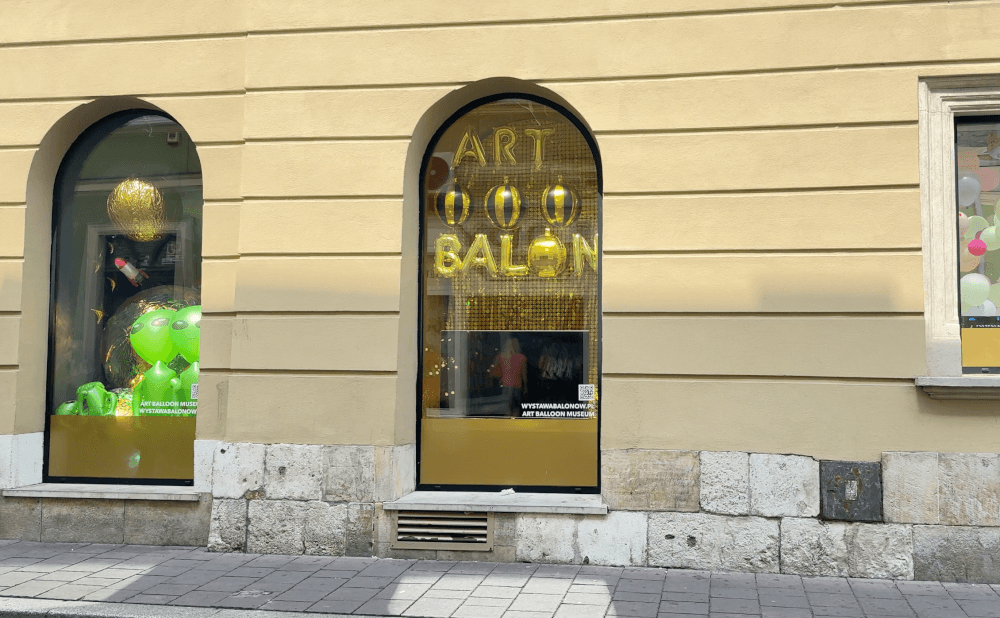
In Krakow, you’ll find a surprising number of museums dedicated to all sorts of things, from the Museum of Illusions dedicated to mind-bending optical illusions and interactive trick exhibits to a museum about balloons, video games and retro arcade machines, and even pinball machines and quirky pop culture memorabilia.
To be honest, I would personally prioritize the many other museums that Krakow has to offer, but just know these options exist if you’re looking for something a little different to do, especially if you’re trying to keep younger travellers entertained.
Now, at this point we’ve covered most of the main activities and points of interest in the city centre of Krakow. Needless to say though, there is plenty more to see in the area.
Further out, for instance, you can also…
12. Admire the views from Kościuszko Mount
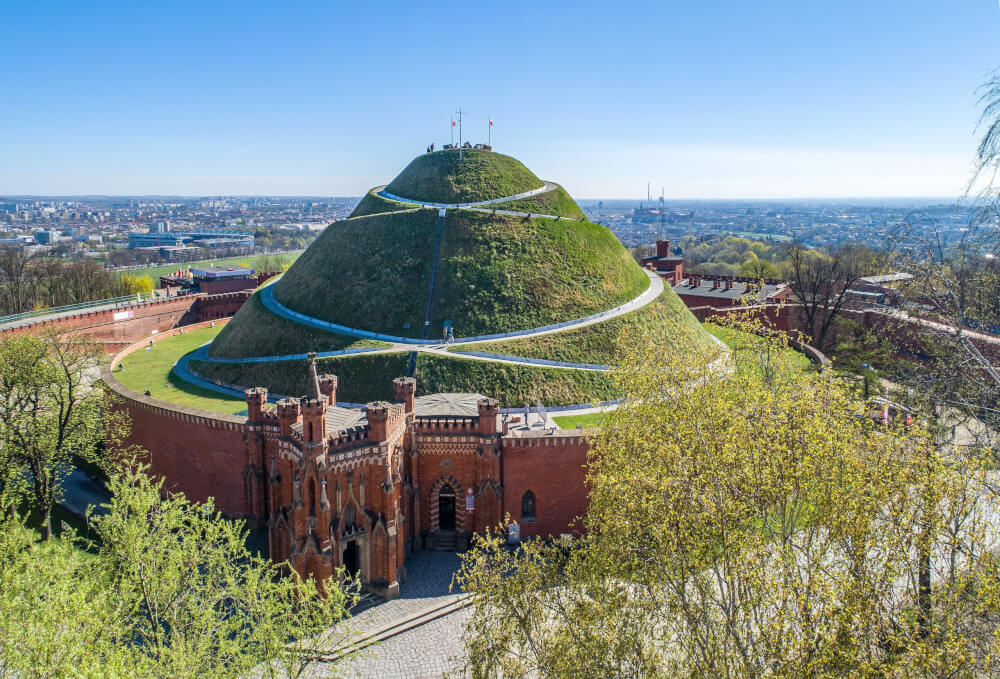
This unique mount just a short bus ride away from the city was built in 1820–1823 as a commemorative mound dedicated to Polish national hero Tadeusz (Taday-oos) Kościuszko. Today, it is a historic monument and panoramic viewpoint surrounded by old Austrian fortifications and worth visiting for sweeping views over Kraków’s skyline, the Vistula River, and even the distant Tatra Mountains on a clear day.
Or you can add one of the most popular Krakow day trips to your itinerary, which is to….
13. Do a day trip to see Auschwitz
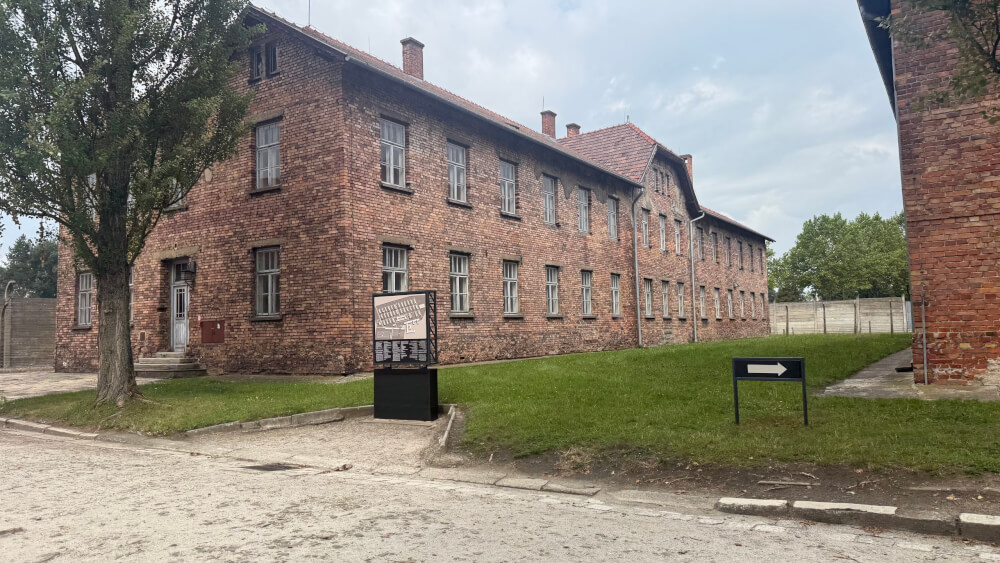
This infamous concentration camp needs no introduction. It was here that Nazi Germany operated a vast network of concentration and extermination camps for five years, resulting in the loss of over 1.1 million lives.
Separated into two main sites, Auschwitz I and Auschwitz-Birkenau, a visit here is a somber confrontation of one of humanity’s darkest chapters, with preserved barracks, watchtowers, personal belongings of victims, and the haunting remains of gas chambers and crematoria serving as stark reminders of the atrocities committed here.
Tickets always have to be booked in advance, and admission without a guide is free, but I would strongly advise going with a guide for much needed context and explanations.
My best tip though? Dedicate your day to Auschwitz and don’t try to plan too many other activities. While the trip itself should only take about half a day, it’s an emotionally draining place to visit, and you’ll likely not be in the mood to do much else for the rest of the day.
I say this because there’s another worthwhile activity often bundled with Auschwitz, and that is to…
14. Venture out to see Wieliczka Salt Mine
This mine was once one of the world’s oldest continuously operating salt mines, producing table salt from the 13th century until 2007. Today it is a UNESCO World Heritage Site and one of Poland’s most unique tourist attractions.
This unique visitor experience takes you into the heart of a vast underground salt labyrinth, more than 100 metres below ground.
After descending around 380 stairs, you wander through various chambers of the mine, ogling statues and informative displays along the way.
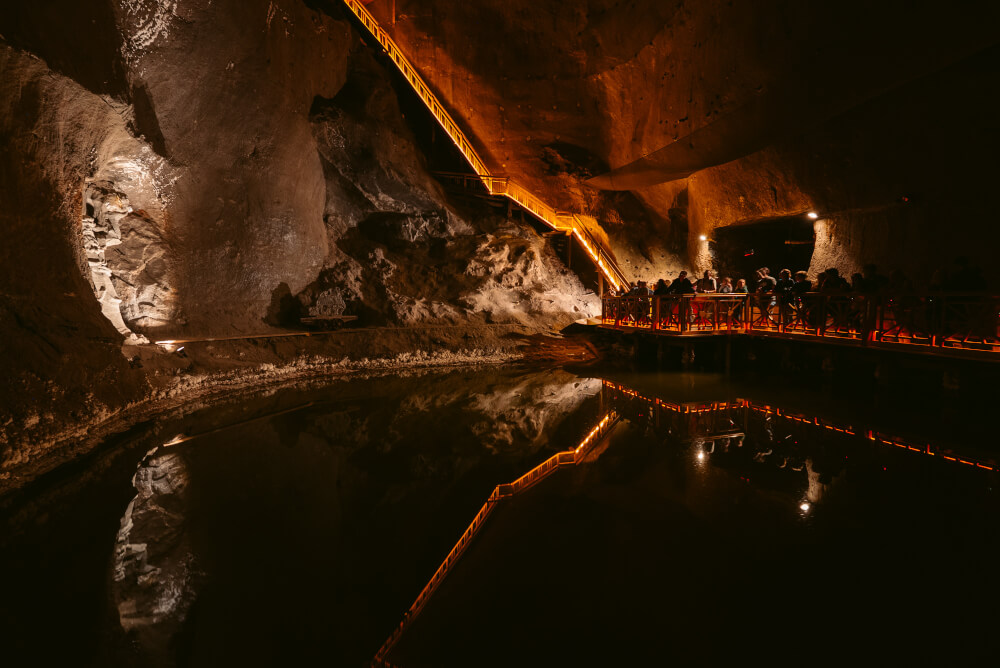
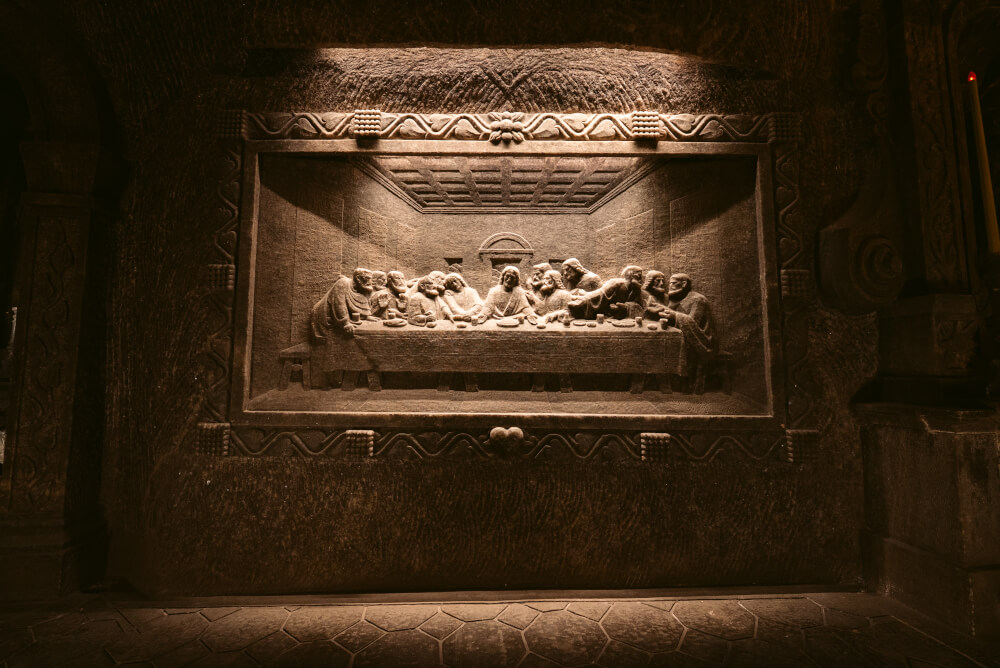
A key highlight, though, are the mine’s 20+ subterranean chapels, which you get to see a few of, the crown jewel of them being St Kinga’s Chapel, home to an enormous salt-carved altar and a striking relief of The Last Supper with statues created by miners, not professional sculptors.
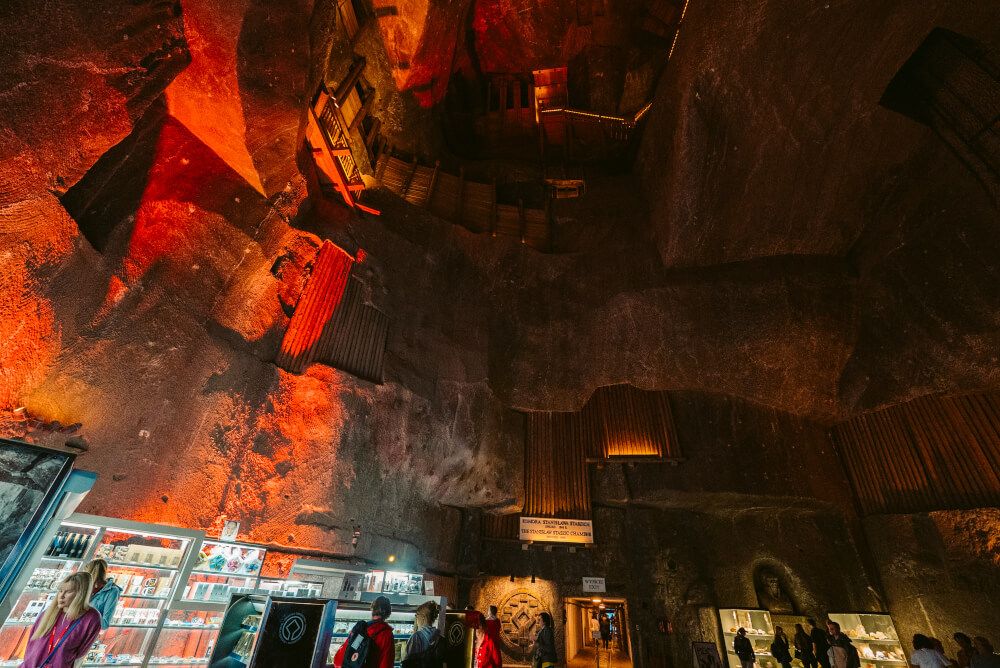
Touristy as it can feel, it is a really unique experience to be wandering through chambers over 100 meters below ground… gift shops, cafes, photo opps and all.
Luckily for your legs too, there’s an elevator that will take you back to the surface when you’re ready.
Another noteworthy possible day trip from Krakow is to…
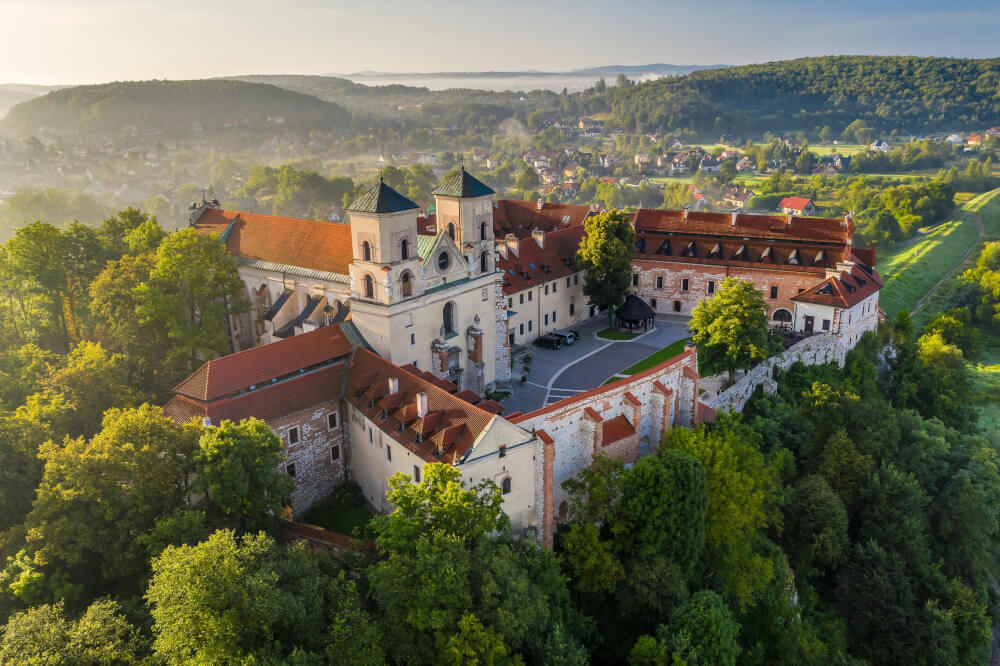
15. Check out the beautiful Tyniec Abbey
Located just about 30 minutes away from Krakow, this abbey is best known for its dramatic hilltop setting overlooking the Vistula River and well worth checking out for peaceful views, a small museum, and the chance to sample monk-made products like honey and preserves.
Finally for those with the time, it’s definitely worth it to…
16. Venture out to explore more of the local area
Some highlights within two hours of Krakow include…
Zakopane, a mountain resort city known for its wooden “Zakopane Style” architecture and access to the Tatra Mountains. Today, highlights for visitors include riding the funicular up Gubałówka Hill, hiking scenic mountain trails, and strolling along lively Krupówki Street.
And Energylandia Zator if you’re into amusement parks. This park is home to some of Europe’s most thrilling roller coasters with dozens of attractions ranging from extreme rides to family-friendly zones and water park fun.

Did I miss any of your favourite things to do in Krakow?
Let me know in the comments so I can add more of the best Krakow activities to this list. Happy and safe travels!