
*FYI - this post may contain affiliate links, which means we earn a commission at no extra cost to you if you purchase from them. Also, as an Amazon Associate I earn from qualifying purchases. Check out our Privacy Policy and Disclosure. for more info.
There are few cities in Europe I pine for as much as Budapest.
Split into two halves (Buda and Pest) along the idyllic banks of the Danube River, Budapest is one of those destinations that has it all. It’s grand, with striking landmarks to ogle and drool over, yet fun, with more food and nightlife than you’ll know what to do with. It’s also filled with unique surprises – from steamy outdoor baths and bars built into abandoned spaces, all the way to a museum about pinball.
In other words, Budapest has all the swanky grandeur of Europe’s glitziest capitals, paired with a cool down-to-earth vibe that will have you Googling apartment prices and the logistics of securing a Hungarian visa.
So if you’re wondering what to do in Budapest, you are (honestly) spoiled for choice. Read on for all the best Budapest must-dos, from classic landmarks and sights to more offbeat finds that show you just how cool Hungary’s capital can be.

Save this list of Things to Do in Budapest for Later!
You’ll be very glad you did.
1. Hop on a Danube Cruise
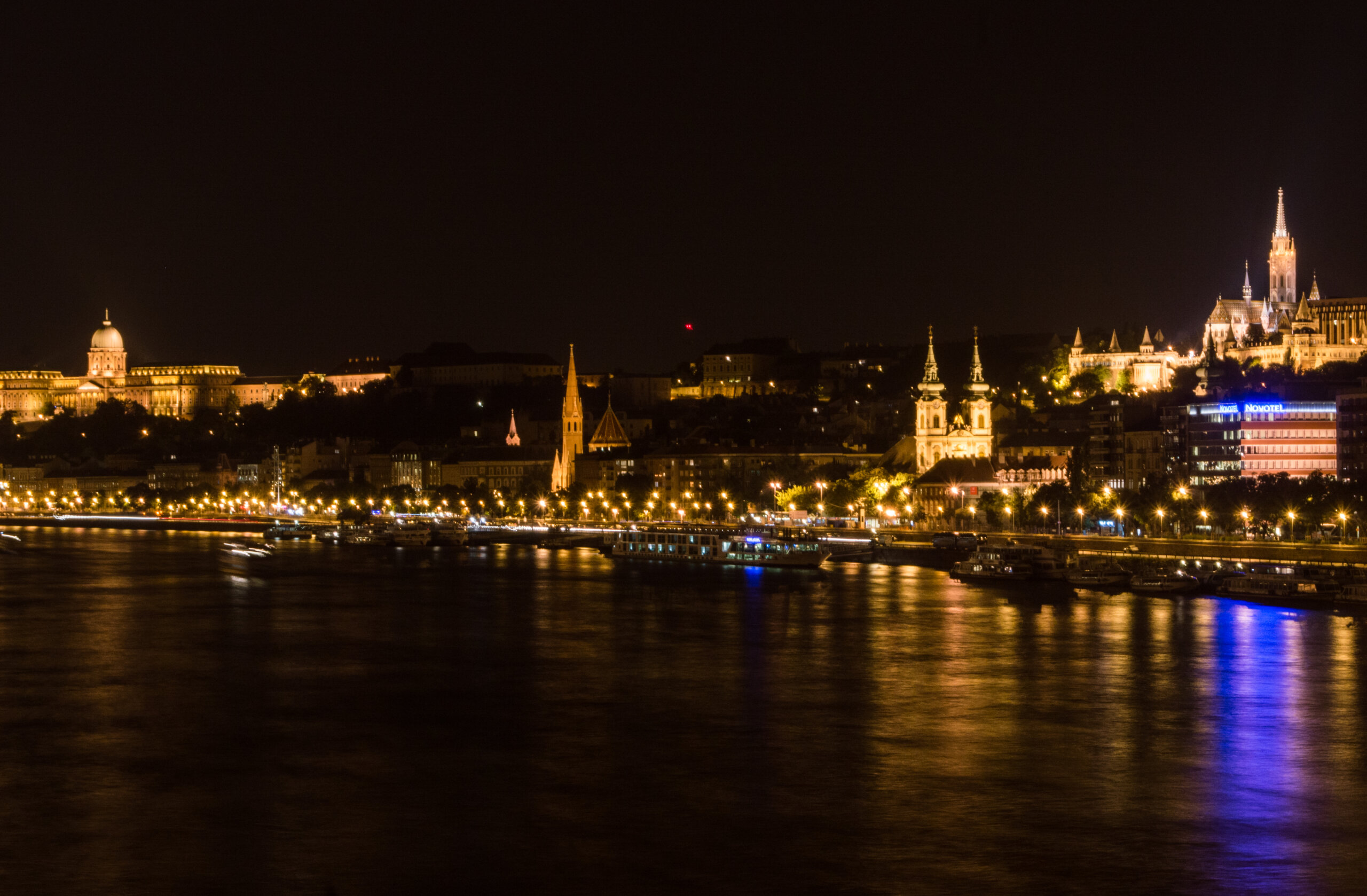
There is something SO magical about soaking in the unique skyline of Budapest through a cruise on the Danube, so I’m listing this as the top must-do.
Of course, tour operators nowadays know the allure of this activity, and as a result there are river cruises of every type imaginable, meaning plenty of choices whether you’re looking for…
- Bottomless prosecco
- Candlelit dinner and live music
- Dinner with a Hungarian folk show
- A straight-up party boat
- … Or your regular city highlights cruise
I’d recommend going at sunset or in the evening because the monuments look amazing lit up at night:
2. Marvel at the Parliament Building (Országház)
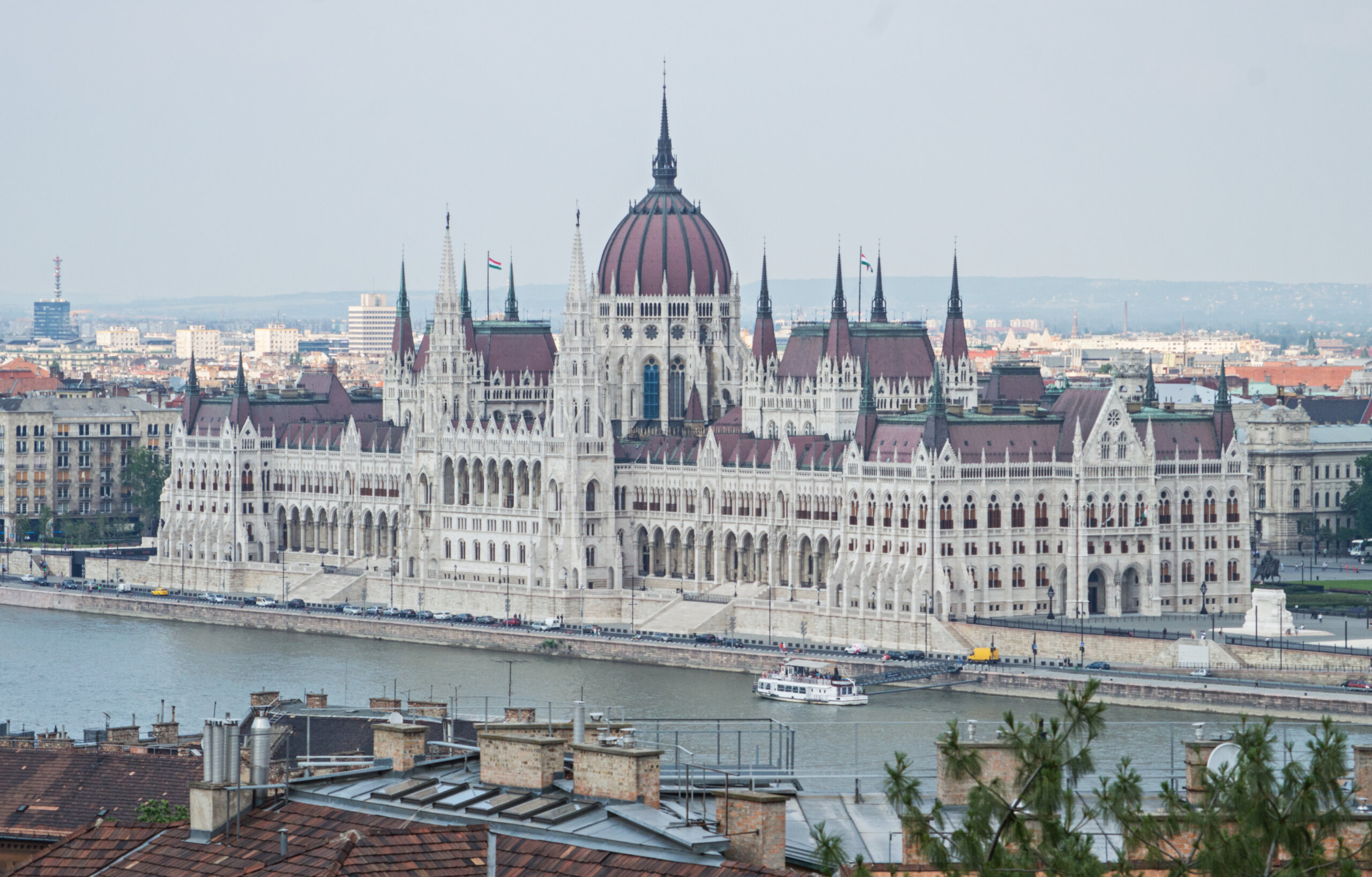
Next, the star of the show – Budapest’s epic Parliament Building. I hate to sound like a rabid fangirl, but is this NOT one of the most beautiful buildings you’ve ever seen? Honestly.
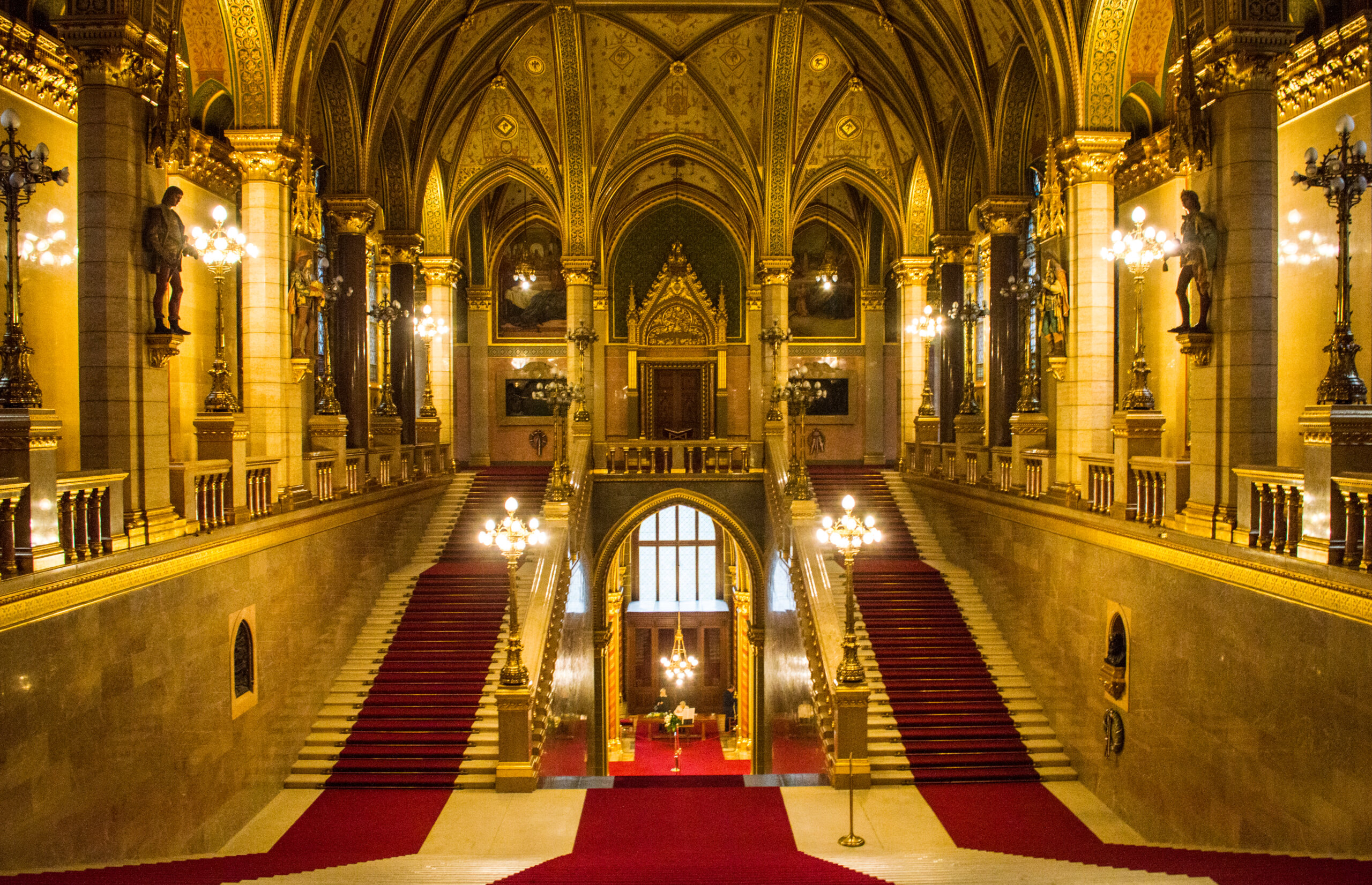
This architectural masterpiece is by far the most iconic landmark of the city, with hundreds of soaring spires and a Renaissance Revival central dome. Designed by Hungarian architect Imre Steindl in the late 19th century after winning an international competition for the honours, the building’s grand façade is adorned with statues and gargoyles… while the interior is equally impressive, with ornate decorations, stained glass windows, and a central hall adorned with frescoes depicting Hungarian historical scenes.
Naturally, the building looks amazing from all angles, but I think seeing it up close and from up high are both non-negotiables (this photo for instance was taken from the Fisherman’s Bastion).
PS: Make sure to see the inside if you can! It’s open seven days a week from 8am with guided tours or self-guided audio tours available in many different languages. Check the website for up to date ticket prices and closing times which vary through the year.
3. Cross Chain Bridge (Széchenyi Lánchíd)
Once upon a time, the city we now know as Budapest was actually two separate cities: Buda (initially made up of Buda and Óbuda), with its historic castle complex and hilly terrain on the right bank, and Pest, the bustling commercial and cultural center on the left bank.
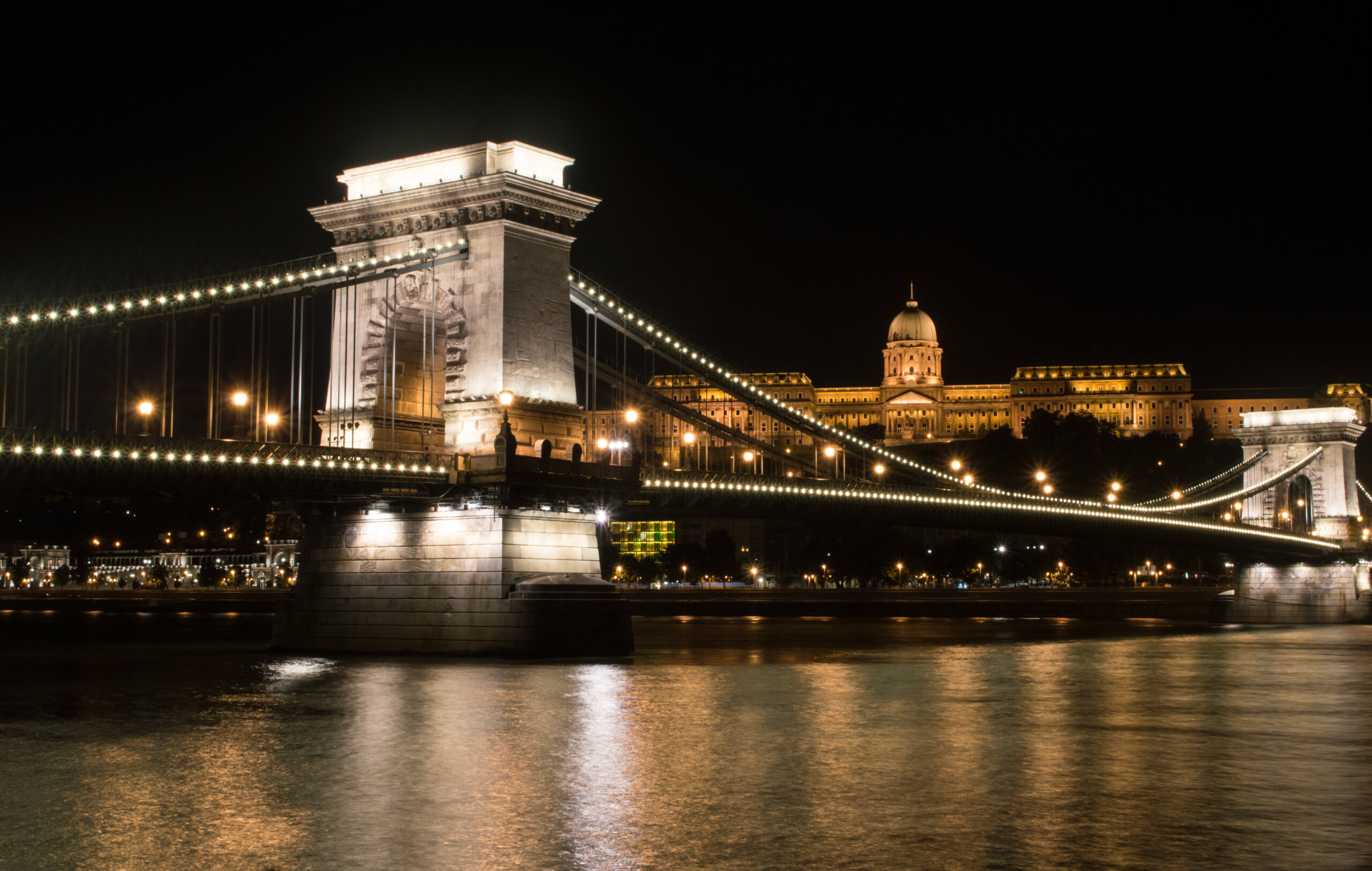
Chain Bridge (completed in 1849) was the first permanent bridge to connect the two, playing a crucial role in the development of Budapest as a unified city.
Designed by the English engineer William Tierney Clark, the bridge has a classic suspension design, with massive stone pillars supporting iron chains that suspend the roadway over the Danube River. Its elegant simplicity and historic significance make it one of the most important landmarks in Budapest today, and a must-see/must-cross during your time in the city!
4. Buda Castle (Budavári Palota)
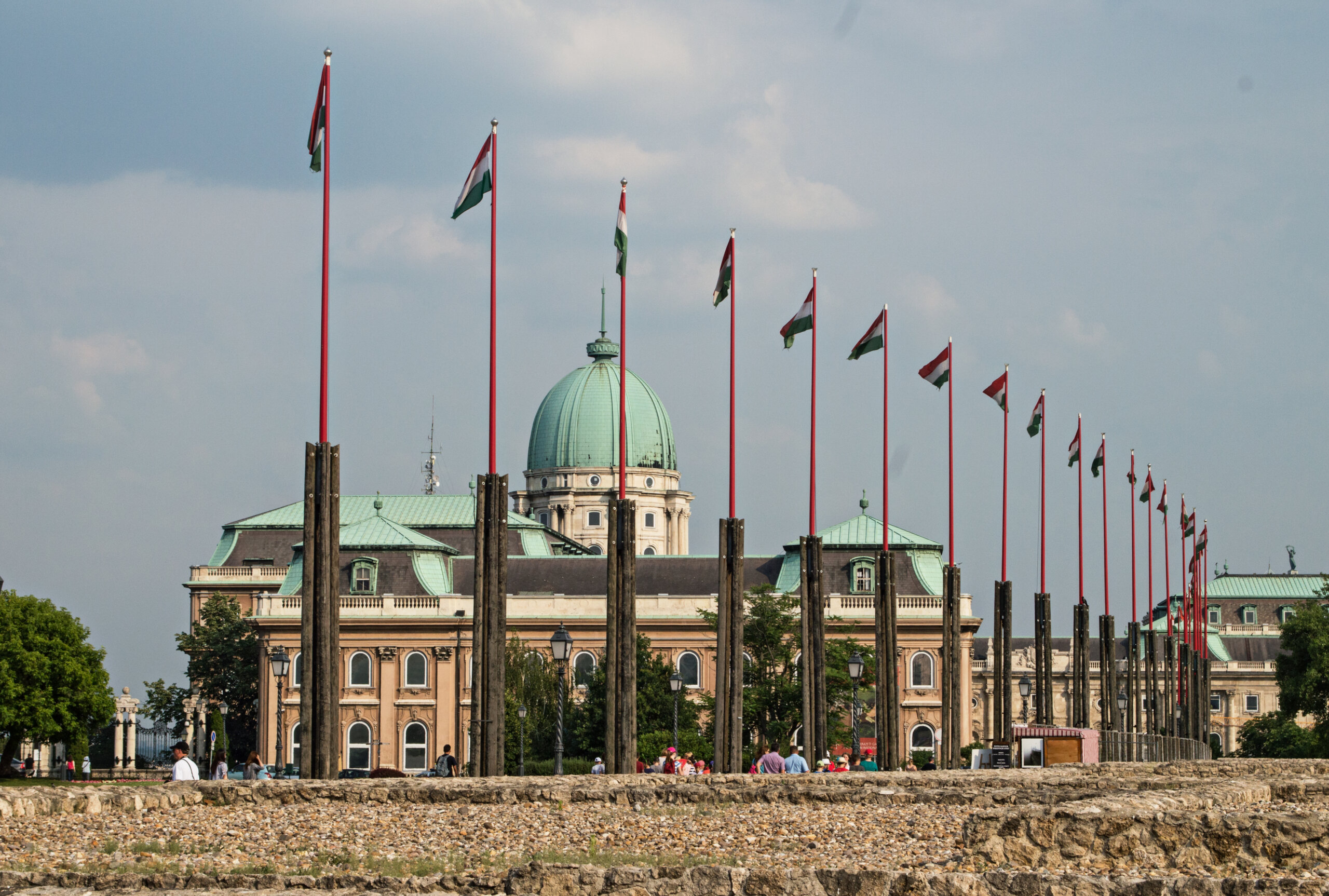
Heading over to Buda, the #1 must do is a visit to Castle Hill, a UNESCO World Heritage site packed with sights integral to any first time visit.
Dominated by the majestic Buda Castle, this hill has been a focal point of Hungarian history since the 13th century, serving as a royal residence, military stronghold, and cultural center.
Today, visitors to Castle Hill can explore notable attractions including the Buda Castle complex, which houses the Hungarian National Gallery and the Budapest History Museum, offering insights into Hungary’s art and history. There is a LOT to see here, so to not get overwhelmed, I’d recommend joining a highlights tour like this one to learn more about the site while seeing all the best bits.
NOTE: While exploring the castle complex and its exteriors is free and requires no ticket, many of the on-site attractions do require paid entry if you want to see inside. Confusingly, there is no one place to get tickets for all on-site attractions. Tickets are instead sold separately for each one. For the best price, I’d advise booking directly on each attraction’s website:
- St Stephen’s Hall | Official Website
- Hungarian National Gallery | Official Website
- BHM Castle Museum | Official Website
- Cave Tours | Official Website – English Tours Only Available on GetYourGuide
Most sections are closed on Mondays though, so try to time your visit for another day of the week!
5. Fisherman’s Bastion (Halászbástya)
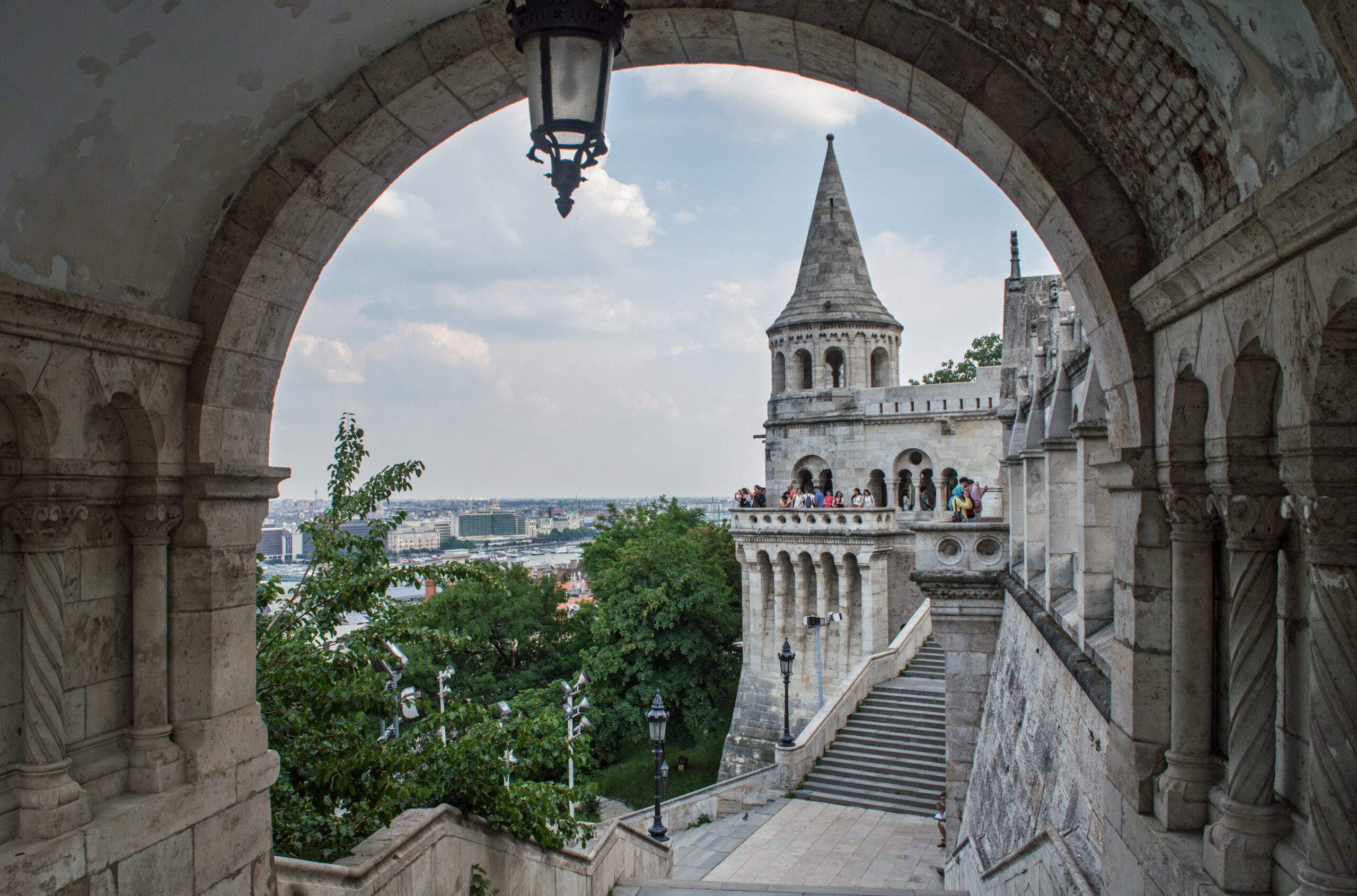
Another highlight of Castle Hill is the Fisherman’s Bastion, a gorgeous terrace ripped straight from the pages of a Gothic fairytale, with countless millennials over the years drawing parallels to their beloved Hogwarts.
Built in the late 19th century in a neo-Gothic and neo-Romanesque style, this panoramic viewing terrace overlooks the Danube and Pest, offering some of the most glorious views that Budapest has to offer.
Of course, the terrace itself is an aesthetic wonder. Inspired by medieval architecture, it features seven fairy-tale-like turrets symbolizing the seven Magyar tribes that settled in the Carpathian Basin in the 9th century. If that’s too much info, all you need to know is that it’s very cool to look at.
Oh! And who were these fishermen exactly? Well, the name comes from the medieval fisherman’s guild that defended this stretch of the city walls during the Middle Ages… so no, no fresh fish to be purchased here (as far as I know).
6. Matthias Church (Mátyás-templom)
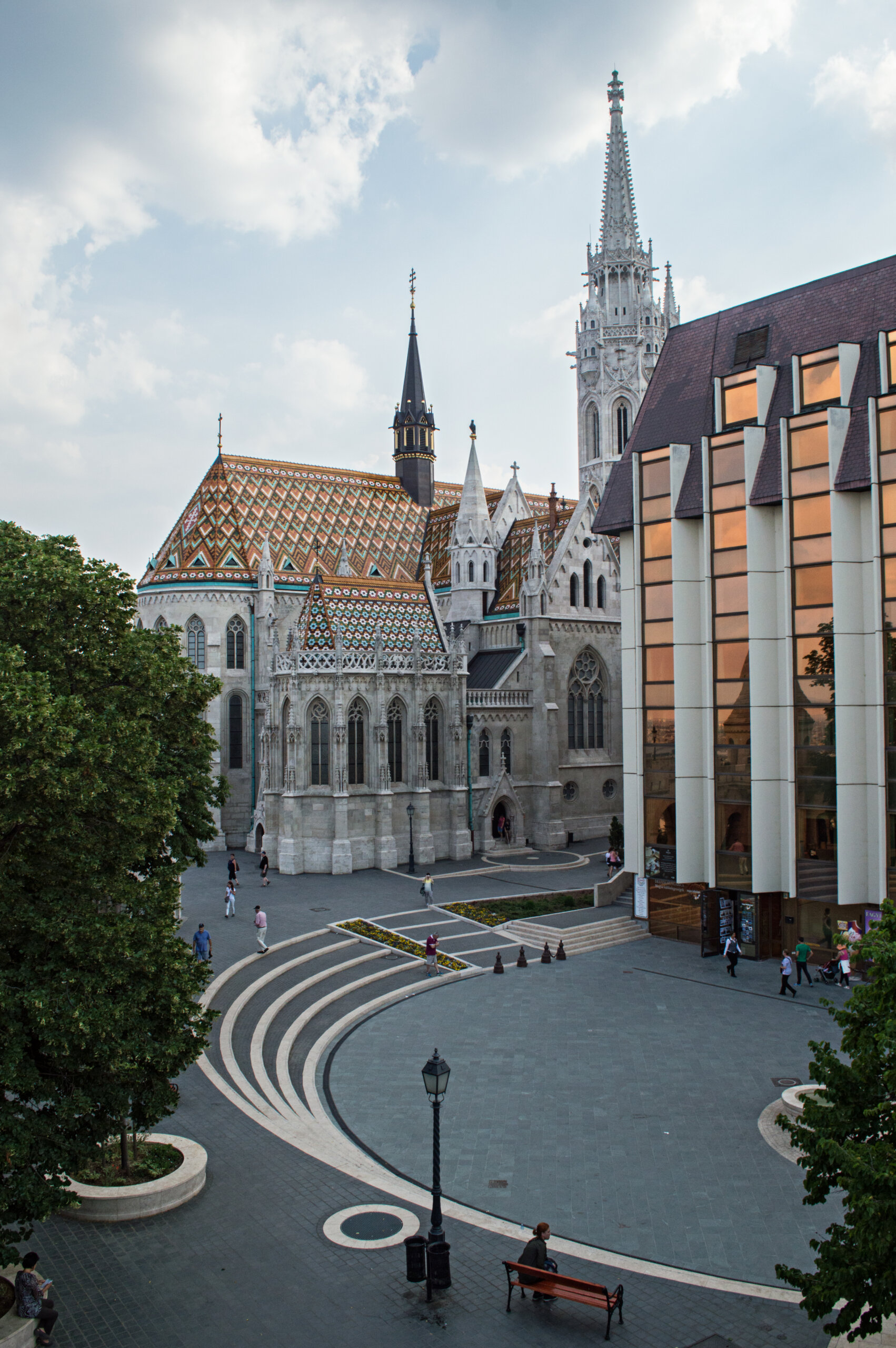
Just beside Fisherman’s Bastion is another gorgeous Budapest must-see, Matthias Church.
This Gothic masterpiece boasts a striking exterior with colourful roof tiles, while stunning frescoes and stained glass windows await inside.
Little wonder why this church has witnessed numerous royal events over the years, including coronations and weddings. Today, you can take advantage of these glorious photo opps for yourself with an entry ticket of HUF 2,500 for adults, or for free if you get the Budapest Card (which includes entry to many of the top sights).
7. Gellért Hill (Gellért-hegy)
With Castle Hill conquered, another worthwhile area to visit on the Buda side of the city is Gellért Hill.
Named after Saint Gellért, a bishop martyred in the 11th century, this hill has been integral to Budapest’s identity for centuries. Its strategic location has made it a site of military fortifications since ancient times, culminating in the construction of the Citadel in the 19th century, initially by the Habsburgs.
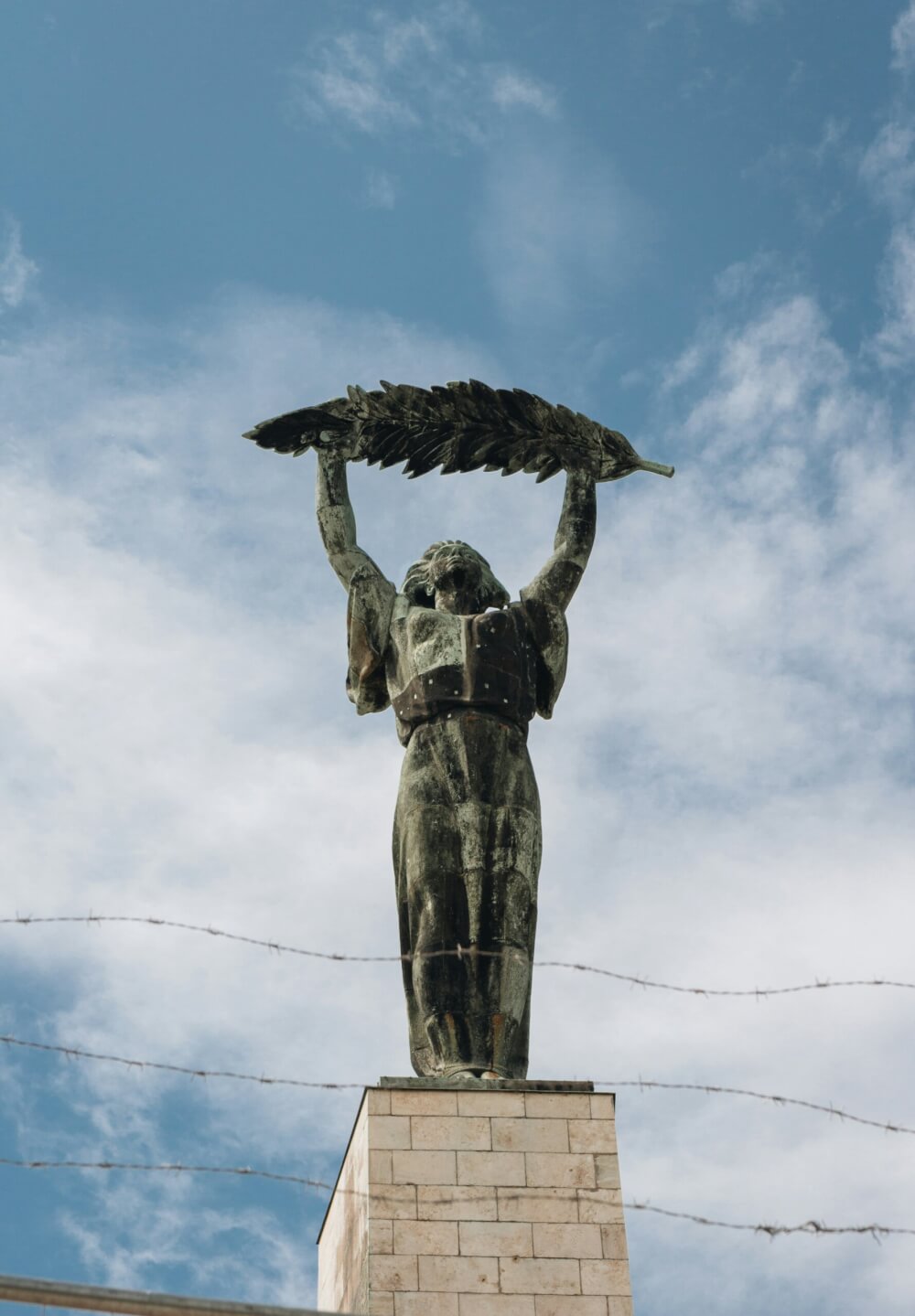
These days, visitors mainly head to Gellért Hill for panoramic views of the city, but there’s actually quite a few things to see and do in the area, including…
- The Liberty Statue: erected to commemorate Hungary’s liberation from Nazi occupation
- Gelert Hill Cave Church: a cave that was once the home of a hermit monk and is now a small, very cool looking, church
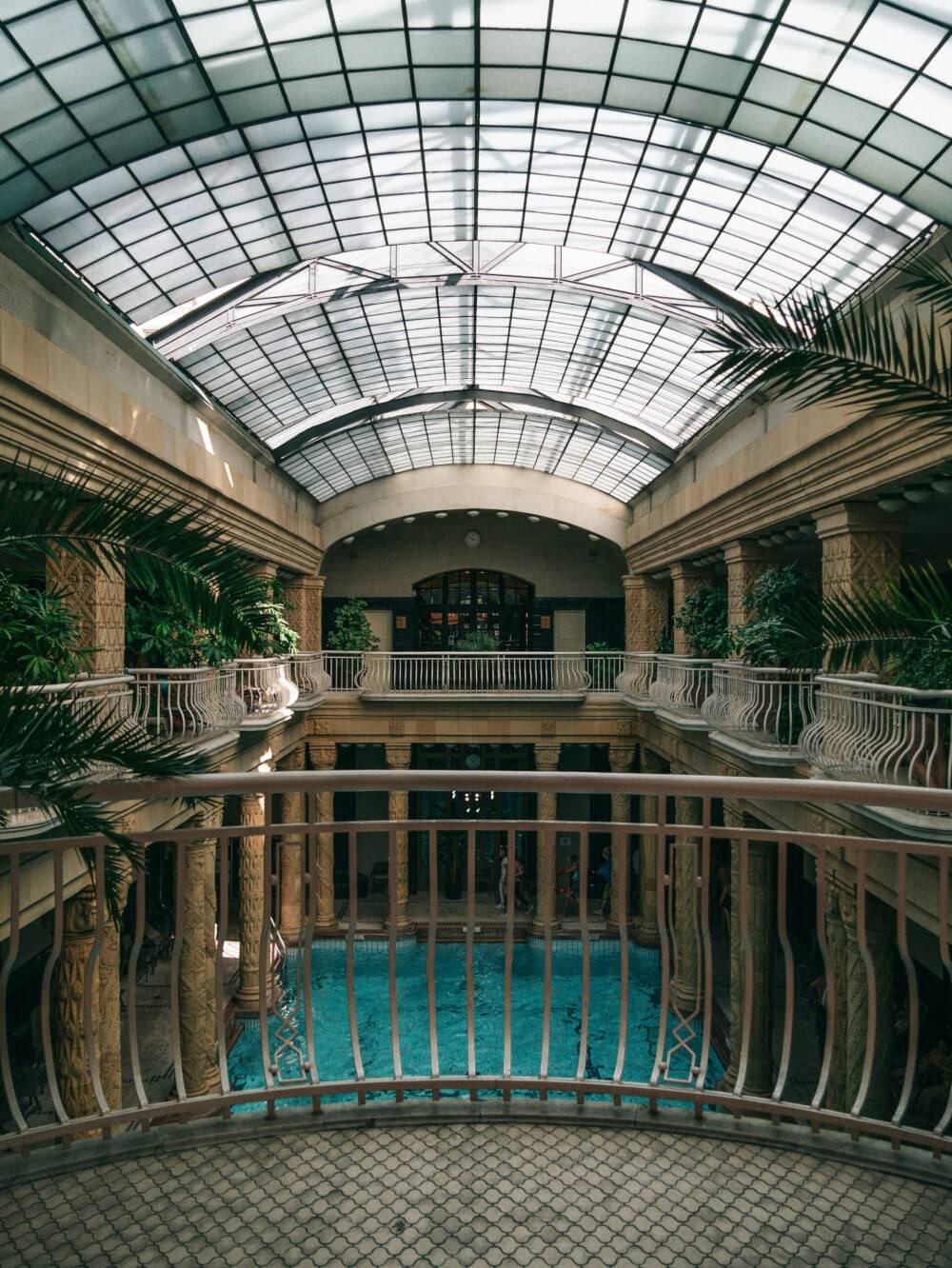
- Gellért Thermal Bath: the thermal spa baths that are part of the beautiful Art Nouveau Hotel Gellért
8. Széchenyi Thermal Bath (Széchenyi Gyógyfürdő)
Speaking of baths, another Budapest must-do is soaking in one!
Thanks to the city’s location atop a geothermal reservoir, mineral-rich thermal waters bubble up from deep underground, offering plenty of opportunities to soak and get pruny.
Harnessing these natural resources, Budapest has cultivated a longstanding tradition of public bathing dating back to Roman times. This tradition has held on over the centuries, resulting in the construction of grand spa complexes for luxuriating in the city’s healing waters.
The most famous of these is probably the Széchenyi Thermal Baths, one of the largest complexes of its kind in Europe, located in City Park (Városliget). It features a stunning Neo-Baroque architectural style, with grand facades, ornate decorations, and symmetrical designs.
Széchenyi Thermal Bath offers a wide range of facilities, including indoor and outdoor thermal pools, saunas, steam rooms, plunge pools, and massage services. There are 18 pools in total, allowing visitors to relax and unwind in different temperatures. The outdoor pools are particularly popular, especially during the colder months, as visitors can enjoy soaking in the warm thermal water while surrounded by steam rising into the crisp Budapest air.
While beautiful though, the downside of these absurdly popular baths is 1) relatively high prices and 2) large crowds of revellers from around the world, many of which are drunk and probably celebrating someone’s bachelor or bachelorette party. If you’re into that sort of thing, you can visit the baths late at night for the ultimate spa-rty!
But if that sounds like your personal nightmare, this classic Budapest experience is probably best skipped in favour of quieter options. Luckily, there are quite a few!

9. Enjoy one of Budapest’s many other baths
If you want to enjoy Budapest’s healing waters without elbowing your fellow tourists left and right, there are many other bath houses in the city that could be a better fit.
Some highly rated options include…
- Gellért Spa: Located on Gellért Hill, overlooking the Danube River from a gorgeous Art Nouveau building. Book tickets here
- Mandala Bath: If you don’t fancy being outside, this spiritual and luxurious spa is much more intimate. Book tickets here
- Rudas Spa: For panoramic pool views over the city and river, plus a 3-course meal! Book tickets here
10. Central Market Hall (Nagyvásárcsarnok)
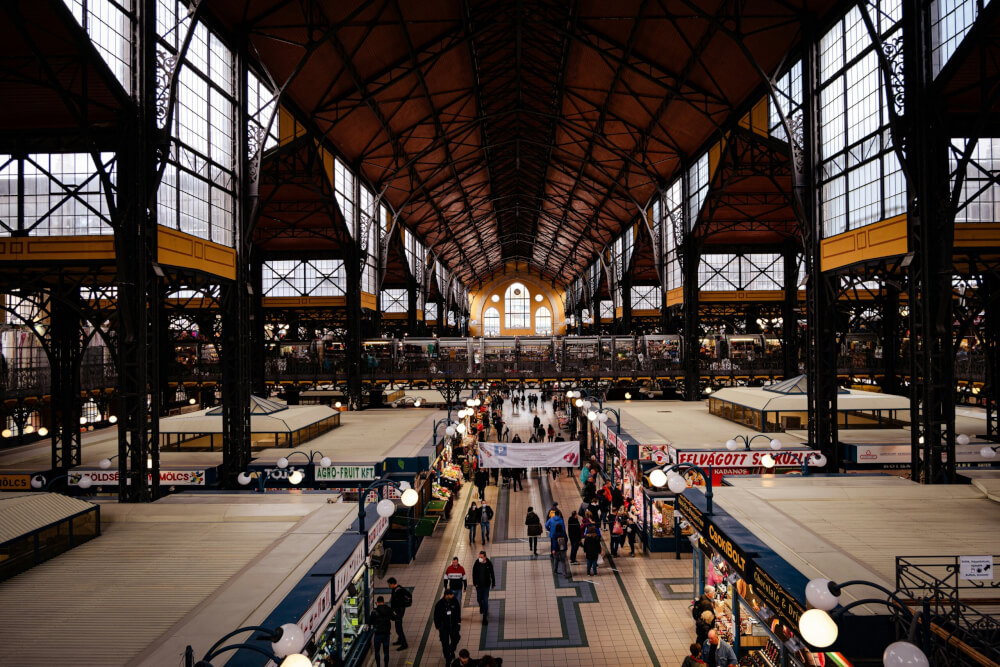
Alright, time to move onto the good stuff – foodie things to do in Budapest! The Central Market Hall, though fairly touristy, is a great place to start.
Located at the heart of Pest, near the Liberty Bridge, the market hall dates back to the late 19th century, with a distinctive Neo-Gothic design consisting of intricate ironwork and soaring ceilings.
Inside, visitors can take their pick from all sorts of fresh produce, meats, cheeses, spices, and artisanal goods… along with plenty of souvenirs and Hungarian specialties to try. NOTE: I found it fun to walk around and browse here, but the prices are definitely inflated, so you’re better off grabbing food elsewhere. Still, come in for a little mosey around – there’s a lot to gawk at!
For a less tourist-heavy alternative, I’ve heard great things about Lehel Market.
11. Gorge on Lángos and other Hungarian specialties
Now, you might be wondering… what Hungarian specialties should you try when in Budapest?
The first non-negotiable is Lángos – deep-fried flatbread topped with an array of toppings ranging from savoury (e.g. garlic, cheese) to sweet (e.g.jam). I cannot state how important it is for me that you try this. it’s just so satisfying – crispy, fluffy, delicious all at once. Best consumed fresh of course!
Some other must-tries include…
- Goulash: A hearty and flavorful soup or stew made with tender meat, paprika, vegetables, and spices.
- Chicken Paprikash: A classic Hungarian dish featuring tender chicken cooked in a creamy paprika-infused sauce, often served with dumplings or noodles.
- Dobos Torte: A traditional Hungarian layered sponge cake with chocolate buttercream and caramelized sugar on top, creating a crunchy layer.
- Kürtőskalács (Chimney Cake): A sweet and doughy pastry cooked on a spit, coated with sugar and often flavored with cinnamon or other toppings. Most people link this treat to Prague, but its roots are Hungarian!

12. Have rose gelato
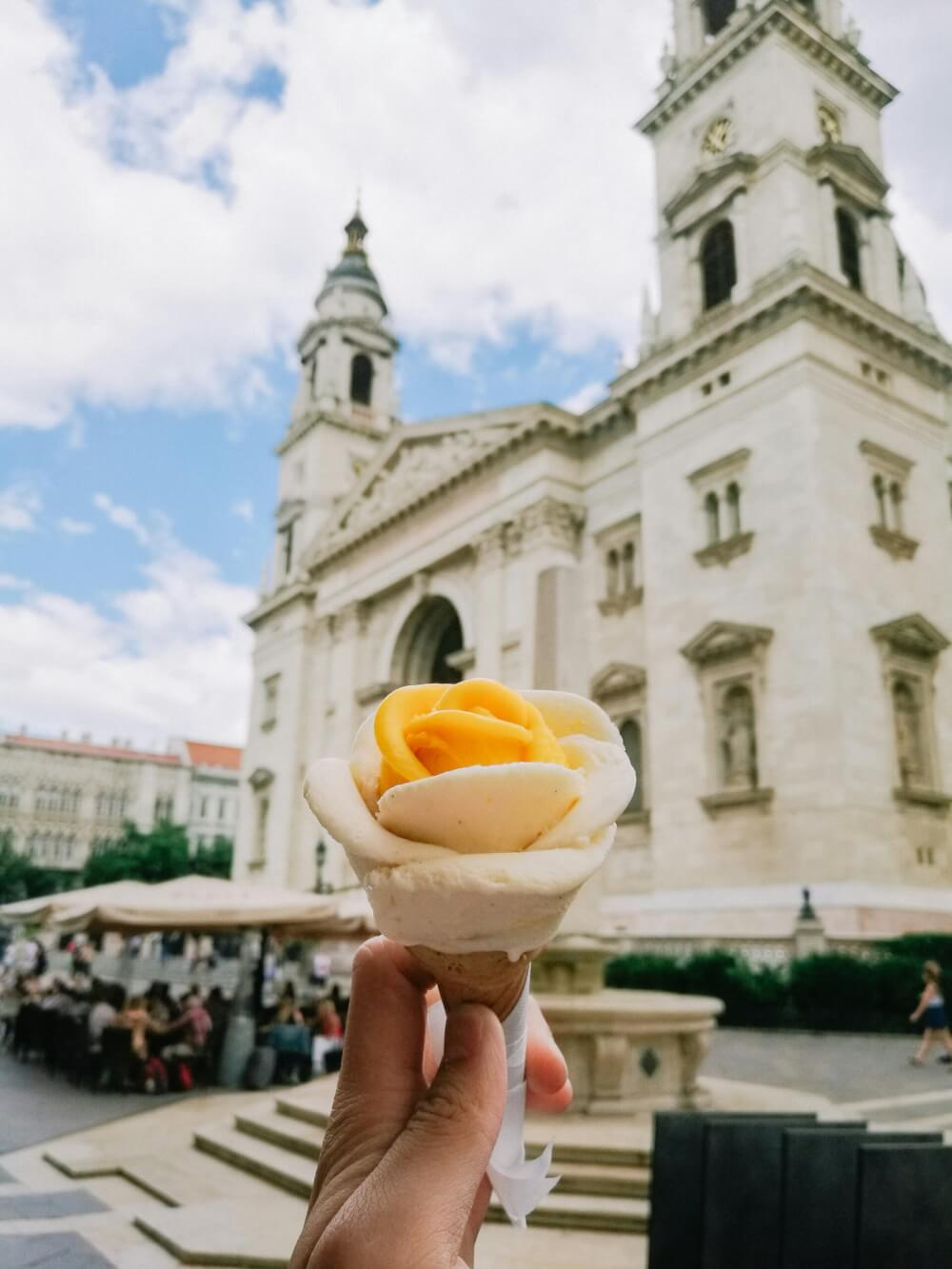
For the prettiest gelato you’ll ever try, be sure to make a stop at Gelarto Rosa, known for sculpting their gelato creations into elegant roses.
… That’s it – nothing else to add. Rose-shaped gelato kind of sells itself.
13. Heroes’ Square
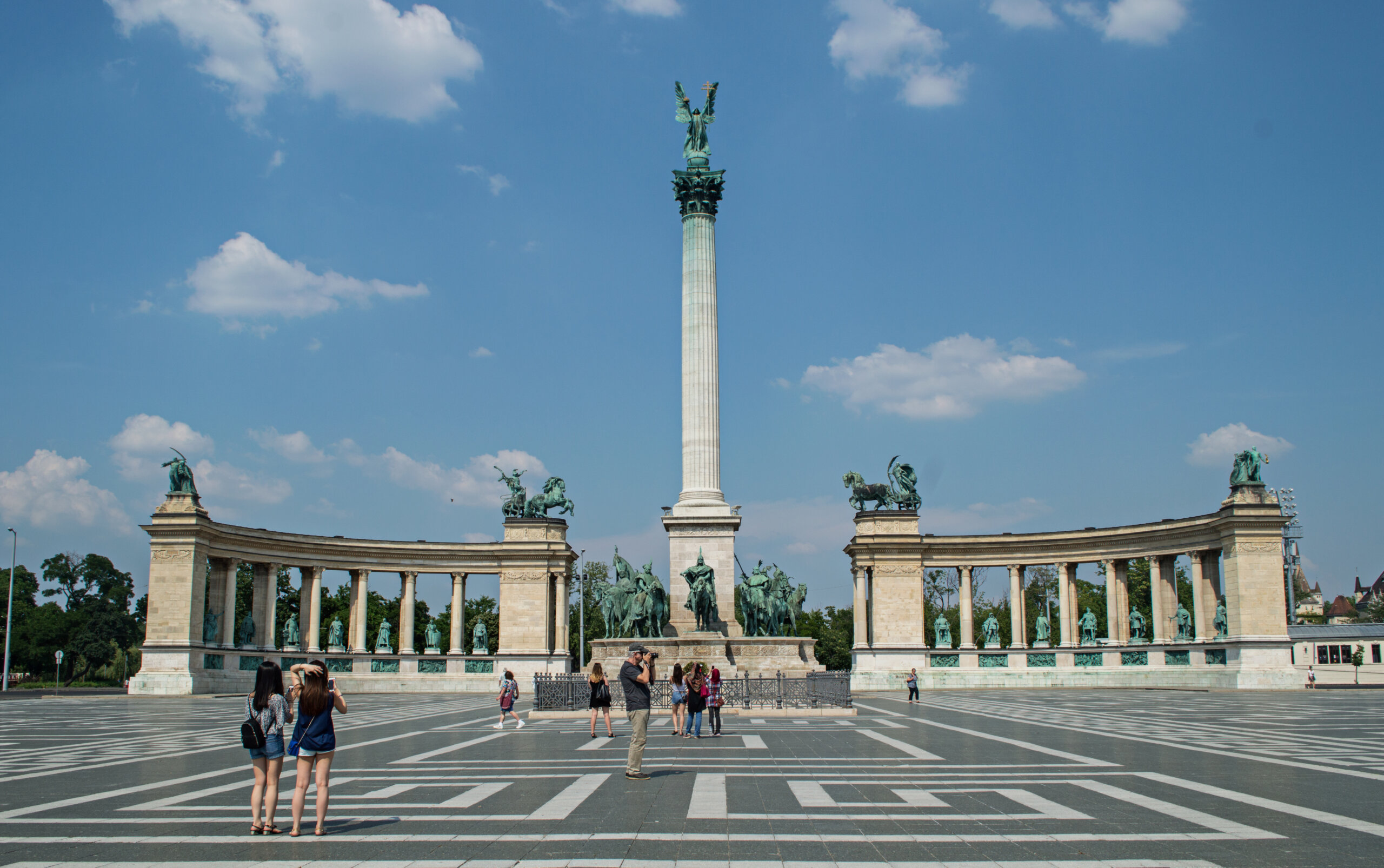
Constructed at the end of the 19th century, another important place to visit in Budapest is Heroes’ Square, which can be found at the end of the city’s iconic Andrássy Avenue.
This square is best known for its grand semicircular colonnade adorned with statues of prominent Hungarian leaders, kings, and national heroes, symbolizing the nation’s achievements and struggles throughout history.
At its center stands the Millennium Monument, a towering column topped with the Archangel Gabriel, commemorating the 1000th anniversary of the founding of Hungary in 1896! Today, the square remains an important gathering place for celebrations, as well as a cultural hub thanks to its location sandwiched between the Museum of Fine Arts and the Palace of Art.
14. Museum of Fine Arts (Szépművészeti Múzeum)
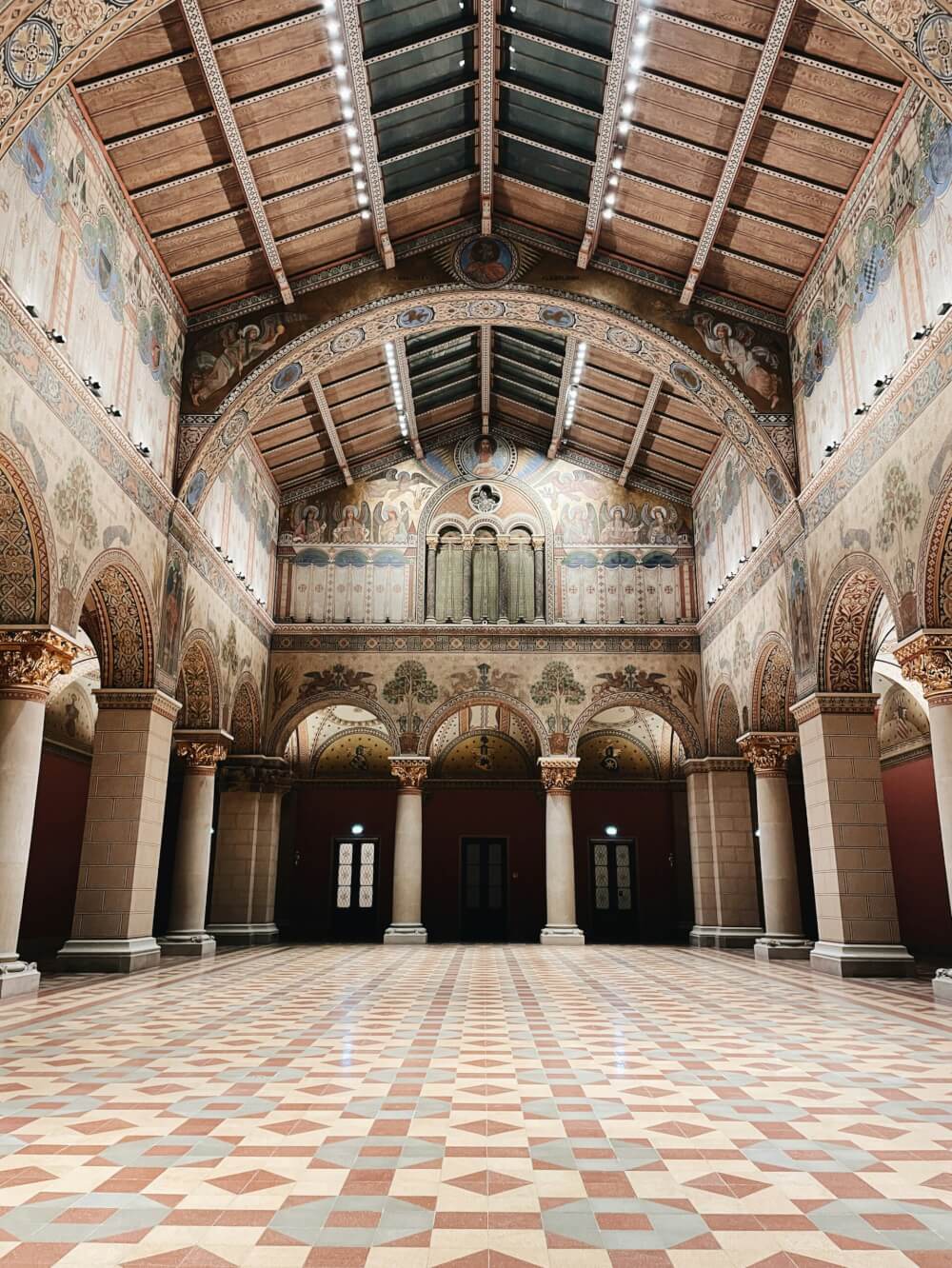
Speaking of these museums, for those in search of cultural things to do in Budapest, one place to visit is the Museum of Fine Arts, home to an extensive collection of artworks spanning various periods, styles, and cultures.
Founded in 1896, coinciding with the celebration of Hungary’s millennium (1000th anniversary), the museum building is an architectural masterpiece in its own right, designed by renowned Hungarian architect Albert Schickedanz in a neoclassical style adorned with columns, pediments, and sculptures. The end result is, as you might expect, nothing short of majestic.
Inside, the museum’s permanent collection includes works of European art from antiquity to the late 18th century, with highlights including masterpieces by Renaissance, Baroque, and Rococo artists such as Raphael, Titian, Rembrandt, and Rubens. There are also significant collections of Egyptian, Greek, and Roman antiquities, as well as Islamic art and artifacts from Asia. So yes, plenty to ogle for art enthusiasts!
15. Kunsthalle (Műcsarnok)
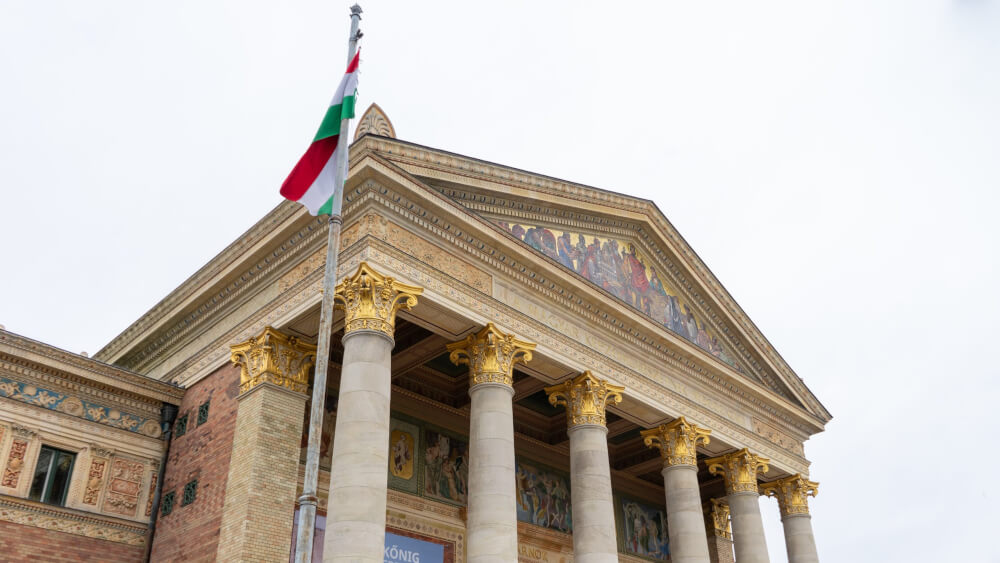
The Kunsthalle, known as Műcsarnok in Hungarian, is a prestigious contemporary art museum and was also established as part of the Millennium celebrations commemorating the 1000th anniversary of the Hungarian state. (Yes, it was a busy busy time.)
Just like the Museum of Fine Arts, which it faces across the Heroes’ Square, the Kunsthalle was also designed by architect Albert Schickedanz (with the help of Fülöp Herzog) in the neoclassical style… though this one’s facade features more orange/terracotta bricks.
Dedicated to showcasing contemporary art from Hungary and around the world, the museum’s programming includes rotating exhibitions featuring works by emerging and established artists working in various media, including painting, sculpture, installation, photography, video, and performance art.
Basically, come here for modern art and go to the Museum of Fine Arts for older and more traditional art!
16. Dohány Street Synagogue (Dohány utcai zsinagóga)
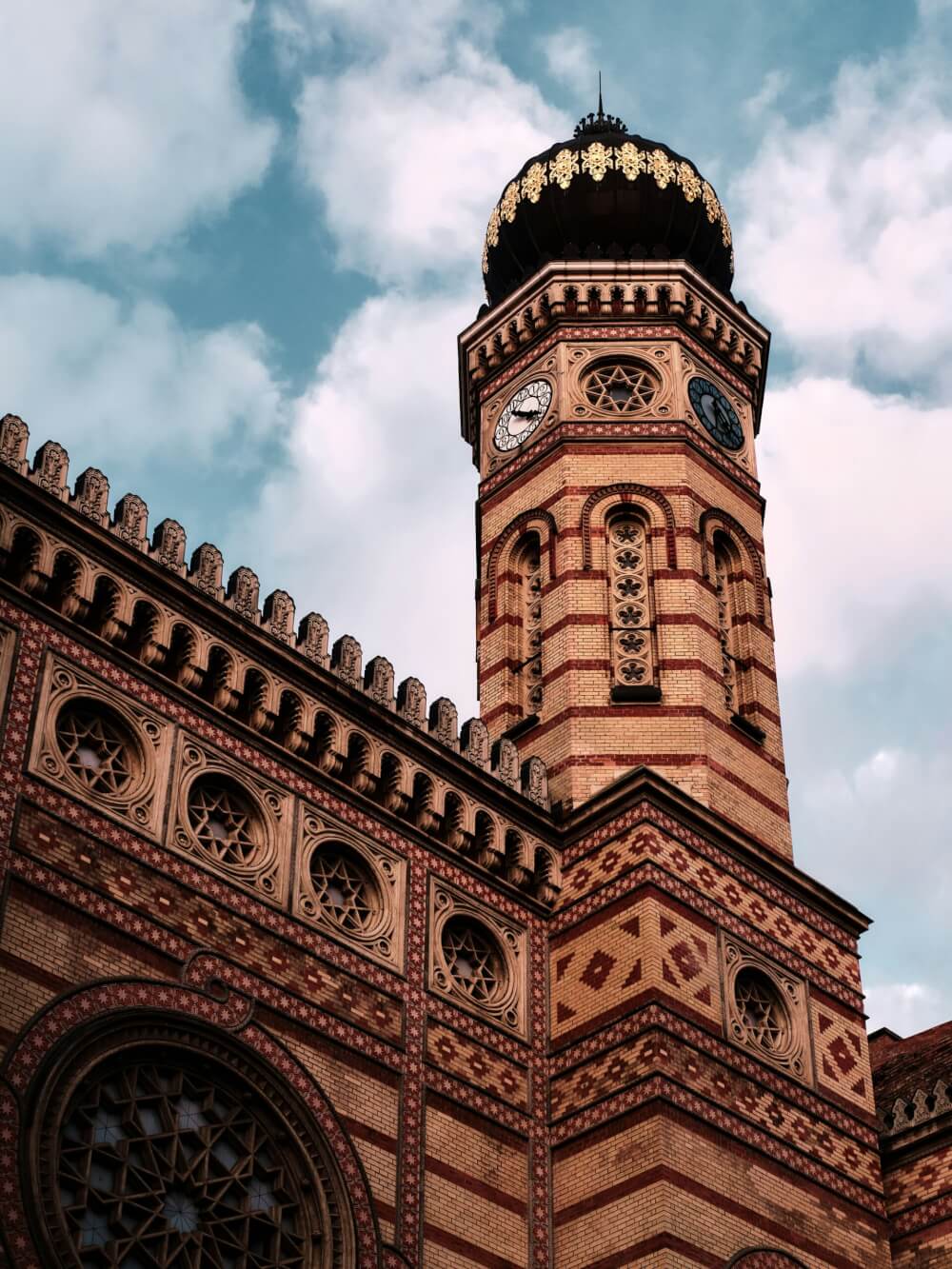
Another poignant but worthwhile Budapest must-see is the Dohány Street Synagogue, located in Budapest’s historic Jewish Quarter.
Built in the mid-19th century in Moorish Revival style by architect Ludwig Förster, this synagogue is actually the largest synagogue in Europe and the second-largest in the world.
Today, visitors can admire its stunning architectural features and visit the Hungarian Jewish Museum, which showcases artifacts, documents, and exhibits detailing the rich history and culture of Jewish people in Hungary.
Another highlight is the Holocaust Memorial Garden in the synagogue’s courtyard, which commemorates the thousands of Hungarian Jews who perished during World War II.
17. St Stephen’s Basilica
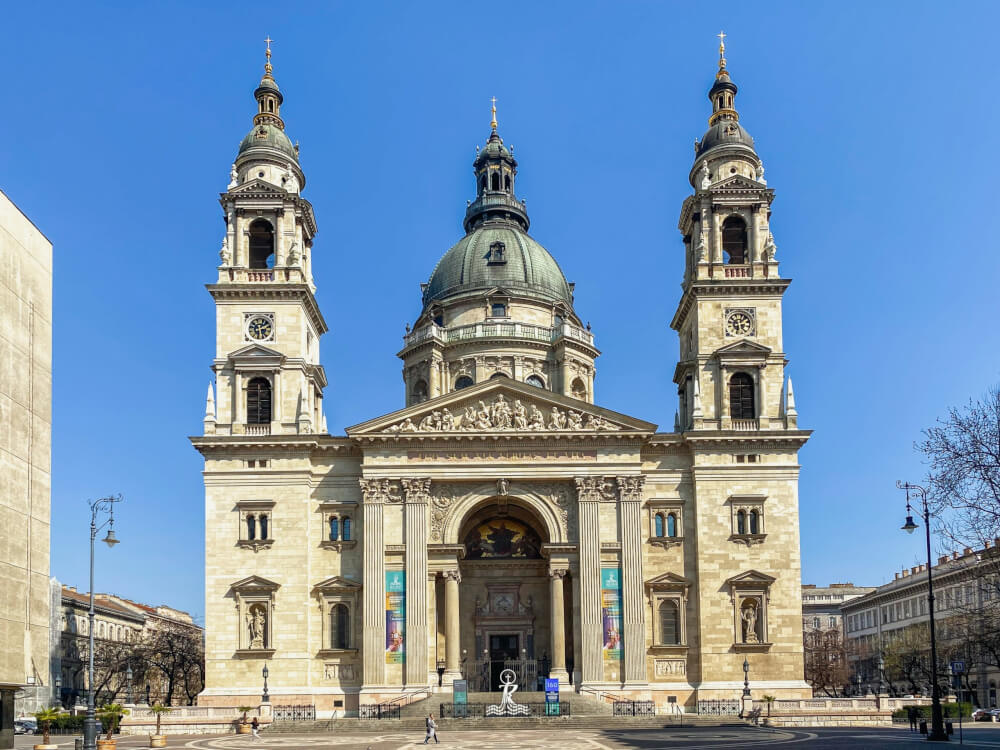
Next on our list is St Stephen’s Basilica, named after Hungary’s first king (whose mummified hand you can still admire inside. Oh yes).
This gorgeous neoclassical basilica is the largest church that Budapest has to offer, with a grand dome and imposing facade that makes it one of the city’s most iconic landmarks. Constructed over half a century and completed in the late 19th century, the main drawcard of this spot (apart from the aforementioned mummified hand) is an excellent view from its panoramic lookout terrace, accessible by either a lift or 364 steps.
The church and panorama is open seven days a week, although obviously on Sunday mornings the main interior is only open for worship. Check out the official website for the most up to date opening times and ticket prices, plus discounts.
For something even more magical, you can also enjoy a classical music concert in the basilica.
18. Hungarian State Opera House (Magyar Állami Operaház)
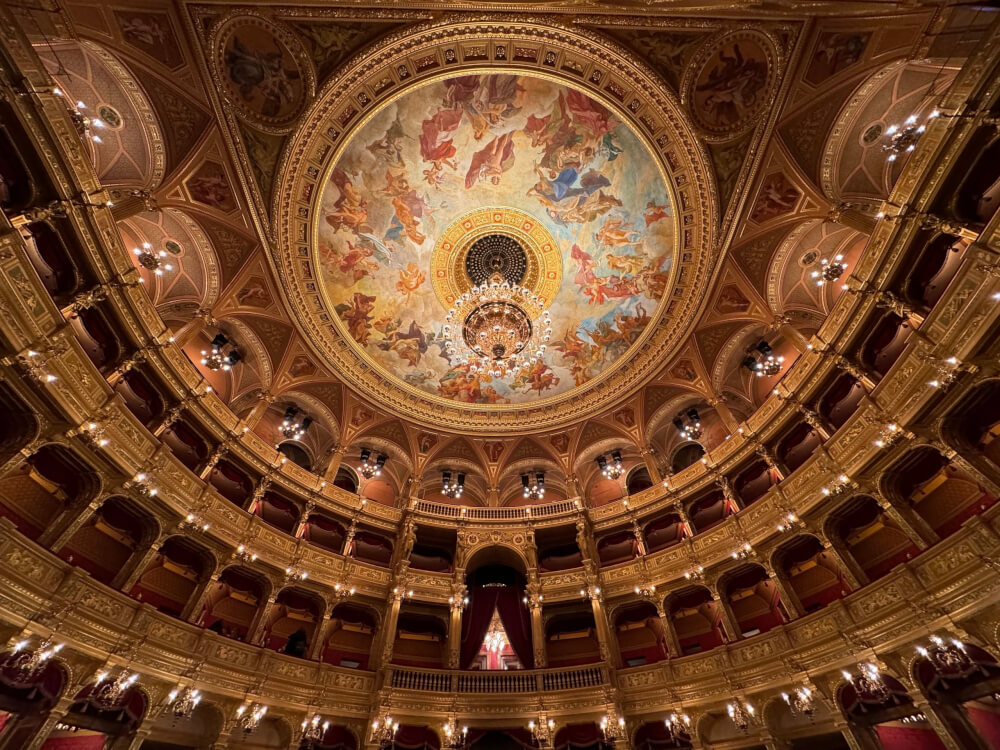
The Hungarian State Opera House, known as the Magyar Állami Operaház in Hungarian, is one of the most prestigious opera houses in Europe, and if we may be so bold, in the world.
Officially opened in 1884, it was designed by renowned Hungarian architect Miklós Ybl, who created the magnificent Neo-Renaissance building as a symbol of Hungary’s cultural and artistic prowess.
… and it’s faiiirly safe to say he succeeded. From its intricately painted ceilings to countless lavish chandeliers, the interior of this place is a true must-see, whether you opt to see a show for yourself or join a guided tour of the building.
19. Enjoy Budapest’s nightlife
AKA the main drawcard for some.
In case the ardent devotion to museums and architecture in the first 18 entries of this post didn’t tip you off, nightlife isn’t my main motivation for visiting Budapest. Nonetheless, it’s a big part of the tourism scene here, so it’s worth mentioning.
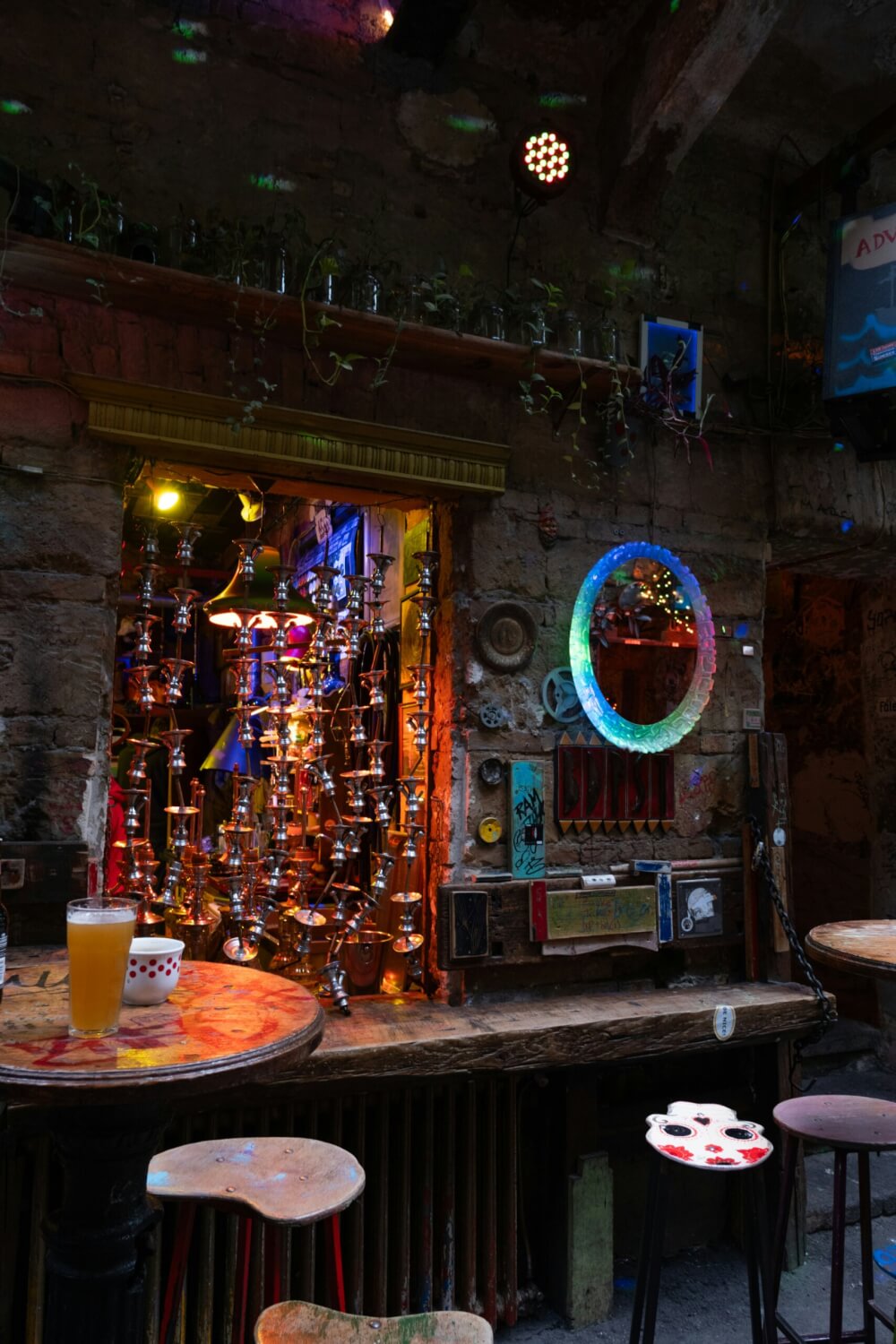
Especially synonymous with Budapest nightlife are ruin bars, unique drinking establishments housed in dilapidated, abandoned buildings, often decorated with eclectic furnishings and artistic installations. Szimpla Kert is the OG – a vast complex of interconnected rooms where you are guaranteed to lose your friends.
Some other popular picks include…
- Instant-Fogas: With seven unique rooms playing different music, everything from rock to R&B to techno
- Doboz: Multiple dance floors and an inner courtyard with a huge tree in the middle, along with a huge wooden gorilla climbing said tree!
- Csendes: Not quite as crazy as the others, more like a café with music, but the décor is just as unique with amazing art on the walls and lots of weird knicknacks
Of course, there’s something for everyone when it comes to Budapest’s nightlife. If you’re into fancy cocktails, you can visit Boutiq’Bar or if you’re more of a craft beer kinda person, there’s many options including Hopaholic, Madhouse, and FIRST Craft Beer & BBQ.
All that said, nightlife is part of what makes Budapest such an exciting and vibrant city, so don’t miss out!
20. Sip coffee in a grand coffee house
Now, to wake you up after all that nightlife-ing, it’s time to embrace another key part of Budapest’s culture – coffee houses!
Once upon a time, specifically around the 1910s to the 1930s, Budapest was known for its many many cafés where writers, poets and other artists used to congregate. There used to be more than 500 of these coffee houses, where writers would write on free paper and everybody came to get the latest gossip! AKA my dream life.
Sadly, many of the establishments were destroyed or closed down during the world wars and under the communist regime, but there are also many that have since been restored and become popular once again.
These days, you can sip an (often pricey) coffee in these same majestic establishments. To make the price tag more bearable, just remember you’re paying for the vibes and not just the caffeine.
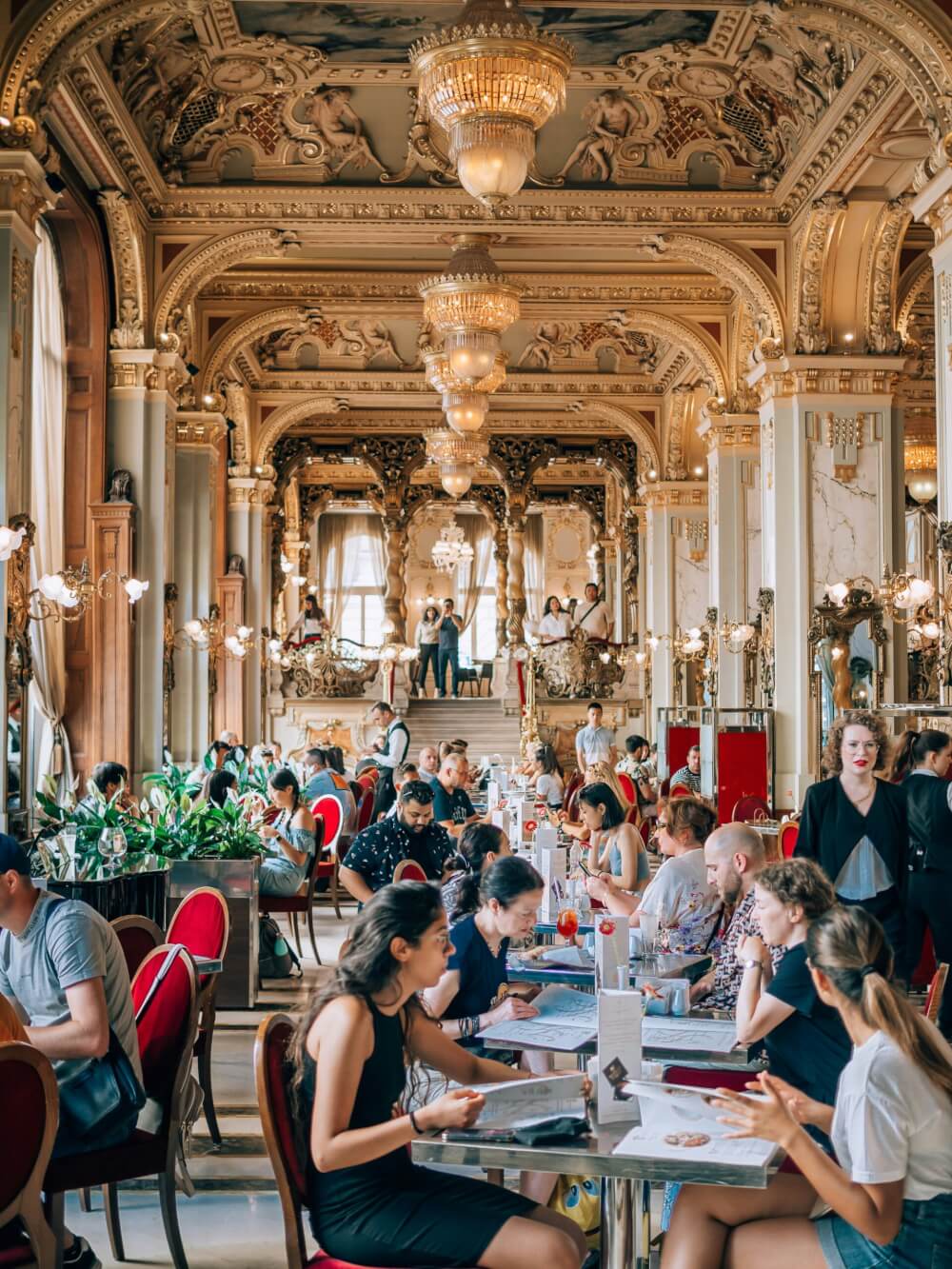
The most famous coffee house in Budapest is the opulent New York Café, a historic literary and artistic hub now popular among the Instagram and TikTok generation.
Other popular options include…
- Ruszwurm Cukrászda: Apparently the oldest café in Budapest and even Empress Sisi was a fan of their pastries!
- Café Gerbeaud: Another old and famous café, with a regal yet intimate atmosphere – try the signature Gerbeaud cake.
- Centrál Grand Café: Also very grand (hence the name) and was a popular meeting place for artists, writers etc.
21. Flippermúzeum
Now, onto something random that I personally believe is one of the best fun things you can do in Budapest: the Flippermúzeum, a museum dedicated to pinball!
… With (most importantly) dozens of machines for you to play on!!
I must have spent hours absorbed in the pinball machines here, a dorky admission for sure, but also a glowing endorsement. If you’re looking for something a little different to do in Budapest, this is a great pick.
It’s open Wednesday to Sunday but hours differ slightly each day so make sure you check out the website if you’re planning to visit. Tickets cost HUF 5000, which is about €13 or $14 in US dollars.
22. House of Terror
Something that’s a little more sobering but still very much worth doing in Budapest is a visit to the House of Terror: a museum about the fascist and communist regimes of 20th-century Hungary.
The museum is housed in the building that was used by both the fascist Arrow Cross Party and the communist ÁVH, with exhibitions providing visitors a deeper understanding of Hungary’s turbulent history. The museum serves as a reminder of the atrocities committed by these regimes and honors the memory of those who suffered and died under their rule.
I wouldn’t say that this is a particularly fun museum, but a visit here is a powerful and thought-provoking experience. The House of Terror Museum plays a crucial role in promoting awareness of the dangers of totalitarian ideologies while also advocating for human rights and democracy.
23. Margaret Island (Margitsziget)
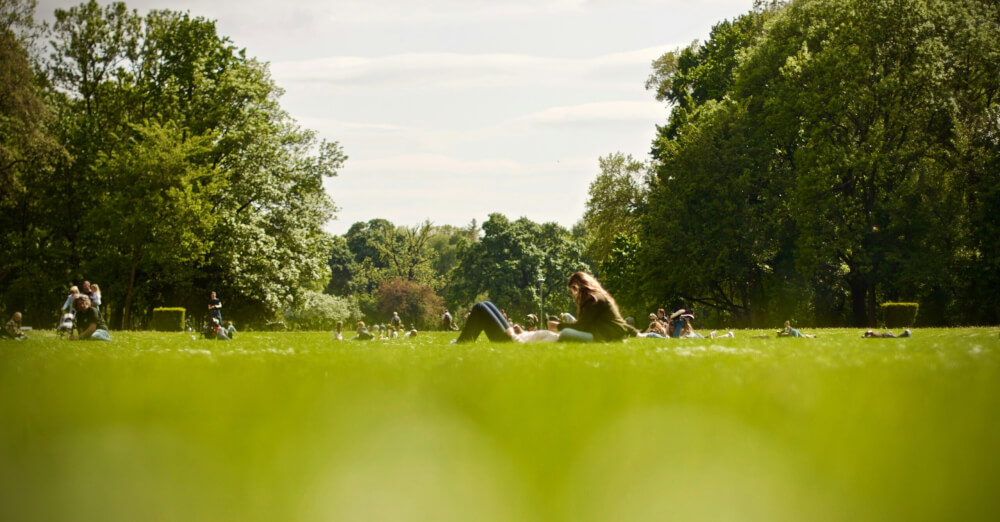
Another beautiful place to visit in Budapest can be found right in between Buda and Pest, on a peaceful island in the Danube known as Margaret Island.
Named after Saint Margaret, the island features lush green spaces, walking paths, and recreational facilities, offering locals and tourists alike a peaceful retreat from the city’s hustle and bustle.
With a history dating back to the Middle Ages, the island was home to religious orders and royal residences before being transformed into a public park in the 19th century. Its design incorporates botanical gardens, medieval ruins, and iconic landmarks such as the Margaret Island Water Tower and the Musical Fountain, which hosts colourful water shows during the summer months.
Visitors can also explore the Japanese Garden, the Rose Garden, and pretty views overlooking both sides of the city. If it’s more relaxing things to do in Budapest you’re after, this is a great spot, there’s even another spa on the island to enjoy.
24. Danube Promenade
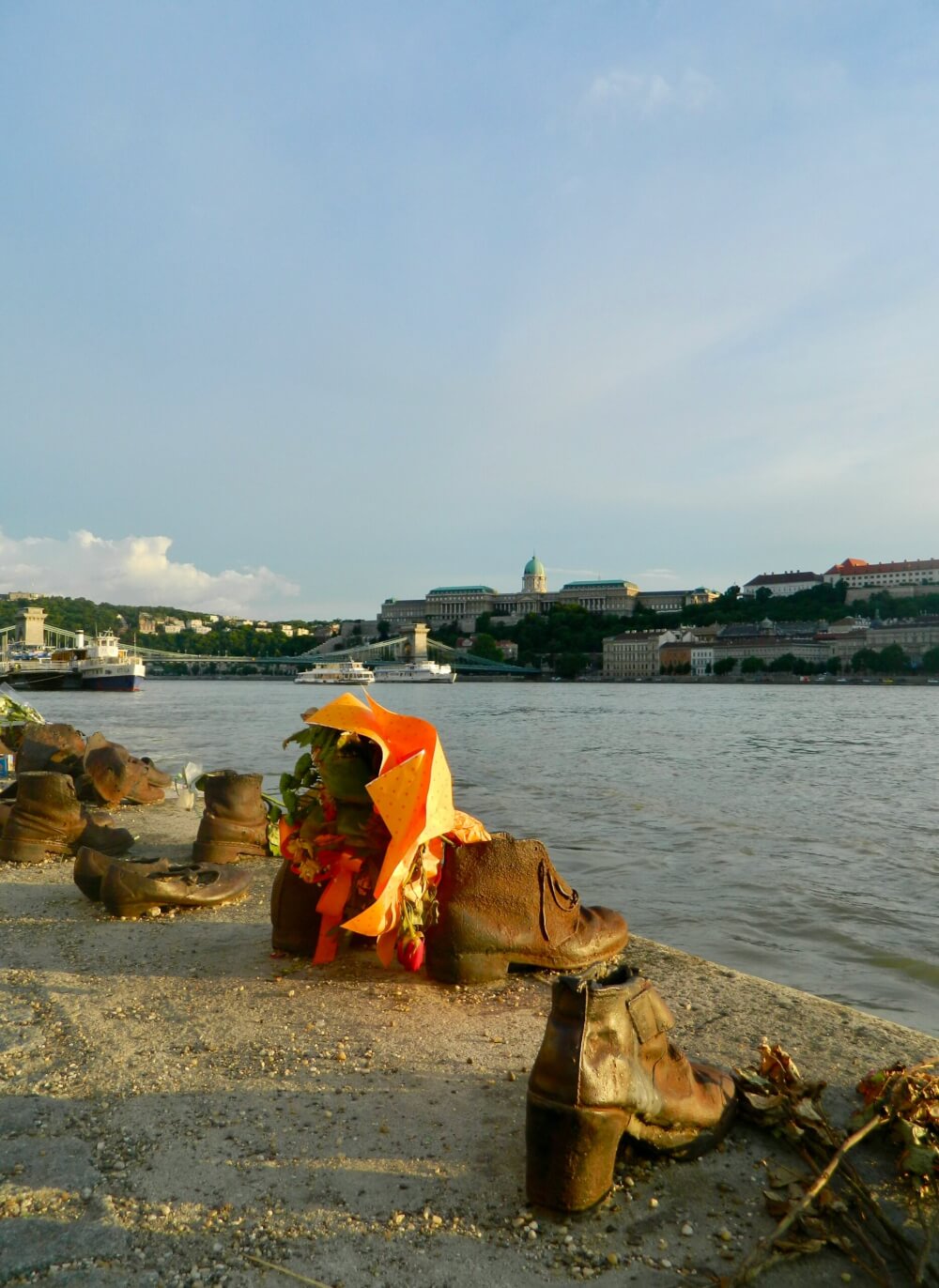
Another relaxing Budapest activity is a stroll along the Danube Promenade between Chain Bridge and Elisabeth Bridge. Along this roughly 20-minute minute walk, you’ll encounter several highlights including…
- Contra-Aquincum: Roman ruins from the 4th century in a park next to the Elisabeth Bridge
- Little Princess Statue: A cute statue of a little girl sitting on the railing of the promenade
- Vigadó Tér: A plaza with a fountain in the middle (in front of the Vigado Concert Hall), plus a cute statue of a Girl With Her Dog
- Shoes on the Danube: One of the most famous sculptures on the Danube, to represent the shoes that the Hungarian Jews had to take off before being executed during WWII.
25. Memento Park
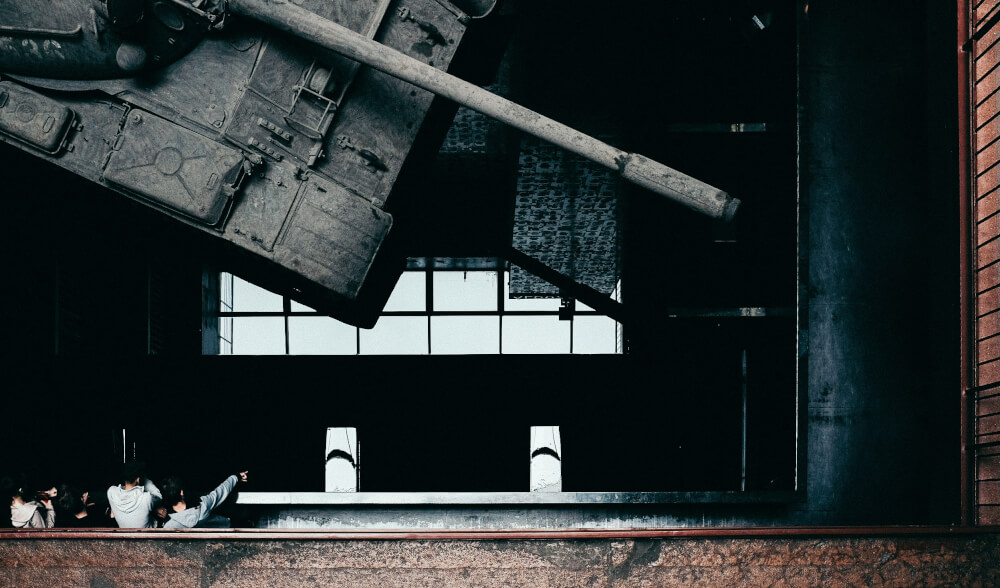
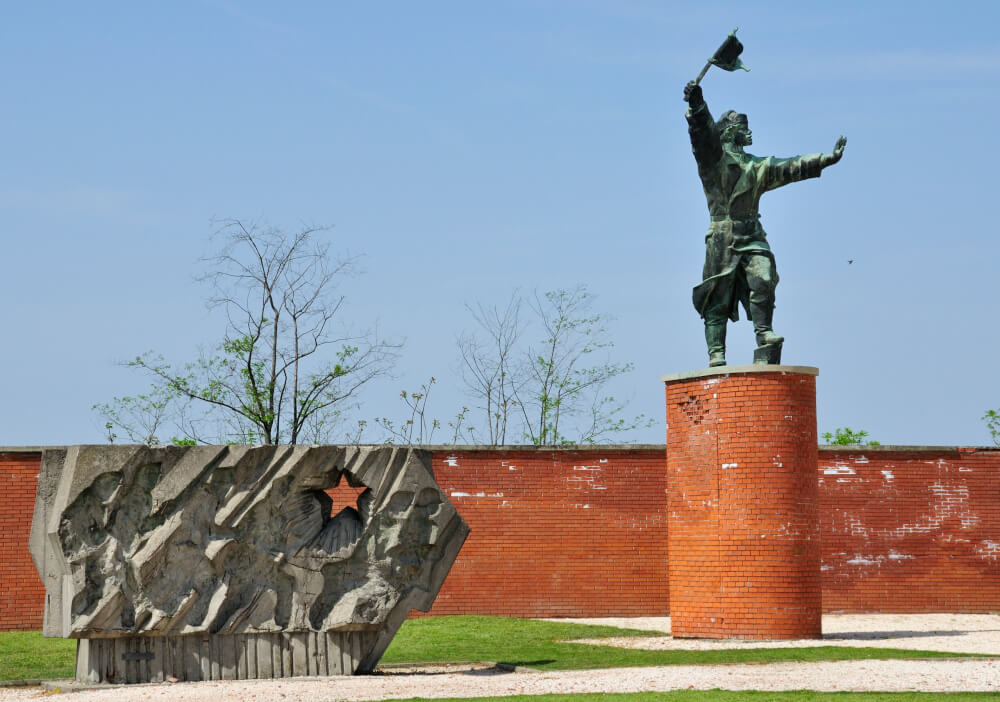
Situated on the outskirts of the city, Memento Park is a unique green space to visit in Budapest that is home to a collection of monumental statues and sculptures that once adorned the streets of Hungary during the communist era.
Established in 1993, this park serves as a poignant reminder of the country’s transition from communist rule to democracy. Its design features an open-air museum setting, allowing visitors to explore the statues and symbols of Hungary’s socialist past in a contemplative environment.
Among the notable pieces are statues of Lenin, Marx, and other communist leaders, as well as symbols of propaganda and socialist realism. If you’re looking for more offbeat things to do in Budapest, this is definitely one for the list.
26. Visit Budapest City Park (Városliget)
Another green space to check out during your visit is Budapest City Park.
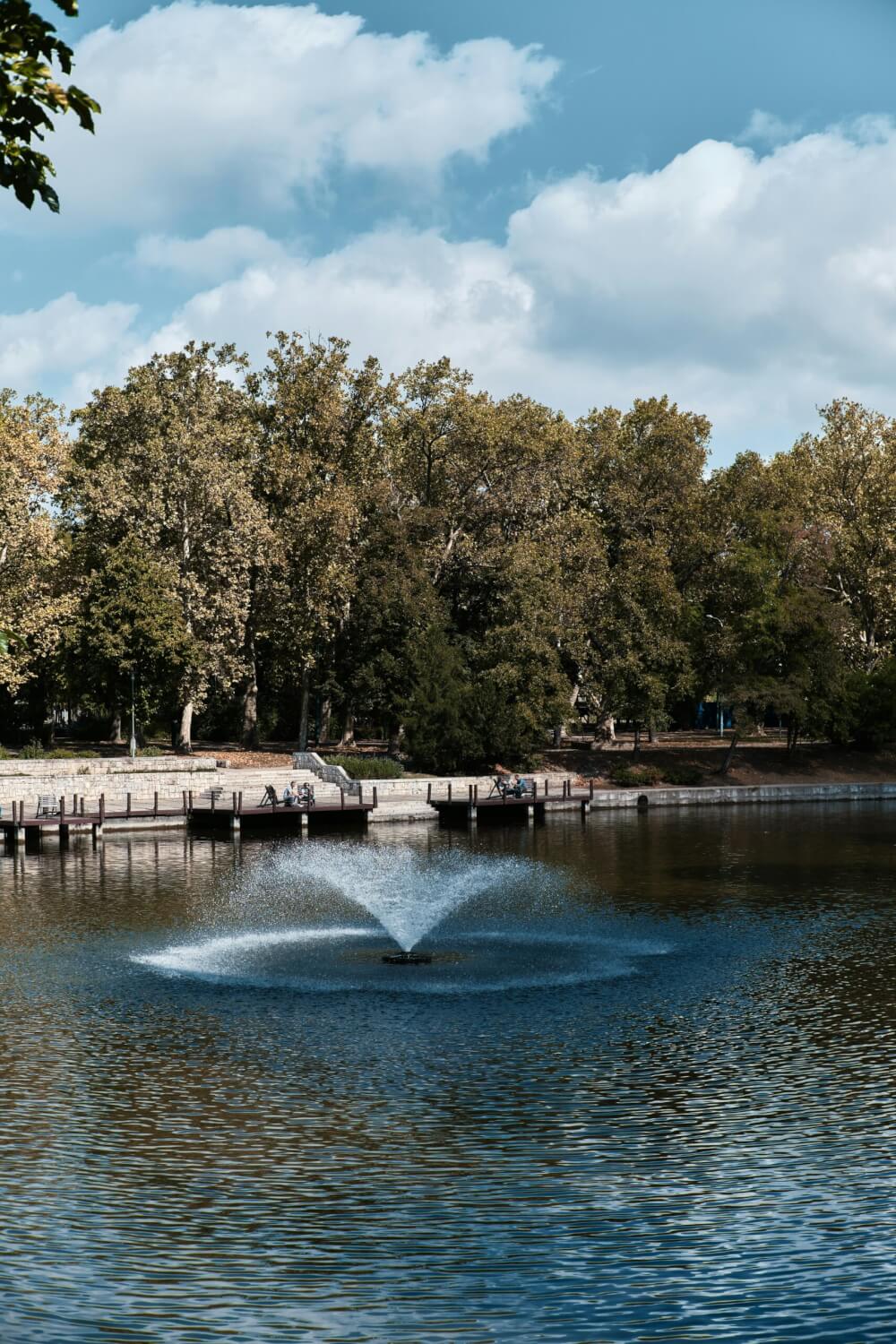
Established in the 19th century, the park is home to a number of lush landscapes, scenic pathways, and serene lakes, providing a tranquil escape from the bustling city streets. This is also where the Széchenyi Thermal Baths are located.
Highlights include…
- The Ethnography Museum: Collections on life in Hungary and Eastern Europe during the 19th and 20th centuries
- Vajdahunyad Castle: A beautiful Hungarian castle from 1896 located right next to the lake
- Budapest Zoo & Botanical Garden: Budapest’s zoo is the oldest in Hungary and one of the oldest in the world
- Capital Circus of Budapest: This permanent stone circus provides shows all year round
- House of the Hungarian Millennium: A gorgeous neo-Renaissance building with exhibits on Hungarian history
27. Go Mural Hunting
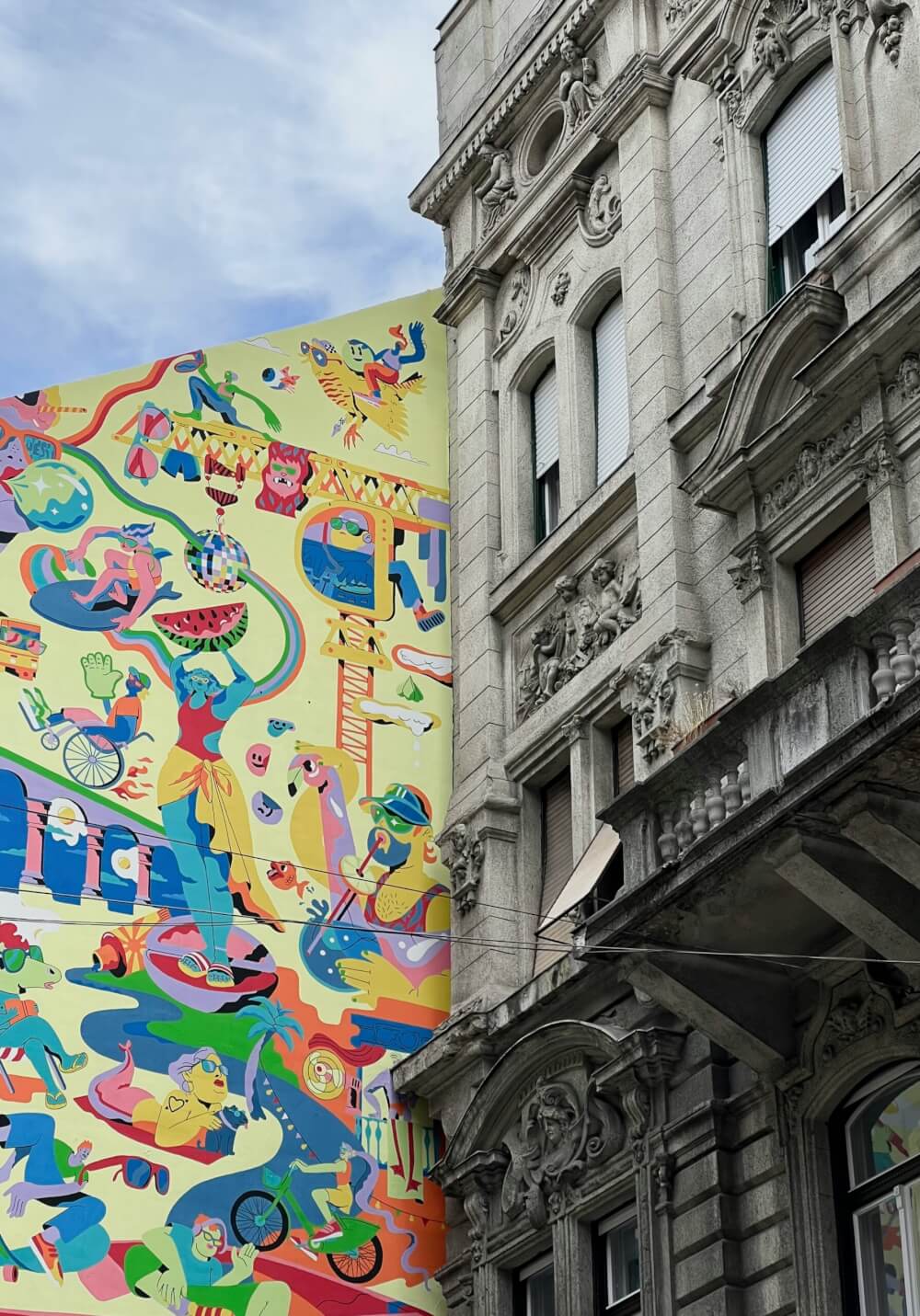
If it’s more offbeat Budapest activities you’re after, another one for your list is hunting for colourful murals! All around the city, you’ll find bits of intriguing street art addressing themes ranging from political commentary to depictions of important figures from history and just generally…. pretty… designs.
Many buildings in Budapest were left in ruins for decades after WWII, particularly around District VII which is also known as the Jewish Quarter. Around the same time that ruin bars started getting popular the city was also undergoing a revitalization movement in terms of street art, with many legal places set up for artists to create murals to beautify the city.
Some popular neighbourhoods for mural hunting include…
- The Jewish Quarter: This is where it all started and is still one of the best places to find street art in Budapest, wander around and you’ll spot lots, sometimes on the streets and sometimes inside the famous ruin bars.
- Filatorigát Graffiti Wall: This legal street art field in the northern suburbs is always changing, with 400 metres of art to admire outside some abandoned industrial buildings.
- Szemeretelep: There’s also another legal street art wall on the way to the Ferihegy airport which can be easily visited on your way if you’re flying in or out of Budapest.
You could even join a street art walking tour if you’d prefer someone else to show you where to find all the best street art, with context on some of the pieces.
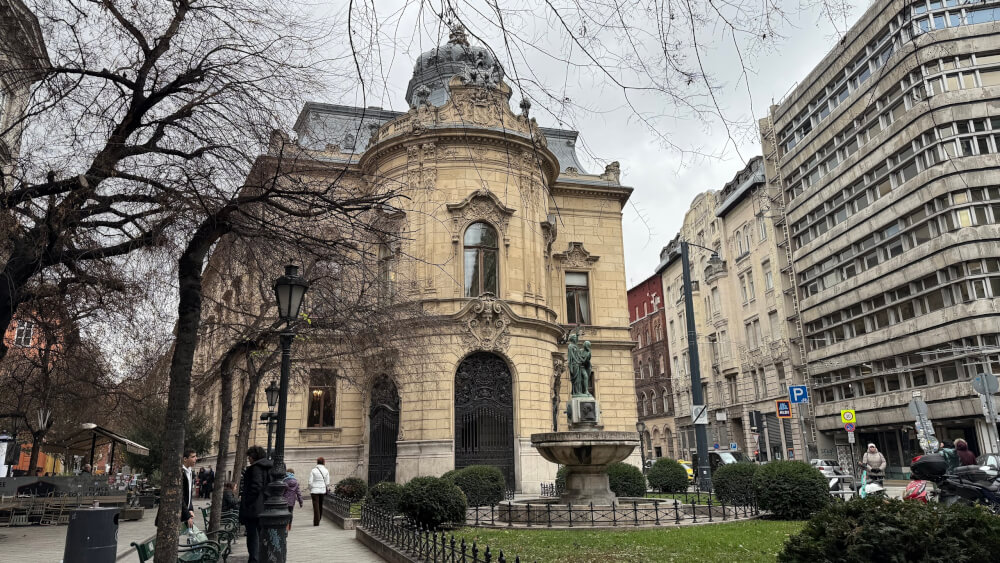
28. Marvel at the amazing Metropolitan Ervin Szabó Central Library
For my fellow nerds who love libraries, Budapest is home to a stunning one – the Ervin Szabó Central Library, named after the ultra-famous Hungarian librarian, bibliographer, and educator of the same name.
And there’s a reason it’s so beautiful! The main building of the library was originally constructed in the late 19th century as the Wenckheim Palace. It was later converted into a public library and opened to the public in 1931.
Today, the library’s collection includes both Hungarian and international works, with a particular emphasis on literature, history, art, and humanities. More importantly though, it’s also gorgeous, featuring elegant interiors that wouldn’t look out of place in a Disney movie!
Anyone can visit the library for HUF 1900 to ogle the beautiful building and use the free Wi-Fi. It’s usually open from 10am until 8pm on weekdays but check out the website to make sure of opening times when you’re planning your own visit.
29. Go caving
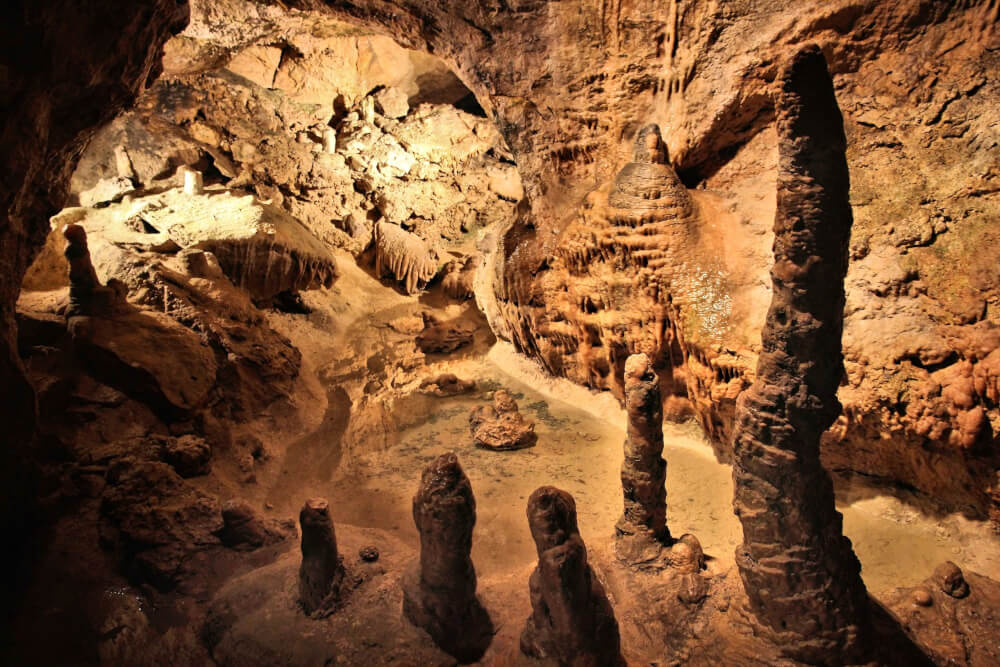
Yes, Budapest has caves! In fact, the city’s cave system is one of the most extensive in Europe, with over 200 known caves stretching for miles beneath the city.
… even more interesting, these caves have a long history of human occupation and use, dating back thousands of years. During World War II, some of the caves were used as air raid shelters to protect civilians from bombing raids. In more recent times, the caves have been used for various purposes ranging from wine storage and mushroom cultivation, to even as a secret military hospital during the Cold War.
These days, it’s possible to experience the city’s caves in a variety of ways, the most adventurous being a caving tour like this one that goes through the Pál-völgyi-Mátyás-hegyi cave system – which is the longest cave in all of Hungary and also the source for Budapest’s famous hot springs!
30. The House of Music
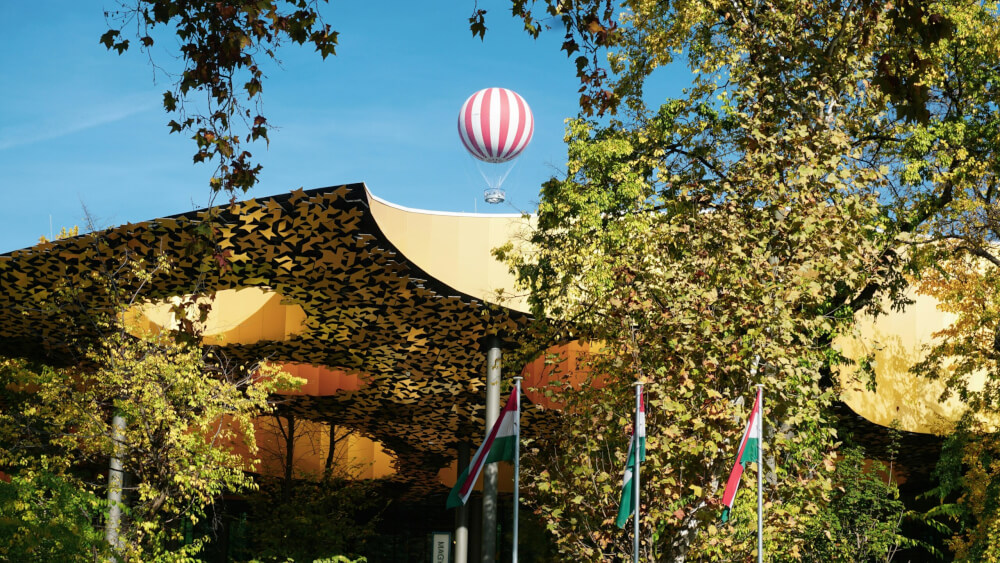
While the House of Music Hungary is also located within Budapest city park, I figured it deserved it’s own section as it’s such a cool and unique attraction.
The House of Music Hungary only opened in 2022, after Japanese architect Sou Fujimoto won a design competition for the cultural centre. The building itself is incredible, with an undulating roof filled with holes, huge glass walls and aspects of trees and greenery incorporated throughout.
The main exhibition here is about the history of music worldwide, but with a distinct emphasis on Hungarian music, of course. It’s meant to be particularly interesting for the types of people who might not attend classical music concerts but will still enjoy learning about music as a whole.
There are also plenty of concerts held here to check out, along with temporary exhibitions like 2024’s Divas and Icons! Check out the website to see what’s on when you’ll be in town.
Did I miss any of your favourite things to do in Budapest?
Let me know in the comments so I can add more of the best Budapest activities to the list. Happy and safe travels! 🙂