
*FYI - this post may contain affiliate links, which means we earn a commission at no extra cost to you if you purchase from them. Also, as an Amazon Associate I earn from qualifying purchases. Check out our Privacy Policy and Disclosure. for more info.
Biased as it may sound, I’m gonna be dramatic today and declare the Canadian Rockies to be one of the most beautiful places in the world.
There’s the turquoise lakes. The thundering waterfalls. The endless cascade of snow-dusted peaks… and MOOSE! I still remember my first visit in the summer before 3rd grade, witnessing the majesty of Lake Louise for the first time. My eyes had never seen that colour blue before, and that same sense of wonder still washes over me on every repeat visit…
So yeah, needless to say, I’m a fan.
Luckily for you though, I’m a studious fan. As well as a realistic one. The Canadian Rockies are jawdroppingly stunning – no arguments there… but they can also be a challenging destination if you’re not prepared.
So, to help ensure your Rockies trip is the best it can be, in this post I’m sharing my top Rockies tips and must-knows meticulously collected over multiple visits… including key dates like when campsites and shuttle tickets are released, and secret tricks to score these spots even when they appear to be sold out.
I hope you find it helpful!
Save this list of Canadian Rockies Travel Tips for Later!
You’ll be very glad you did.
1. The Canadian Rockies are huge – accept now that you won’t do it all!
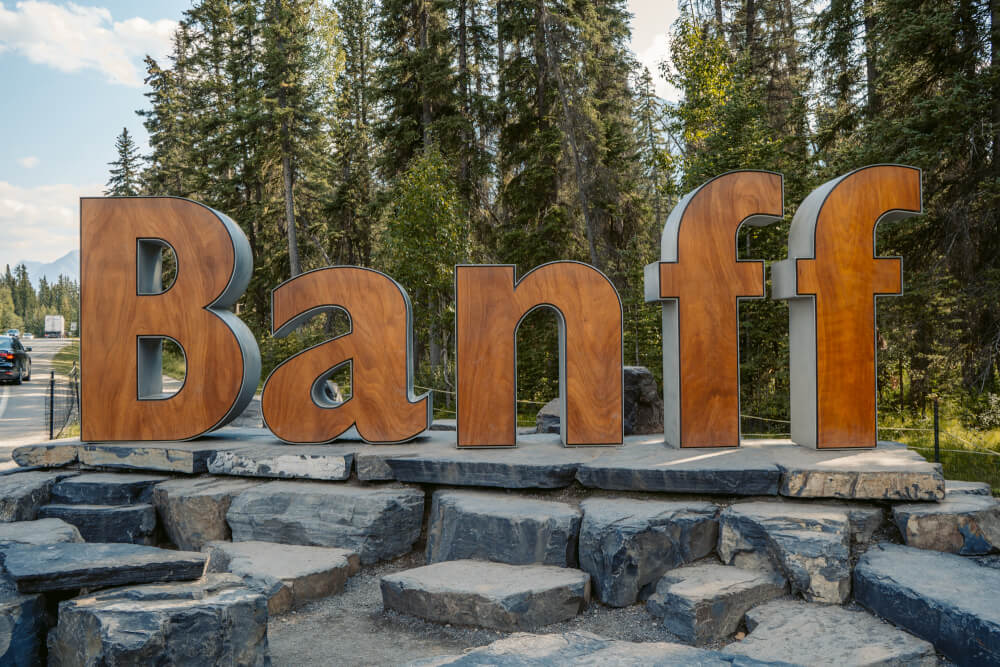
To help you get your bearings, most first time visitors to the Rockies will end up visiting just the stretch that focuses on the region’s five national parks, in order of most visited to least, being..
- Banff
- Jasper
- Yoho
- Kootenay
- Waterton Lakes
(And sometimes stopping in Mount Revelstoke National Park as well, if the trip includes BC)
And since this is Canada we’re talking about. The distances can be far, with direct paths often not possible due to all those absolutely hideous mountains and lakes. This is why you should expect a ton of driving.
From Banff, for instance, it takes just under an hour to get to Lake Louise, so don’t just assume that because places look close together on a map, that they’ll actually be super quick to get between.
Now, the number one mistake first time visitors make is they try to rush through a trip in the Rockies, but honestly you could live here for years and still not see every amazing view or trail… so rather than try to speed through this vast expanse, exhausting your brain and car motor in a vain attempt to “see it all”, my best tip is to choose a smaller area to explore in-depth.
The very cool thing about the Rockies is that there are amazing mountains, trails, waterfalls, and lakes all over, beyond just the most popular names, so covering a smaller area thoroughly will allow you to find more hidden gems too… while preserving your sanity.
2. Plan your route strategically
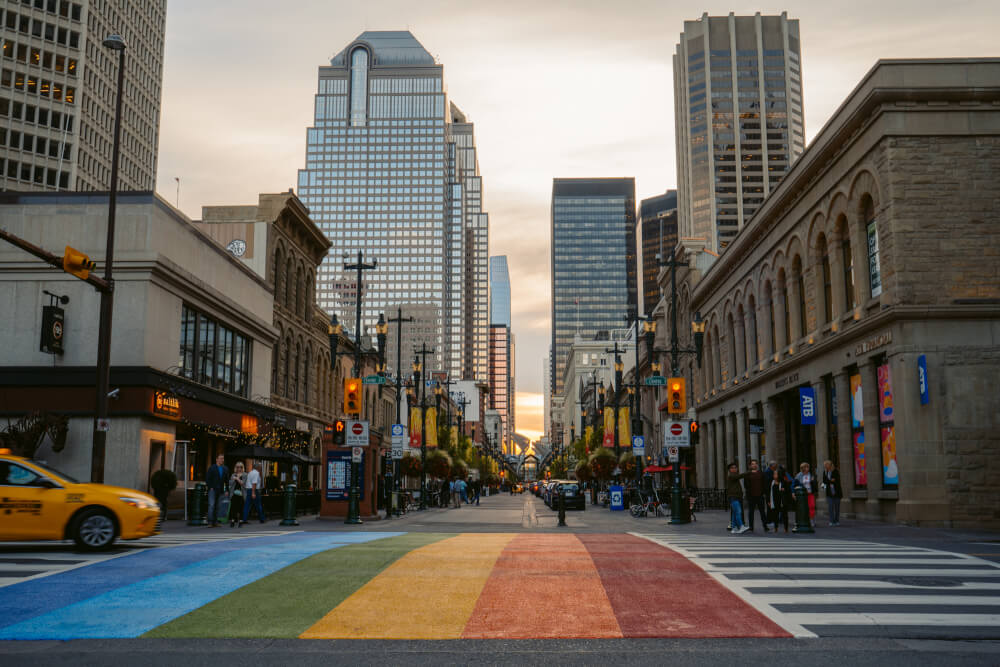
In terms of arrivals, the two main airports to fly into are Calgary (which is closer to Banff) or Edmonton (which is closer to Jasper).
Generally, I’ve found Calgary has better flight deals coming from abroad because WestJet’s global hub is there, so there are lots of very affordable flights from big cities in Europe and Latin America.
If your trip is limited to just Alberta, those with flexibility might want to consider flying into either Calgary or Edmonton and then out of the other to avoid backtracking.
But if you have more time, you might want to consider extending your trip further out west towards my hometown of Vancouver to see more of what Western Canada has to offer. I’m ultra biased but I think it’s pretty great out there!
A very popular circular route, for instance, would involve adding the Okanagan (which is BC’s beautiful wine country), Vancouver, Whistler and also Kamloops/some of the cool stuff around there like Wells Gray Provincial Park on the way back to Jasper, but I would advise a minimum of two weeks to do this trip justice.
Again, there is SO much to see and do, I don’t want to keep adding to your list but to make the most of your time, I think trying to find some kind of loop itinerary or flying in one city and out another is really the best way to maximize your time. You can use Google Flights’ multi city flight search feature to check out what the prices are like.
3. Know the pros and cons of visiting in each season (as well as the risks!)
The Rockies are stunning no matter which season you visit, but timing is super crucial if there are specific things you want to see or experience.
If you are looking for the classic Rockies postcard views and want to see the lakes fully thawed out, then mid June to mid October is your best bet.
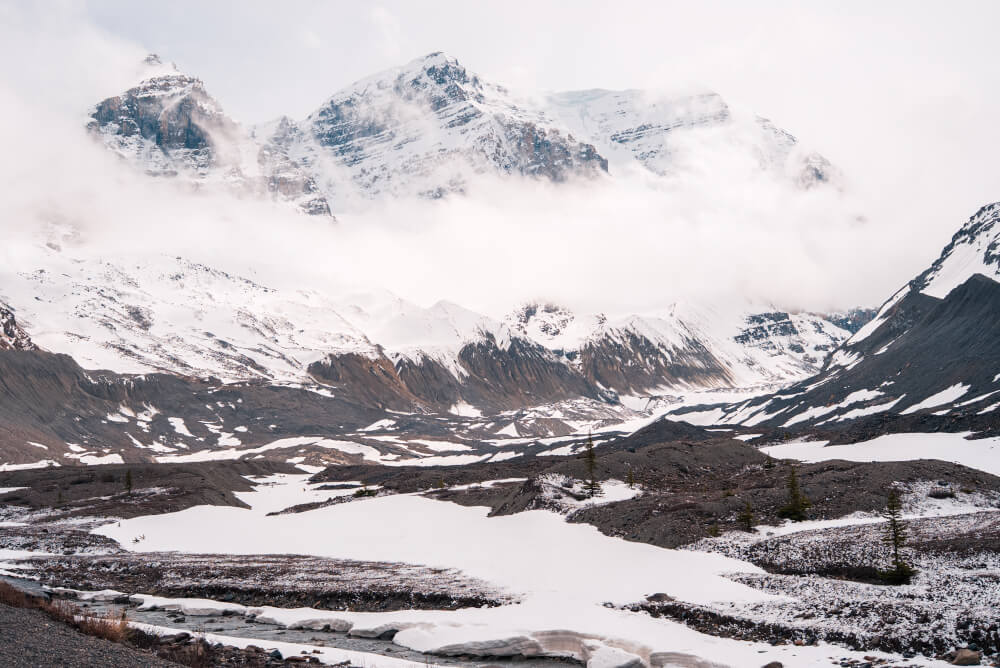
While exact thawing times vary year by year, my recent trip during mid-May meant most of the lakes were still half frozen, which was really cool to see but maybe not the iconic bright blue lake colour many come to associate with the Rockies.
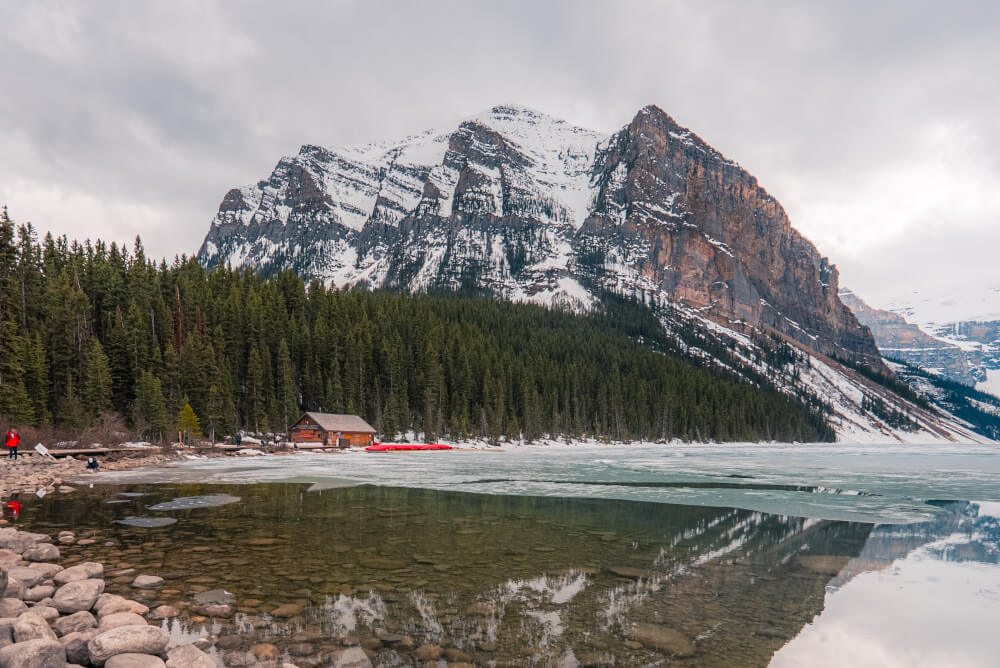
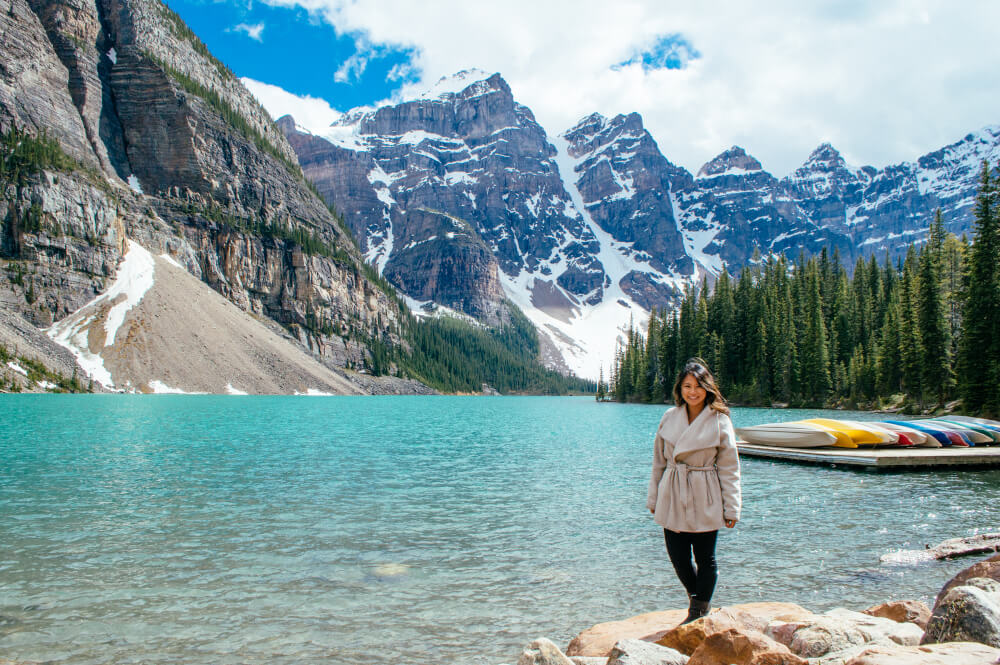
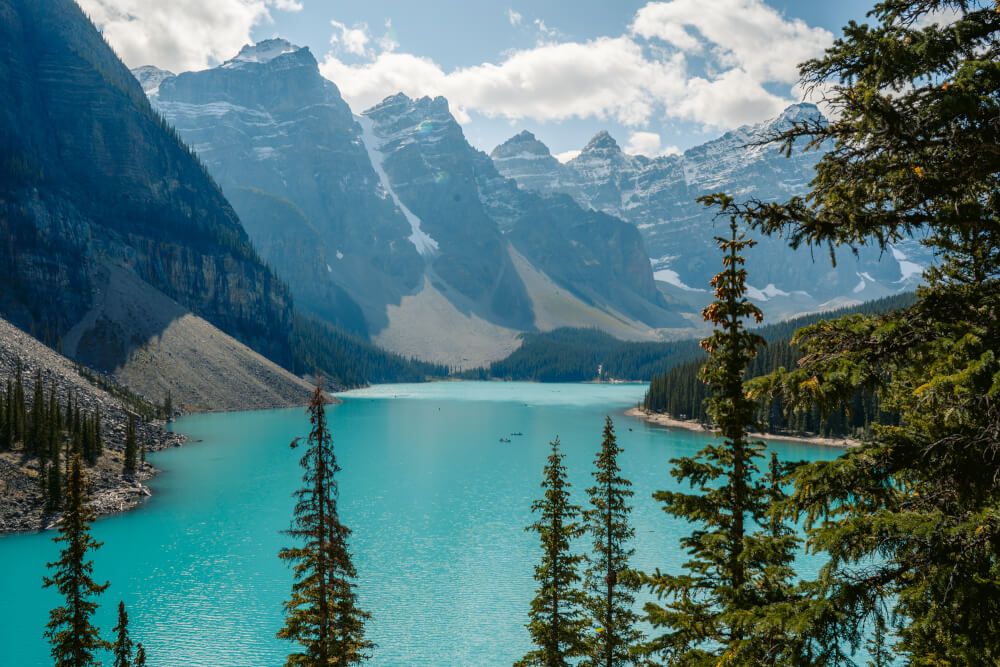
And do note that some lakes are actually inaccessible before June, so it’s not just a matter of weather. The road to Moraine Lake, for instance, has been closed to private vehicles since 2023 and is therefore only accessible by a shuttle, which doesn’t run from mid-October until June 1st.
If avoiding crowds is the goal, then avoiding July and August would probably be your best bet. June will have relatively fewer crowds, and from mid September onwards the crowds should start to thin out substantially. If you time things right, you might even be able to catch the stunning Larch season which is when you see these trees turn golden yellow, and that is usually from mid September to early October.
Winter in the Rockies is, of course, a different experience entirely, but if you’re into snow sports, frozen waterfalls and are prepared to hike with the right gear, like spikes, there is a ton to do.
And something that has been on my bucket list forever is seeing the frozen bubbles at Abraham Lake, which are (duh!) only visible in the winter, but there are tour companies that can bring you there easily if you don’t want to navigate driving on your own and all that.
So in summary, tons of great times to go, but know what the limits are for each period to avoid disappointment.
Moving on, to clarify and avoid confusion, I will also note that…
4. Jasper and Banff are national parks, but there are also towns by those names
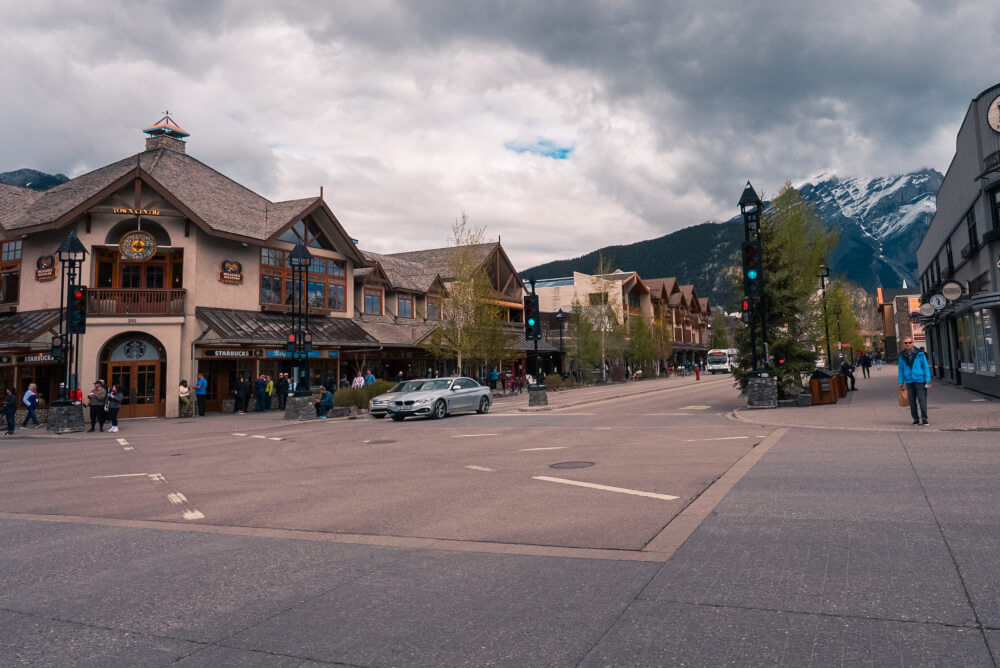
There’s a difference between Jasper National Park and Jasper town, and likewise with Banff National Park and Banff town.
Now, lot of people stress about staying IN Jasper or IN Banff, but to be honest with you, I think the towns are some of the least interesting parts of the Rockies, and there are actually more cost-effective places to stay as bases outside of these main towns.
So if you’re on a budget, do…
5. Consider staying in other towns outside of the main ones like Jasper and Banff
On our recent trip, we stayed in Hinton as a base for Jasper, which was great. Not only is the drive between Jasper and Hinton actually stunning, Hinton has way more large supermarkets and big name chains compared to Jasper, along with much more affordable accommodation. You can check out the options here.
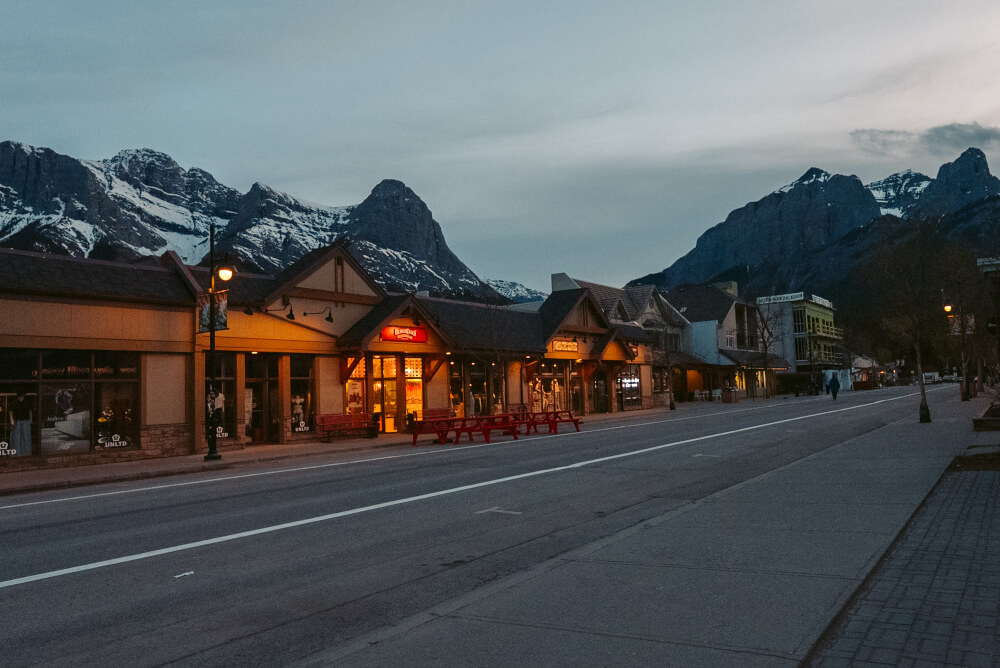
On this trip as well, instead of staying in Banff, we stayed in Canmore, which again, was really great value and a 25ish minute drive from Banff. We also felt like the options here overall seemed more modern and less dated than Banff… though if you find cheap accommodation do double check the location, because if it’s by the railway which ours was, you will be hearing some hilariously loud trains all night. Apart from the rather alarming railway wakeup call though , we did enjoy staying here.
Golden is also a fairly good value base with many activities of its own as well. You can check out the options here.
Accommodation-wise, do beware that…
6. Book your accommodation ASAP
Unfortunately, the Rockies are a popular place, so your best defence is to book ahead, especially if you are planning to stay close to any of the most famous sights.
You can also, unfortunately, expect value for money to be pretty lacking in these more popular areas, with even the eye-gougingly expensive hotels feeling… weirdly dated and old.
On the plus side though, there really are options for every price point!
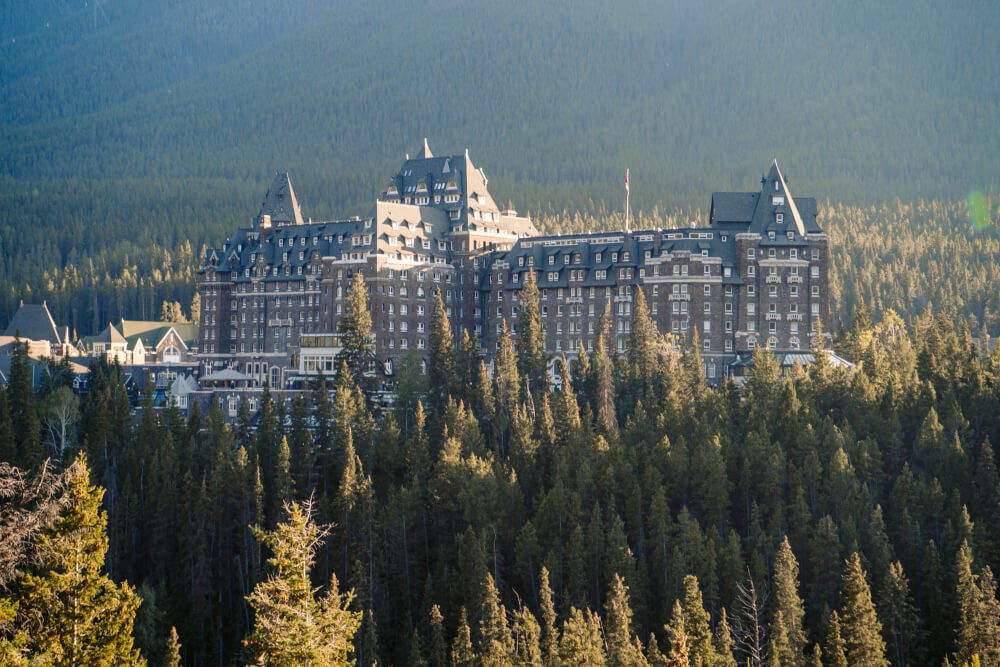
At the top end, you have luxurious properties like the Fairmont Hotels, which cost an arm and a leg but offer an incredible experience, especially the lakeside suites at the Fairmont Lake Louise… with a bonus being you can wake up AT Lake Louise and experience it before and after crowds arrive.
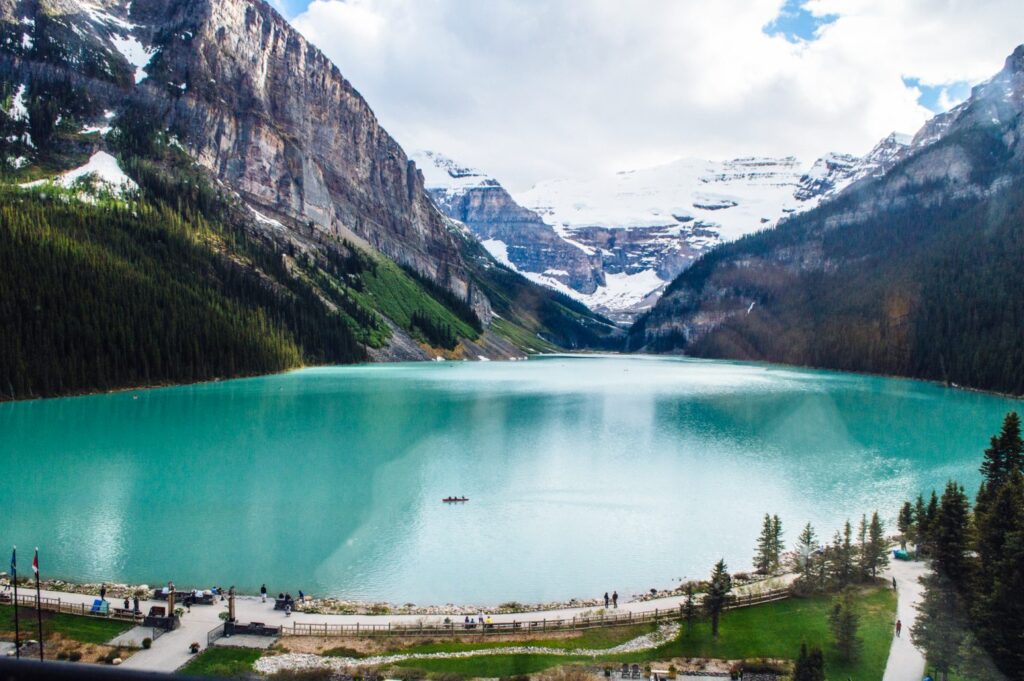
There are also slightly more budget friendly lodges, hotels and motels scattered around that can, again, feel quite dated.
But my personal recommendation is trying to book an aparthotel or apartment rental, simply because you then have access to a kitchen… which can make a huge huge difference in terms of budget, and also gives you more space to hang out and unwind if you’re travelling in a group.
My go-to is usually hopping on Booking.com to see all the different options, using filters to find what I’m interested in, and checking off any key amenities like a kitchen or laundry. I have a full video detailing my process for finding the best places to stay every time so be sure to check that out.
Now if budget is a priority, there are also some hostels available in the Rockies, both in major towns and also farther out if you want to be close to nature – Hostelworld is a great website for looking those up but do prepare yourself that even hostels are NOT cheap.
During peak season, hostels in towns can still cost you over $100 a night for a dorm, and hostels in more remote areas will still be about $50 or more. So yes, cheaper, but not cheap by any means.
If you plan to do big hikes during your time in the Rockies, do know there are also some very cute mountain huts you can book, though space is extremely limited so planning ahead is key here as well.
The Alpine Club of Canada website is where you can see the options and book, but do note there may be a lottery system for the more popular ones like the Elizabeth Parker Hut at Lake O’Hara in Yoho National Park. Staying here is one of the only ways you can hike this lake without getting a coveted shuttle spot, so needless to say, it’s very popular.
Of course, there is still camping as an option as well, but for that I say…
7. Plan ahead (Jan/Feb) if you want to camp during your trip
I am by no means a camping expert, so I will just offer you some general planning advice – if you want to camp during your time in the Rockies, you really need to plan months ahead, and this is because all Parks Canada campsites open their reservations in January/February, and do sell out immediately. So, you need to be ready to book the minute that they’re released.
You can see a full list of release dates on the Parks Canada website, so go there now and save any dates that might be relevant to you, taking note of the time zone so you don’t accidentally miss it!
When bookings open up, you will need to say what equipment you’re booking for, say a small tent, medium tent, or trailer homes of a certain size, so before these bookings open, make sure you have an idea of what you’ll be camping with.
if this sounds like too much planning, for the more adventurous among you, there is another option people don’t usually talk about because it’s… not for the weak, and that is to camp on crown land, or land owned by the government rather than by private individuals or corporations.
Fun fact, this is almost 90% of land in Canada.
Camping on crown land, though, usually means no facilities, no cell service, and you being completely on your own. For those who are prepared to do it, this means utmost freedom and independence, but it is not suitable for most first time visitors.
And it’s actually surprisingly NOT always 100% free, contrary to popular belief.
In Alberta, you need something called a Public Lands Camping Pass in order to camp on public land along the eastern slopes of the Rockies. As of 2026, this is $20 per person for a 3-day pass.
However, in BC, stays on crown land are allowed and free for up to 14 days in one location… so, BC for the win.
Again, I’m not a camping expert so I’ll just direct you to other resources that can help if you want to explore this further.
Freecampsites.net has lots of spots marked, with reviews from real people to help you gauge what spots are like.
I’ve also heard great thing about Backroad Mapbooks if you are looking to really explore the backcountry… but I feel like that’s probably not most of you so I’ll move on.
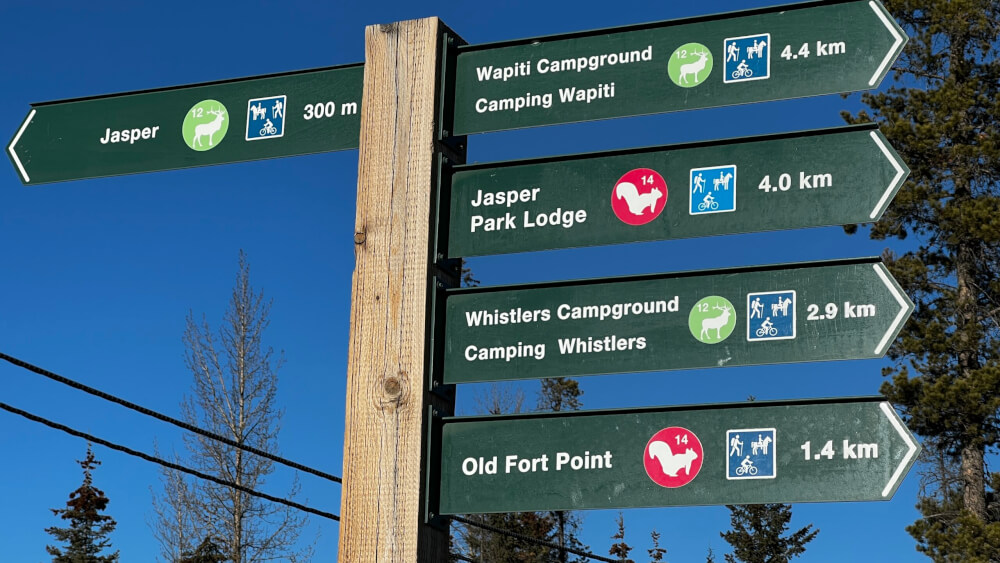
Now, I’ll cover transport a little bit later in this guide, but since we’re talking about accommodation, I should also mention that you can…
8. Consider a camper van or an RV to combine transport + accommodation
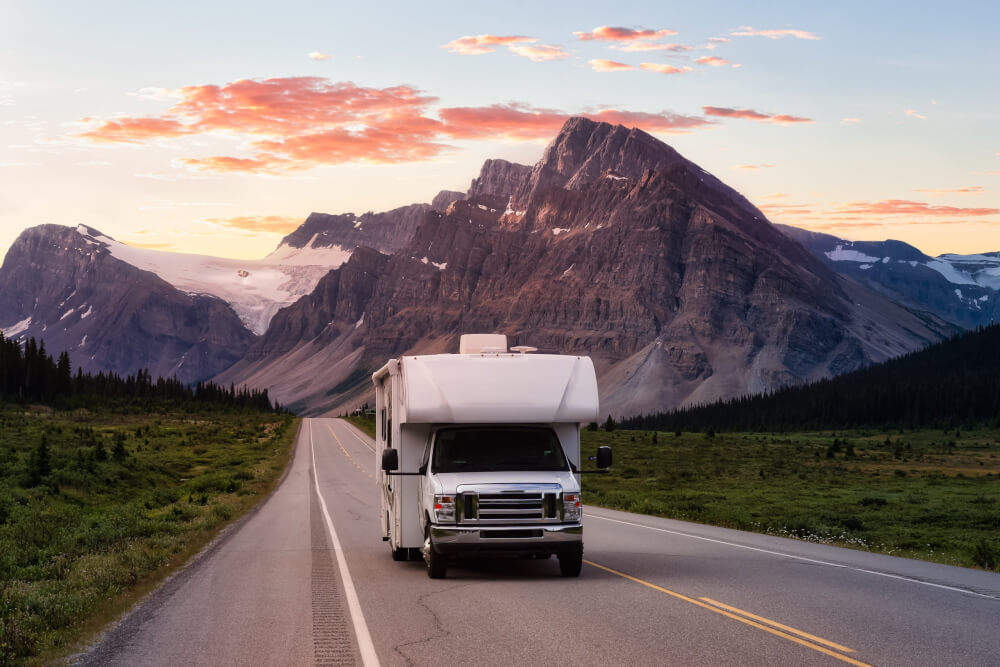
Camper vans and RVs are a very popular way to get around the Rockies, and is well suited to those who crave the freedom and proximity to nature that comes with camping, but maybe…. also crave the warm snuggliness of a real bed and pillow. As a princess who adores her creature comforts, I don’t blame you one bit.
And you know what? With traditional accommodation being as expensive as it is, bundling it with transport in this way can actually work out to be cheaper!
In terms of where to rent one, Canadream is a very popular RV rental company and you’ll see their RVs constantly – there’s also RVezy and Outdoorsy, which are sites that allow you to rent directly from van and RV owners.
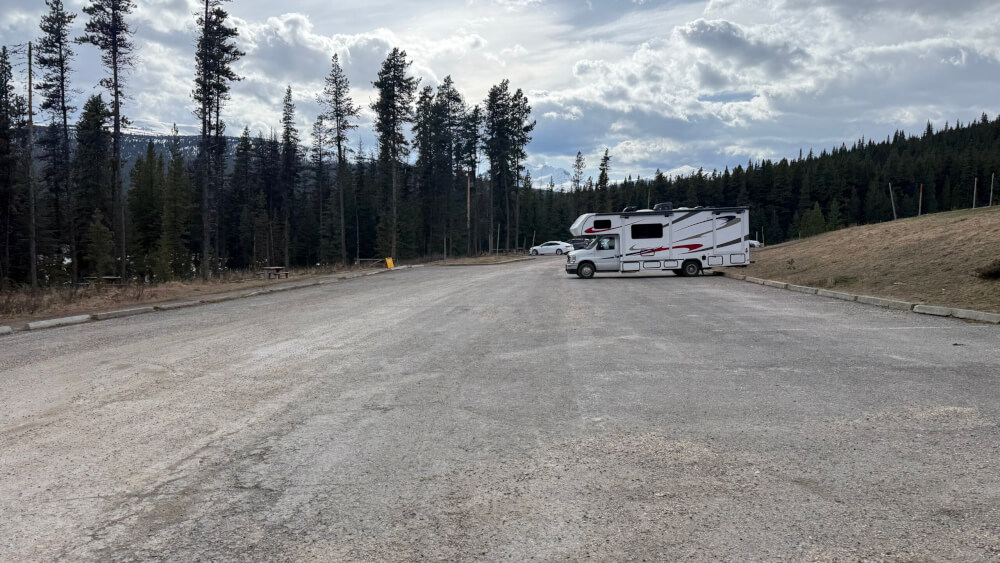
But this is super important, keep this in mind:
9. If renting an RV, pay close attention to RV size & book the right campsites for it
Because if your RV does not fit the site you booked, you will be turned away and be doomed to a vacation full of strip mall parking lots.
Now, while were talking about bookings, another thing to have on your radar is that you need to…
10. Book parking shuttles for the big lakes (Lake Louise & Moraine Lake)
If you are going to Banff National Park, odds are you are going to want to see these two lakes.
… Unfortunately, so will everyone else. And their moms.
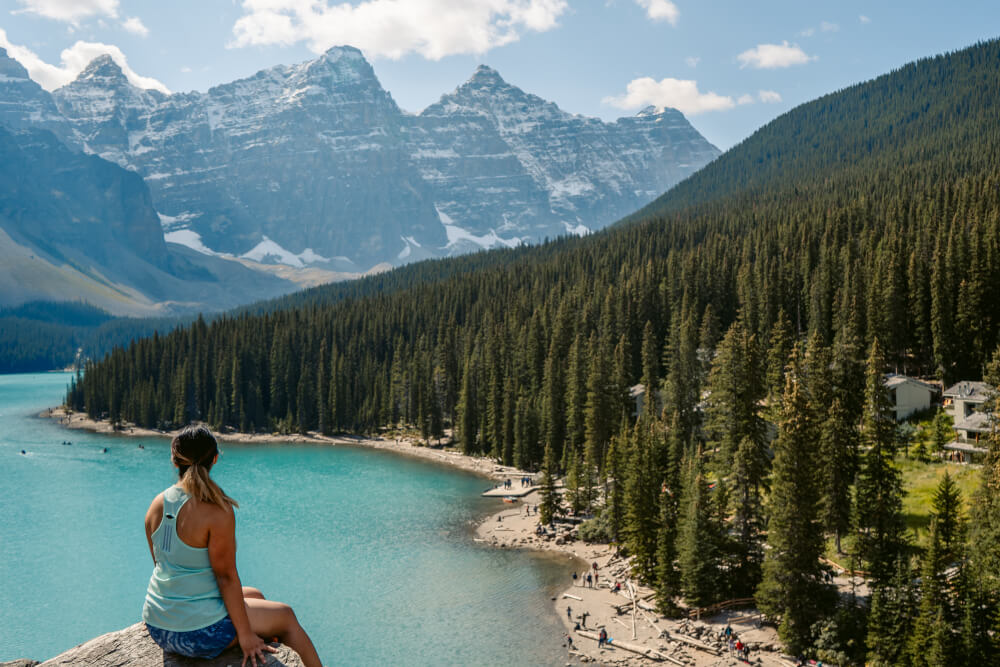
So, as Parks Canada say themselves, the only way to guarantee that you’ll see these lakes is by booking a Parks Canada shuttle in advance on their official website.
This is because Moraine Lake is closed to private vehicles so you can’t get there on your own anyway, and Lake Louise is SO busy that finding parking can be a nightmare and never guaranteed.
The way the shuttles work is this: you book seats for a specific day and time slot for however many are in your party, and then you just park your car stress-free in a giant parking lot that day, and the shuttle takes you to the lakes.
There’s also a shuttle that goes between Lake Louise and Lake Moraine, so you can do both if you have time, you don’t need to book a shuttle to both.
The problem is, spots are limited, and competitive.
There are two specific times you can book these shuttles. The first is the day the reservations open for the whole season, which is usually mid-April.
If you know your travel plans already, try for this date.
If you haven’t planned that far in advance, you move onto Option 2, which is to book a slot 2 days prior to the day you want a reservation for. These extra slots open up at 8am MDT, again, two days before departure.
From experience, slots go pretty much instantly, so you want to make sure you’re online at that exact release time. The smaller your party, the better your odds at securing slots. And obviously, the later the slot, the less desirable, because generally people wanna get there in the morning to maximize their time… but honestly, that’s irrelevant because you wanna take what you can get.
I will say though, if you don’t manage to get a spot on the initial drop, don’t panic.
I was recently tasked by my parents with what I thought was the IMPOSSIBLE task of trying to secure shuttle tickets for 8 people in the middle of peak season, and while doing this, I discovered a really good trick.
Yes, reservations sell out pretty much immediately upon release because people panic and add them to their carts, BUT if you wait 20-25 minutes after that initial drop, then carts start to expire, and any bookings that weren’t confirmed initially then go back in the pool, and because nobody is still hanging around refreshing at that point, you have way less competition and can more easily secure spots.
Granted, the most desirable slots are usually taken up by this time, but if you have a smaller party, you might get lucky.
So remember this trick, always refresh on the bookings page about 20-25 minutes after. Keep refreshing, don’t keep your eyes off the page, just keep doing it and something will pop up.
You can also use this trick for campsites.
11. Don’t forget you’ll need a pass to visit all the national parks during your visit
These cover the cost of maintaining all the beautiful recreation areas, trails, and roads that you’ll be enjoying during your time in the Rockies.
You can either get a Daily Pass or an Annual Discovery Pass, which gives you access to 100+ parks for the whole year. Which one makes sense depends on the length of your trip and how many parks you’re visiting.
Luckily, they make it pretty easy to figure out the best option – passes aren’t cheaper online, so if you want to make sure you get the right pass for your needs, in-person the process is super easy – you can get them at the park gate or at visitor centres, they ask you how many people you have and which parks you’re going to and get you the pass as needed which takes all the guess work out of it.
Park Passes can also be purchased online, but do note you’ll have to print these out and it’s again, not cheaper to buy online as far as I know, so the only main benefit is you might be able to skip the line if there is one, but the wait isn’t usually too bad.
If you do want to buy online, the Banff lake Louise tourism site has a great page where you can enter the number of people as well as your dates and they’ll recommend the best pass.
In the past, they’ve run offers like the Canada Strong Pass, which grants free admission and 25% off camping/overnight stays, so be sure to keep an eye out for anything like that.
Now, finally I mentioned this before but just to hammer home the importance, do try to…
12. Explore beyond the most famous sites to round out your experience
The Rockies are filled with amazing places, and only a fraction of them are the famous ones you see in every guidebook and Instagram post.
It sounds old school, but just poking around on Google Maps to look at areas that look cool on satellite view is a surprisingly fun way to find lesser known spots.
AllTrails is also great for finding trails too.
Generally speaking, if you want to avoid crowds in the Rockies, you’ll want to head to places that tour buses don’t go to, so have a look at websites that offer tours and take note of the recurring names, then try to steer clear of those if getting off the beaten path is your goal.
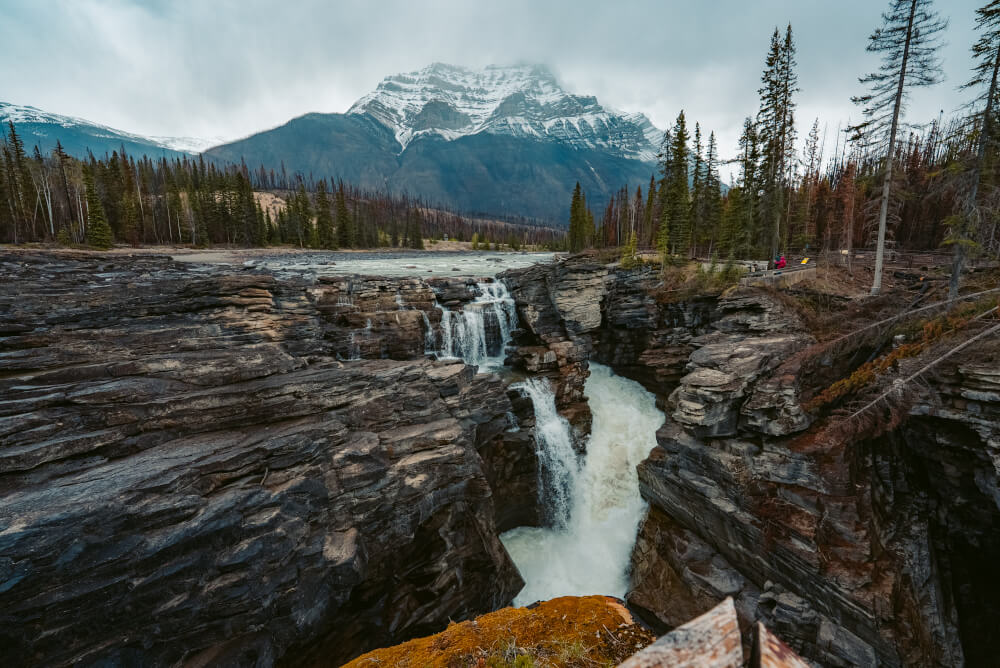
13. The best way to explore and get around the Rockies is with a car
As a non-driver myself, I’ll always take public transport whenever I can. Sadly, in the Rockies, this isn’t really a great option.
For the full experience here, you really do need a car. It’s incredibly difficult to see the highlights of the Rockies without a vehicle of some kind (whether that’s your own, or a through a tour), so do bear that in mind.
I usually use DiscoverCars to compare prices across various companies at the same time.
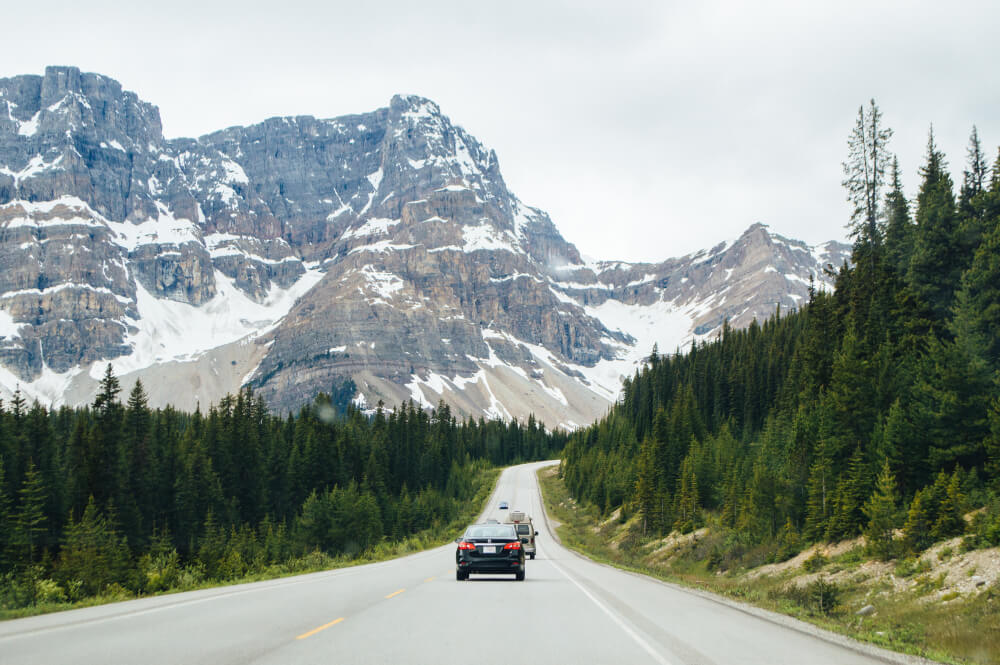
14. Always keep an eye on fuel
… and make sure you have enough, as gas stations can be sparse.
We learned this the hard way driving from Hinton to Banff, realizing partway through we didn’t have enough fuel to get us all the way to Jasper, and the closest gas station was actually in the opposite way back in Hinton. So don’t make our mistake and ensure you fill up the tank before long driving days!
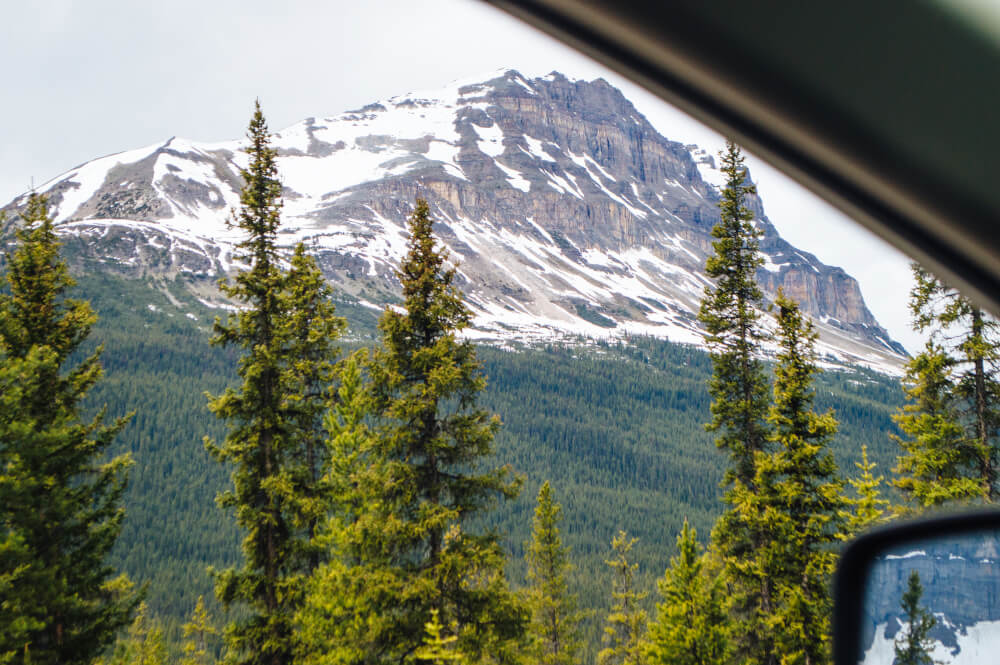
15. Drive carefully, especially at night
One of the region’s biggest drawcards happens to also be one of its biggest night time dangers: wildlife.
You’ll see signs warning about deer and all sorts of animals – but yes, they can and do randomly jump out in the road at night, so drive very carefully.
Though I will say, there are a lot of cool wildlife crossing bridges now which I think are an amazing idea that makes things safer for both animals and humans alike… though this will definitely decrease your chances of spotting roadside animals.
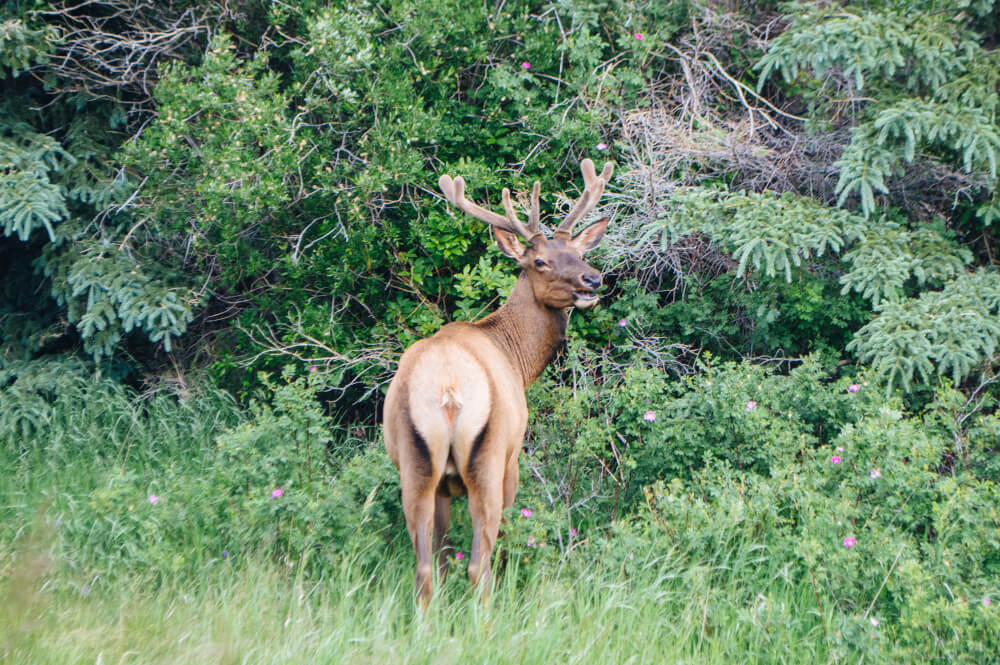
16. There are many tour companies out there – but always read reviews
The next best thing after driving yourself around the Rockies is, of course, to get someone else to drive you around the Rockies… so tours are a good option if you’re not renting your own car.
Not all tours are created equal though, so make sure to read reviews carefully and also prioritize smaller groups.
Bigger tours with bigger buses are often the more cost-effective way to do things but, of course, this comes with its drawbacks, namely that when your bus is that big, you bring the crowds with you everywhere you go. And, usually destinations will be limited to the busiest, most popular sites, without much say or flexibility on your part.
From personal experience in other busy touristy areas, smaller group tours are generally a nicer experience than the huge ones. To find these, I usually hop on GetYourGuide, which is a marketplace for tours and activities, and I’ll look for the ones with the best reviews. I’ll then cross-check these reviews with ones on Google Maps and Reddit to weed out any evident red flags, before making my choice.
Unfortunately, I don’t have any personal recommendations to give you but if you have any good ones to recommend, please comment below!
17. There are limited public transport options if you’re strategic
All this said, if you are stubbornly set on seeing the Rockies without a car or tour, there are some ways that you can make a limited DIY trip work. Again, this isn’t the path I’d personally recommend, but I like to be thorough in my guides, so here are the basics for doing a public transport Rockies trip.
First off – shuttle services like these ones offer trips from Calgary Airport to Banff, Lake Louise and Jasper in the summer, while other companies, like SunDog tours, can get you from Edmonton Airport to Jasper.
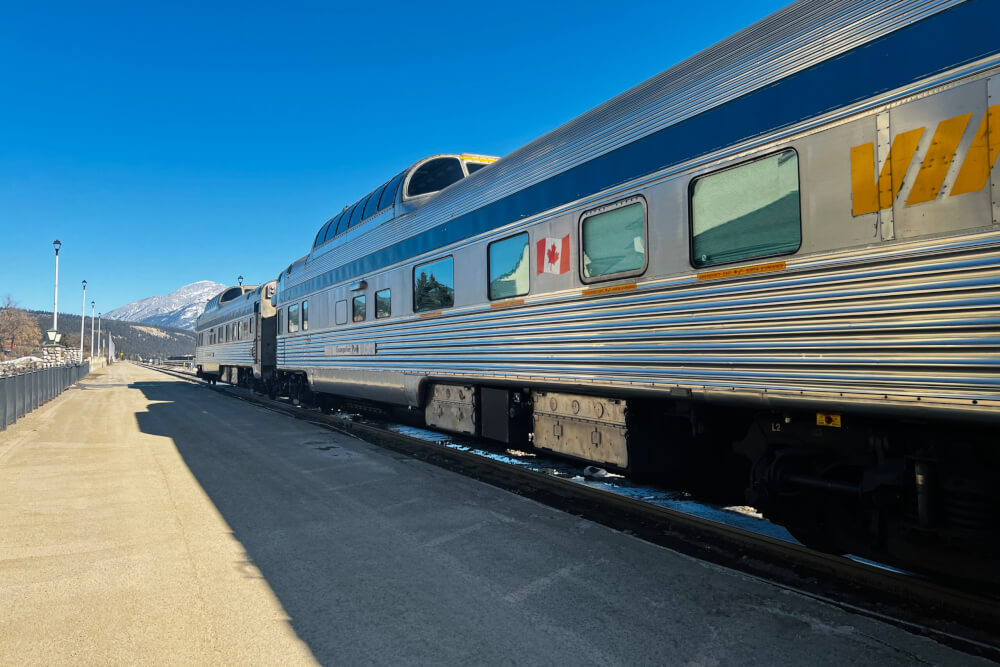
Jasper is also one of the few stops on the Via Rail Canadian route, meaning you can get there by train, though even the journey from Vancouver is about 19 hours.
To be honest though, public transport sightseeing is quite limited in Jasper, so unless you’re happy to book some private day tours while you’re there, you might want to stick to Banff where the Roam Transit network can take you to the main sights between Banff, Canmore, and Lake Louise.
The major caveat is, of course, by relying on public transport, you can only really get to the busiest and most touristy places in the Rockies, but at the end of the day, they still are breath-taking places, so just brace yourself for crowds and enjoy the views. They’re glorious even when you have to share them.
And lastly, though I sadly have no experience on board, I should also mention that…
18. The Rocky Mountaineer offers a luxury tour that includes train/bus travel
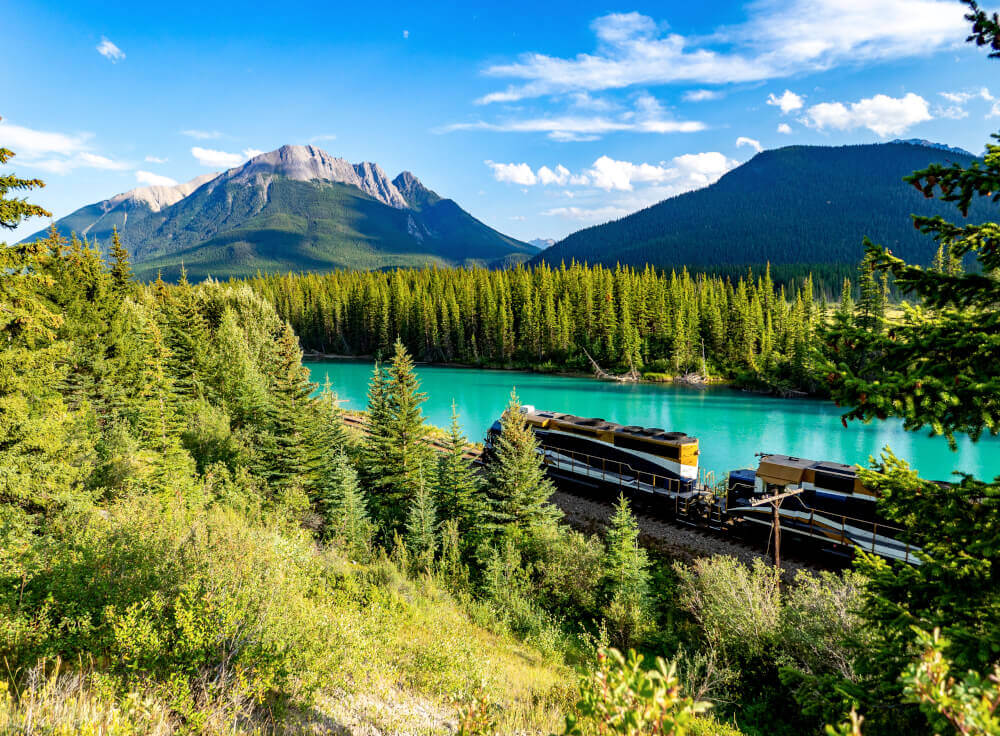
This is one option that obviously doesn’t come cheap, but as someone who adores train travel, I can see how this in itself would be a once in a lifetime experience worth splurging for if it’s your dream.
Having done a more budget version of a train trip across Canada, I can honestly say that the stretch between Vancouver and the Rockies is the most scenic bit and the views truly are incredible… plus Rocky Mountaineer is the only company that does trains to and from Banff – Via Rail only takes you to Jasper, so if you want to get a train to Banff this is actually your only option.
This is, of course, a packaged tour, so you get the transport via train and also day tours by bus that take you to key spots. As such, you don’t get a ton of flexibility, but if ease and comfort is what you’re after, and you’re flush with cash, just know this is an option.
19. Pack layerable items that you can rewear, with options for every kind of weather
The best way to pack for the Rockies is to just assume that you’re going to encounter every possible temperature and weather condition… because you probably will.
At minimum, you want to make sure you have a good waterproof outer layer and a warm option like a puffer or fleece. Even in the summer, temperatures can drop at night and once you’re no longer in the sun, so you really want to make sure you have something warm in every season.
Now, when it comes to staying warm, layering is always the best strategy, so rather than packing one huge sweater, for instance, which is only good for one type of of temperature, layer up instead with a thin base layer that keeps heat in, a warm mid layer like a fleece or down puffer, and a waterproof shell on the outside, adjusting the thickness of these layers depending on when you go.
This will give you a much more versatile wardrobe that you can mix and match as needed, because even in the winter, you’ll encounter warm conditions, like stepping into a cozy restaurant, for instance, or even just working up a sweat while walking to a viewpoint, so you don’t want to be trapped in just one layer of clothing that can’t be cooled down.
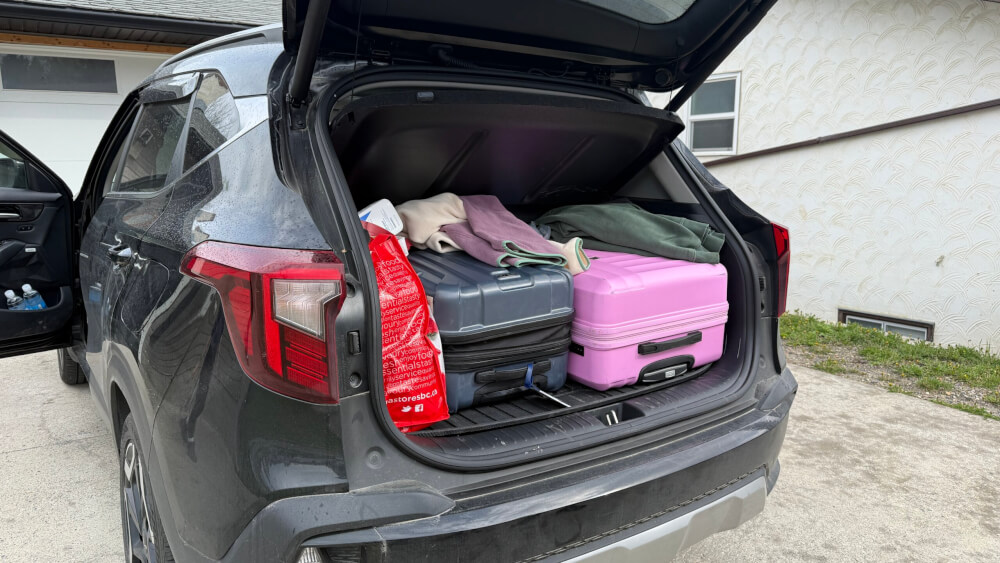
Recognizing that most cars won’t have a ton of room for luggage, especially if you’re travelling in a group, you might want to maximize space by packing items that can be reworn multiple times. This way you can pack less. For this, I always swear by merino wool items like these because they’re resistant to odour and bacteria and can be reworn multiple times without needing a wash.
Packing items like these will help you shrink the size of your bags, so you don’t have to panic about trunk space.
Another recommendation I have is to…
20. Buy expensive items like bear spray and sunscreen in advance of your trip
Usually these items will be marked up significantly in tourist towns, so buying them ahead of time will save you from some horrific sticker shock.
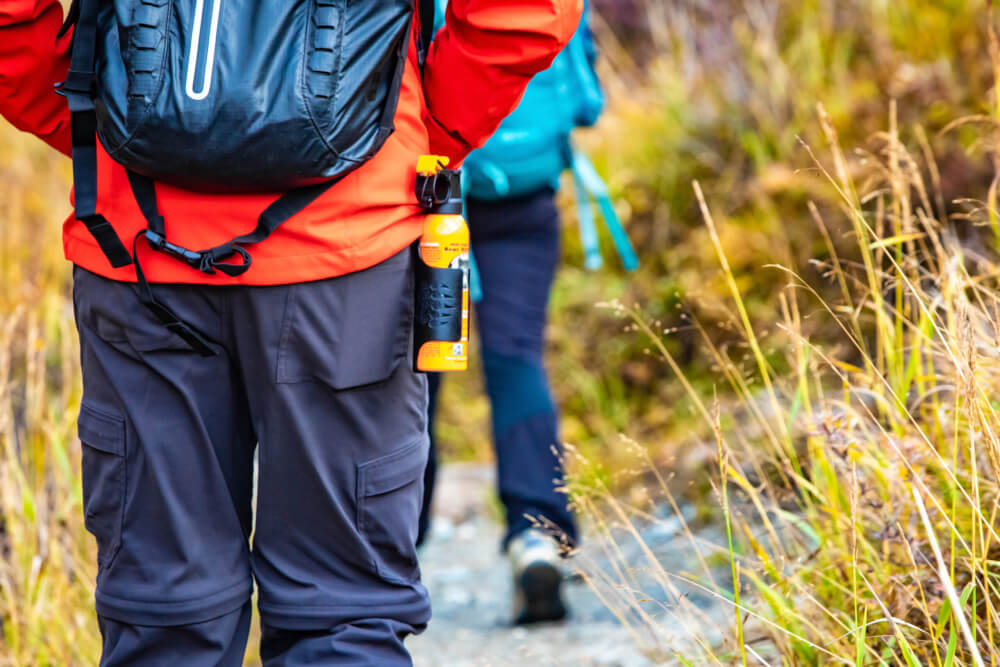
Now in regards to bear spray, the odds of you actually needing it is very, very, very slim and honestly, if you don’t know how to use it at all, having one in your bag probably won’t be all that helpful… but for ease of mind, I say it’s worth having a can just in case.
It is quite expensive, though, so if you don’t expect to be hiking much and don’t see any use for it in the future, you could potentially look into renting bear spray, though the cost of this adds up quickly after a few days. RentABackpack, based in Canmore, has a simple service that allows you to rent a can for $10 the first day and then $5 for every day after that if you’re looking for a simple solution.
I’d also advise you…
21. Don’t forget to pack classic household items that are tough to get in small quantities
Once again, there aren’t a ton of shops and amenities once you get out of the towns in the Rockies, so you’ll want to make sure you’re well stocked in case of emergency… and there are just some items that are impossible to get a small quantity of.
For instance, some things I would definitely bring include…
- A few garbage bags for the car
- Sandwich bags or Tupperware for snacks and food
- Emergency toilet paper
- Laundry pods or sheets if you plan to do laundry
And I know most rental apartments come with dish soap, but maybe bring a bit of dish soap if you have anything like water bottles or Tupperware you think you might need to quickly clean in a hotel or something.
I recently shared a hack on my packing channel that I think would work perfectly for this purpose – basically, if you take a sponge and squeeze dish soap in it, you can wait for it to dry out and then cut it into small pieces. Then throw these in a bag and you have little sponges loaded with dish soap that you can use in a pinch for small things like cleaning a small Tupperware container.
Also, don’t forget:
- Large tote bags for shopping and groceries – most places charge extra for bags now
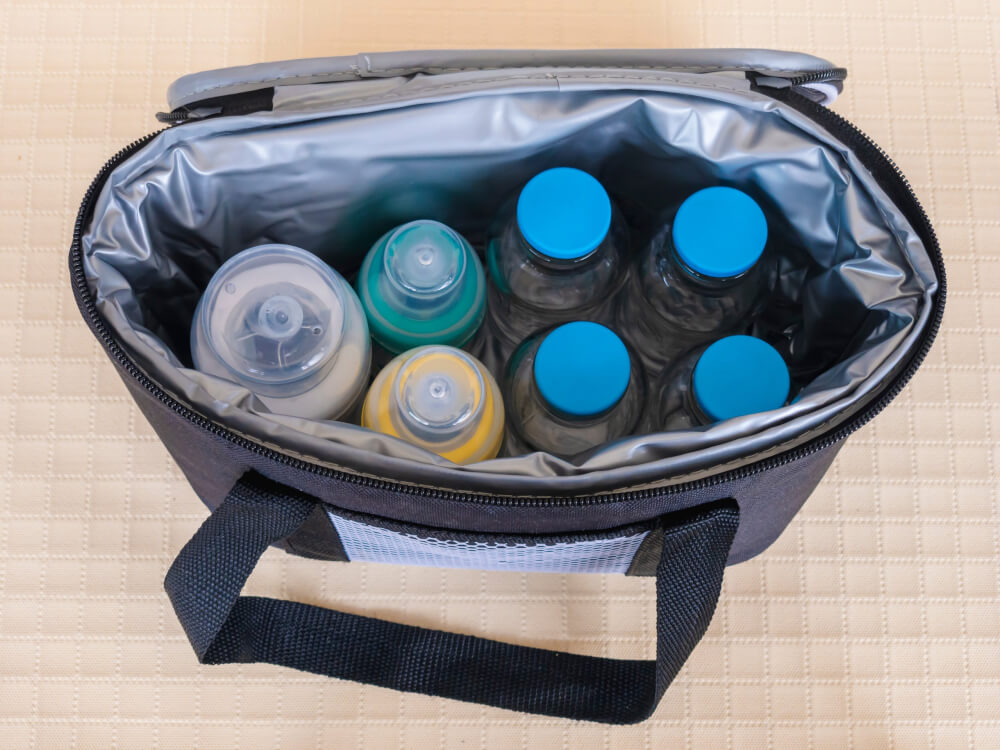
- A cooler bag if you want to keep drinks and food items cold
22. Remember that there’s a time change between BC and Alberta
Just because people often combine the two on a Rockies trip, I have to say that you need to remember the time change if you’re going to visit both British Columbia and Alberta.
BC is on Pacific Time and once you cross over to Alberta, you’re in Mountain Time. So, do account for this in your plans.
23. Don’t blindly follow advice online – a lot is outdated and conditions change
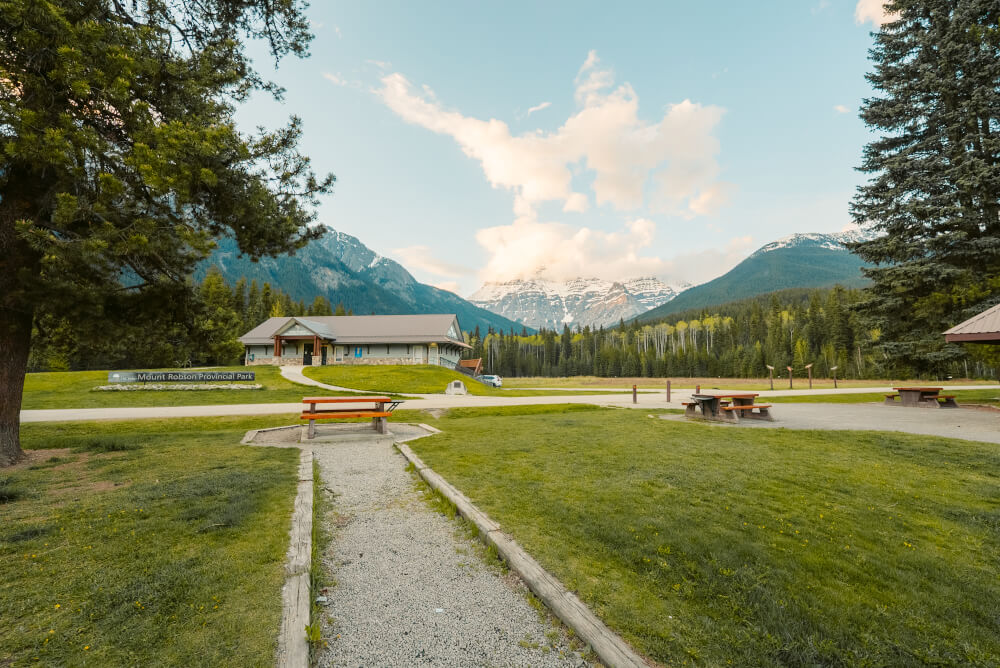
Now this is a very important one: before you head out anywhere, do your best to find up to date information. The visitor centres scattered around are a great resource for this, and the Parks Canada website also has a really good page that summarizes current conditions on popular trails and places.
Speaking from personal experience, online content inevitably becomes outdated, because independent publishers often don’t have the resources to stay on top of continually updating every single article they’ve ever written. Especially in a nature-oriented destination, a lot can change – trails close, a shift in environmental conditions can make once-safe areas not-so-safe, etc. so it’s best to be prepared.
The Jasper wildfires in 2024, for instance, created some pretty widespread devastation, with certain popular areas still closed off or inaccessible during our trip last year. Had we relied solely on blog posts and old articles, we probably would have ended up in some of these areas that are still closed to the public, so yes make sure you look for as much recent info as you can.
Another important thing is to…
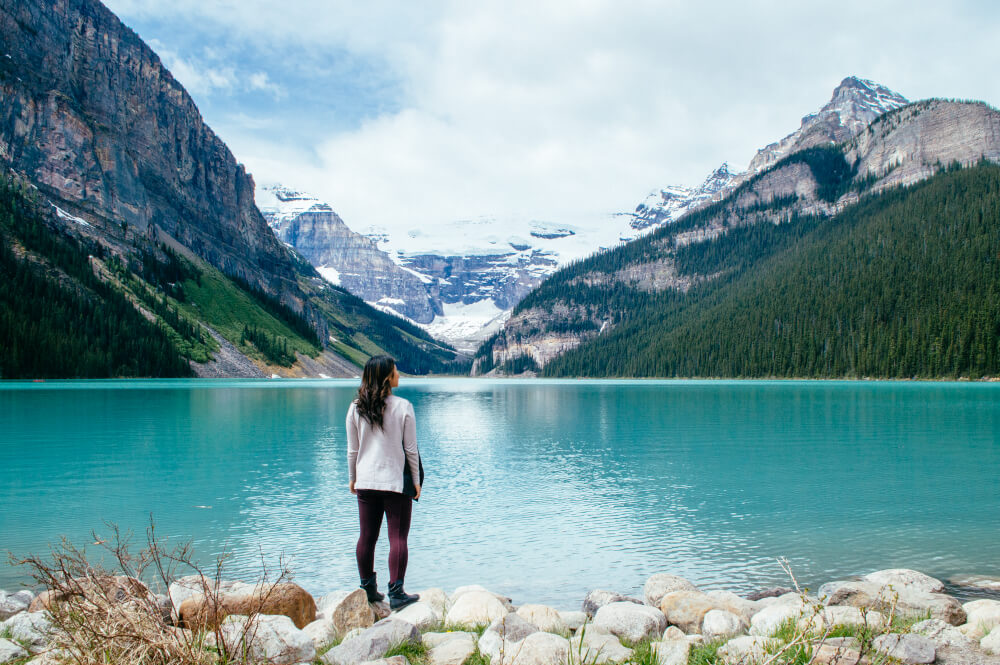
24. Prepare well for hikes & don’t underestimate Canadian nature
Because the Rockies are such a popular destination, oftentimes they can attract visitors who aren’t super experienced hikers or people who haven’t spent an extensive amount of time in the outdoors.
This can lead to people being unprepared for hikes and trails, going out in the wrong footwear, for instance, or not bringing enough water, so do keep in mind that there are some easier beginner friendly walks at popular spots, but many trails in the Rockies can be challenging, so prepare accordingly.
On a similar note…
25. Do make sure you are careful and know best practices re: wildlife
I know that bears, elk & moose seem adorable and harmless but their cuteness is definitely best admired from afar.
No matter how cuddly they look, you definitely don’t want to get too close no matter what, though the exact protocol does depend on the animal, so make sure you read up on what to do in case you come across any wildlife.
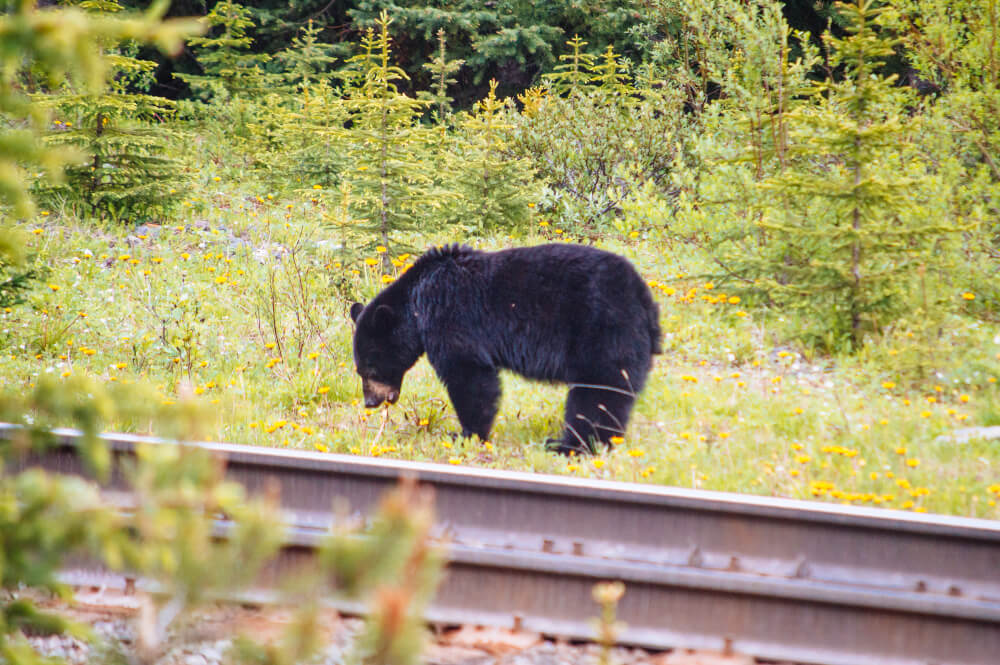
With black bears, for instance, you need to make as much noise as possible so they know to stay away… and don’t forget to dispose of your trash properly to avoid attracting them in general. This is why travelling in groups is recommended, because the noise naturally keeps bears away – so keep chatting, or if you’re on your own, maybe do a little solo singing or thinking out loud.
And if you’re thinking, what about bear bells? Apparently those are too quiet to be heard by bears until it’s too late, so yes, talking to yourself is the better option.
Finally, it goes without saying – never ever feed wildlife. As they say, a fed bear is a dead bear because feeding them gets them comfortable around people, and when that happens, they get put down… so admire the wildlife but do so at a distance.
And on that note also, just keep your eyes peeled for wildlife constantly, because when you’re driving, animals can be easy to miss but if you pay attention, you may get super lucky and spot them.
26. Dress and prepare for all kinds of weather (it can get COLD!)
I mentioned this before, but you truly never know what kind of weather you’ll get in the Rockies, so your best course of action is to always be prepared, meaning even if it’s the most beautiful blue sky day with blistering hot sun, you should have a rain jacket in your car just in case, and a puffer jacket for when the sun comes down.
Similarly, even if it’s a rainy day and you can’t see the sky at all, you should pack some sunglasses. Weather can change very randomly and you want to be prepared in any case…
It’s best practice when you pack for the day to just assume you’ll get every kind of weather imaginable.
Next up, remember:
27. Leave no trace
This is so, so, so, so important. Assuming you’re in the Rockies for the nature, it’s your responsibility to help keep it nice and pristine for future visitors.
Needless to say, always clean up after yourself, do not litter, and always carry a few large Ziploc bags in your pockets to ensure you have a clean and easy place to keep trash until you find a proper place to dispose of it.
And this doesn’t get said enough, but the concept of “leave no trace” extends beyond just picking up after yourself, it’s just the general idea of leaving places as you found them, so don’t go off trail and risk trampling delicate ecosystems, and don’t engage in what seem like harmless activities like stacking rocks.
Remember: moving one rock might not seem like a big deal, but if enough people do it, then suddenly taking rocks out of a creek to build stacks can actually alter how that creek flows, or might disturb local wildlife who rely on things being in a certain place… so just to be safe, leave places as close to their natural state as you can.
Also, FYI sometimes rock stacks and cairns are used as navigational markers, so if you just randomly build them where they don’t belong, that could lead people astray.
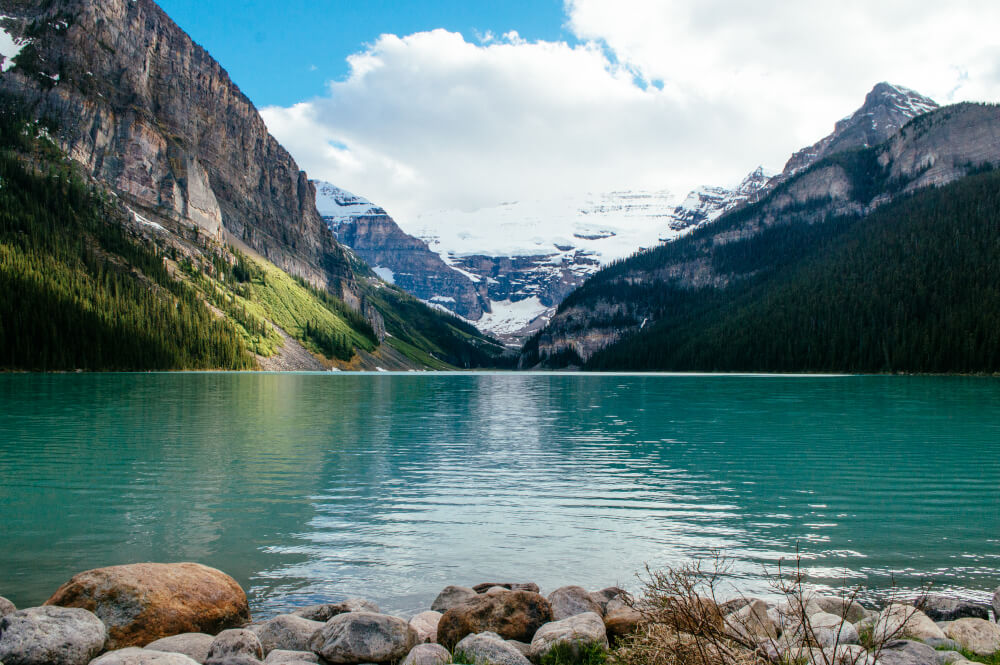
Now I’ve said repeatedly that the Rockies are a busy destination, so this next tip will come in very handy…
28. Visit popular spots either very early in the day, or very late in the day
Going early is no secret, to be honest, that’s what a lot of people do and it’s still so busy.
On my more recent trip, I found going late actually worked in our favour, and this can work especially well when the days are long in the summer.
So, if you can’t be bothered to get up at 6am or whatever, try going to popular spots in the late afternoon, like after 4pm. Crowds will have started to thin out by then.
Another thing to take note of is that…
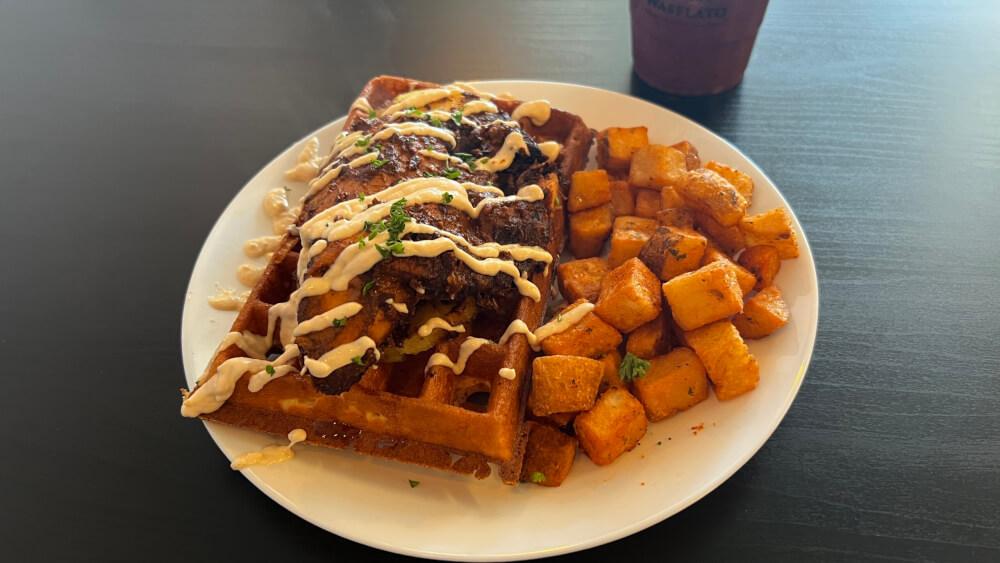
29. Dinner is eaten pretty early – most kitchens close around 9ish
I know that meal times are relative, but I’m a pretty late eater and found that dinner times in the Rockies felt early for me, like 5:30-6pm isn’t uncommon. So, just pay attention to that if you’re used to getting late meals out.
Of course, being a late eater means you might not have to fight the crowds as much, but do note that kitchens can close earlier accordingly, often by 9..
Now, onto a thorny must-know which is…
30. Don’t forget to tip – in Canada the standard is 15-20% for good service
I know. It hurts, but that’s what’s customary when it comes to sit down meals.. and while staff aren’t likely to get aggressive with you or anything, undertipping is definitely considered bad form and you might get some frosty looks.
To give a little insight though, while I hate tipping culture, the reason many get snippy if you don’t tip or tip poorly is because servers are usually required to give a percentage of their total sales amount to other staff, like those in the kitchen… regardless of how much they get tipped. So if you don’t tip enough, they effectively lose money on your table.
Just to explain a little bit why they might have attitude about it. But most of the time, servers make very good money anyway so… do with this info what you will.
In any case, tipping on takeout or fast food is much less expected though, and opinion is divided on whether or not it’s necessary – I usually do about 10% if they’re nice, but it’s not as much of an expectation.
Speaking of fast food…
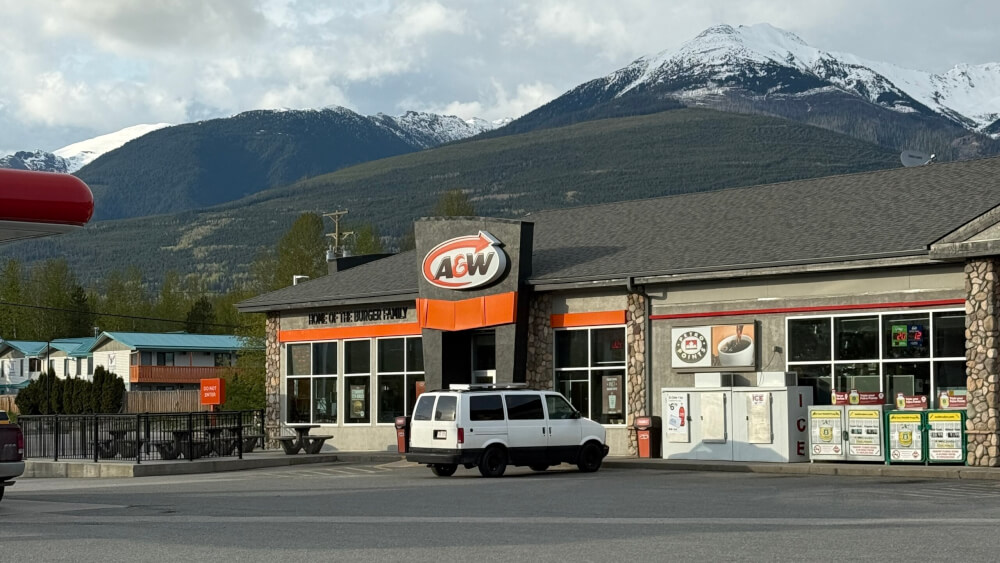
31. Supermarkets, A&W and Tim Hortons will be your best friend
While you’ll find a good number of restaurants and places to eat in bigger towns like Jasper, Canmore or Banff, you’ll definitely want to stop off at supermarkets to grab some snacks and food for the long stretches in between where you won’t encounter many options at all.
I’d always recommend stocking up on some resilient road trip snacks like jerky, protein and granola bars, as well as instant foods like noodles that you can easily whip up in case you’re starving.
Even when options are available, honestly, time is of the essence, so you’ll often want something quick, in which case the two chains you are most likely to encounter are Tim Hortons and A&W – 2 Canadian icons. I’d say the food overall is better at A&W, but it’s not really a Canadian road trip without an Iced Capp and some Timbits, so definitely take advantage when you see a Tim Hortons.
In addition to being well stocked with food and water, do…
32. Beware there may be large stretches with no phone service
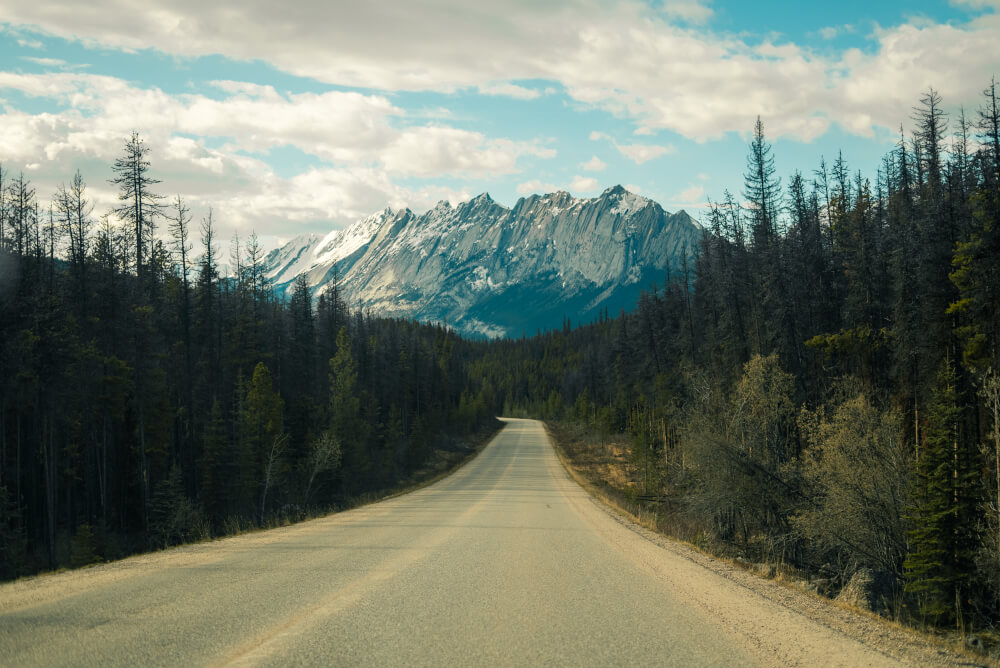
Along the Icefields Parkway, for instance, there is a solid 100km stretch where there’s no phone service at all, but honestly, don’t worry – this is such a well travelled road that even in an emergency situation, it won’t be long before other cars come along.
So long as you prepare for no service and save offline maps with places where you want to stop, along with trail maps on AllTrails, it’s pretty hard to get lost here unless you veer off the main road, so there’s nothing to worry about.
In a pinch, at Saskatchewan Crossing, there is a pub, café and huge souvenir shop where you’ll find good bathrooms and WiFi, but that’s pretty much it for that entire section of the road, so make sure you have food and water.
I was also able to use Satellite mode on my iPhone to send a text when I needed to, so remember that’s an option as well, in case of an emergency.
Now speaking of emergencies, another thing to be mindful of is you should…
33. Strategize your bathroom breaks if you’re picky about having “nice” bathrooms
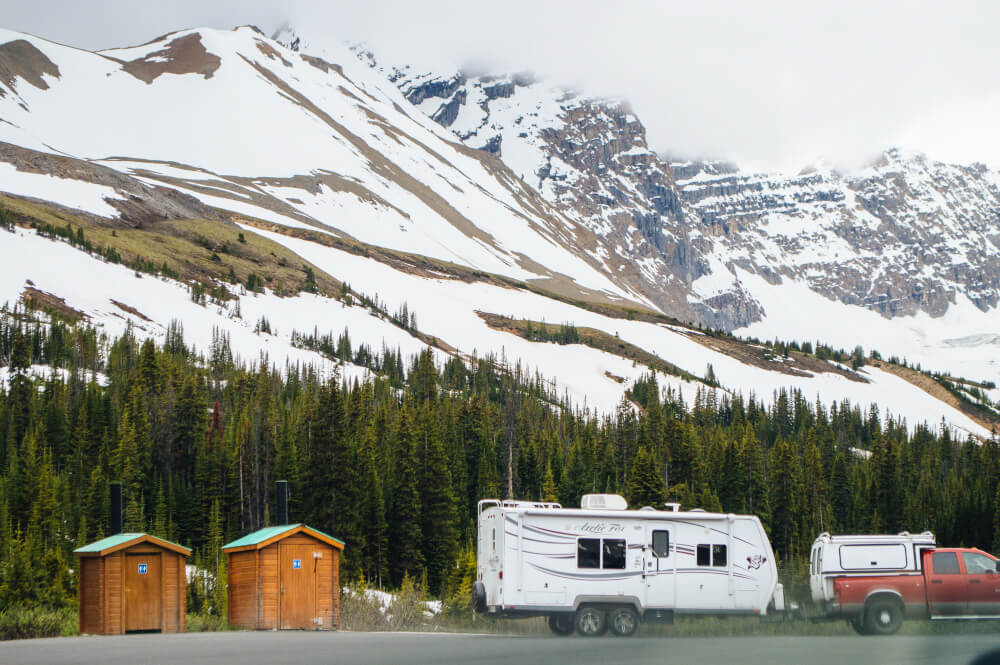
Obviously, when you’re out in nature, the toilets are rarely flushable and they aren’t cleaned too often, so I would take full advantage of any good toilets when you have them, like at your accommodation or at a food spot. The toilets you find at national parks can sometimes leave much to be desired.
On a similar note, do…
34. Bring plenty of hand sanitizer, sanitizer wipes and toilet paper
You will definitely be needing them and using them a lot. Just again, remember to take any trash with you, which includes toilet paper.
35. Learn how to use the bearproof bins
Oftentimes in the Rockies you’ll encounter special garbage containers that are designed to be wildlife proof, so if you can’t figure out how to open it, look for a graphic printed on there that shows you – usually it’ll be a little latch thing you press onto in order to open it up.

I hope this list of Canadian Rockies travel tips was helpful!
Let me know in the comments if you have any more to add.